
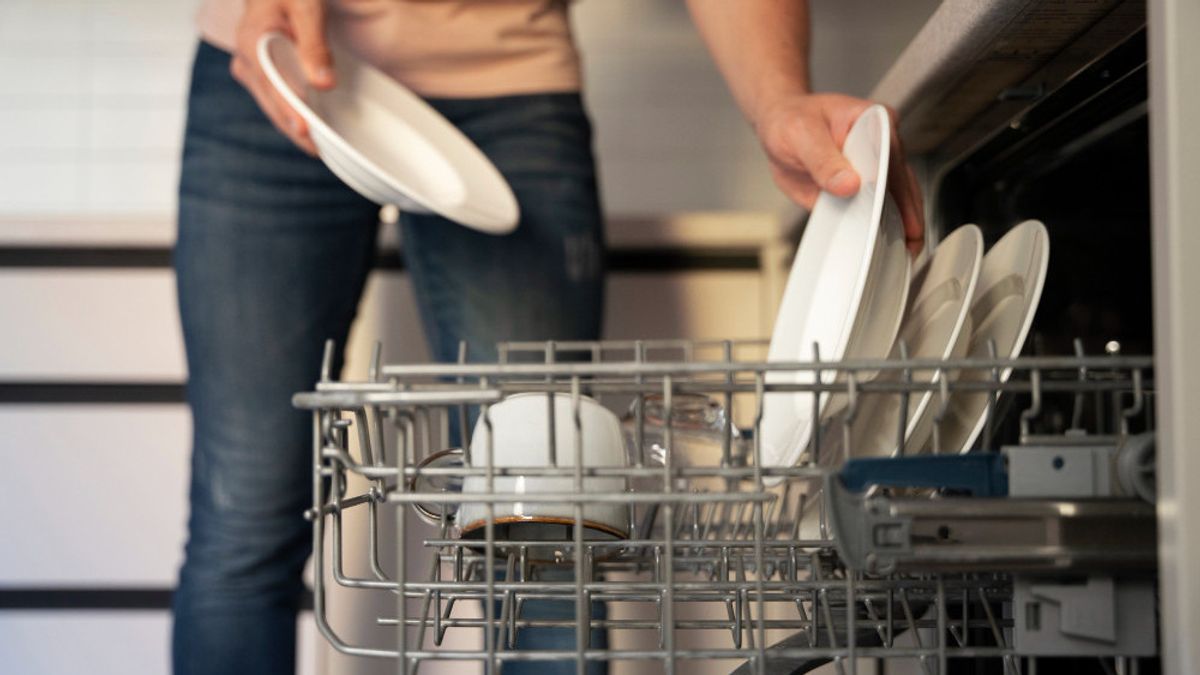


YOGYAKARTA - Many people are tempted by the convenience of dishwashers, but it is important for you to understand what the weaknesses of these automatic dishwashers are before deciding to install them in the kitchen area of the house.
Indeed, this tool looks very practical and modern, but there are some technical limitations and high operating costs that are often the main complaints for new users.
Brief History and Weaknesses of Automatic Dish Washing MachinesSince it was first patented in 1850 by Josephine Cochrane, the dishwasher was initially a luxury item for socialites who were afraid of their ceramic dishes breaking if they were washed manually.
Although it is now a standard in developed countries, this tool carries a number of consequences that you must consider carefully. Reported by VOI from the house Digest page, here are some of the disadvantages of washdisher that you need to know:
Expensive Investment and Installation CostsOne of the most obvious weaknesses of automatic dishwashers is the price. According to data from Forbes, the average cost of purchasing and installing the unit can reach Rp. 15 million, even it can be much more expensive depending on the brand. This is a big investment that is not necessarily proportional to the benefits for everyone.
Bulging Electricity ConsumptionAlthough this machine is often claimed to be water-saving, it is very power-hungry. To achieve a level of sanitation that can kill bacteria such as E. coli and Salmonella, the machine must heat the water to a high temperature. It is this water heating process that will make your monthly electricity bill skyrocket.
Problems of Space and MeasureA dishwasher requires a fairly large permanent space in the kitchen. For those of you who live in a small apartment or a house with a narrow kitchen, the presence of this tool can be very suffocating. Although there are portable variants, the capacity is limited and still takes up counter space (countertop).
Not Efficient for Small FamiliesThis machine is designed to wash large amounts at once. If you live alone or just the two of you, turning on the machine for just a few dishes is a waste of energy.
On the other hand, if you wait for the dishes to pile up to fill the machine, your kitchen will smell and become a germ nest.
Must be rinsed manually first.The expectation that dirty dishes can go straight into the machine often misses. For equipment that is very oily or stained with sticky food, you still have to rinse it by hand. Otherwise, the food residue will clog the filter and make the laundry result not the cleanest.
Very Long Washing DurationIf you're in a hurry, manual washing is the winner. The average cycle of an automatic machine takes 1 to 3 hours. This is certainly not practical if you need the tableware in a short time for the next meal.
UnhealthyInterestingly, a study in Sweden reported by NPR revealed a surprising health side. Children who live in a house without a dishwasher (manual washing) tend to have a lower risk of allergies, asthma, and eczema.
Read also the article discussing Fact or Myth? Can Asthma Sufferers Climb a Mountain?
Researchers theorize that exposure to small amounts of bacteria while hand washing actually helps strengthen the body's immune system. This is something that is lost due to the extreme sanitation process of automatic machines.
Understanding the weaknesses of automatic dishwashers does not mean forbidding you from buying them. However, if you have a limited budget, a narrow kitchen space, or just live alone, washing dishes by hand is still a smarter choice.
The English, Chinese, Japanese, Arabic, and French versions are automatically generated by the AI. So there may still be inaccuracies in translating, please always see Indonesian as our main language. (system supported by DigitalSiber.id)


