
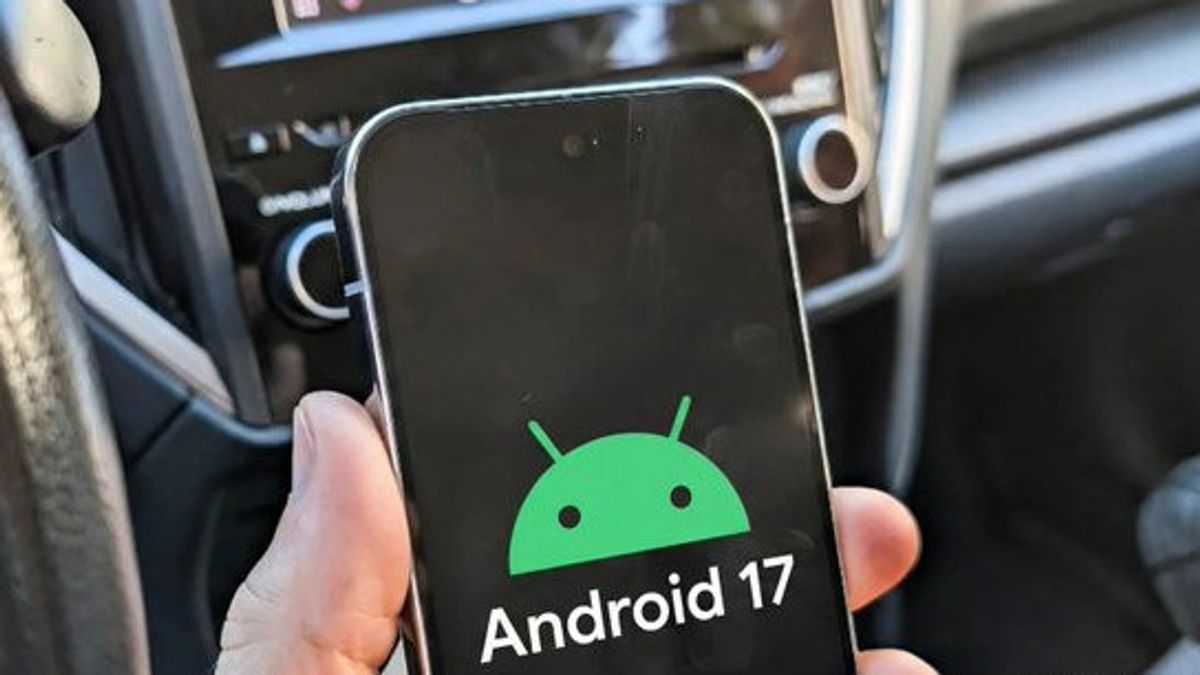


Google is preparing a new feature in Android 17 that is designed to reduce motion sickness when using a mobile phone in a moving vehicle. The feature, which is temporarily known as Motion Cues and is likely to be marketed as Motion Assist, is said to be inspired by a similar feature from Apple's iOS.
The problem of motion sickness is often experienced by mobile phone users when they are passengers. Scientifically, this condition arises due to sensory conflict: the eyes focus on the screen that is silent, while the inner ear detects the body is moving. The result is classic, ranging from dizziness, nausea, to a heavy head. In the digital commuter era, this is clearly a serious disorder.
Based on the developer's findings and the disassembly of the Android internal code, Motion Assist works by displaying visual elements in the form of small dots on the screen that move in accordance with the direction and speed of the vehicle. Data is taken from the phone's motion sensor, so that the screen seems to "move" along with the user's body. The trick is simple, but the effect can be significant in reducing nausea.
English:
This concept is not new. Apple was the first to introduce Vehicle Motion Cues in iOS 18. Even on Android itself, a third-party app called KineStop has implemented a similar idea since 2018. The difference is, Google's version will be directly integrated at the operating system level, not just an overlay application.
Until now, the implementation of Motion Cues on Android is still limited. The feature is actually already in Google Play Services, but has not been released to the public due to technical constraints. Visual points cannot appear in important areas of the system such as the status bar, notifications, lock screen, or quick settings menu. The reason is the Android security restrictions that prohibit applications from drawing over core system components.
Android 17 is expected to be the solution. Google is reportedly preparing a new system API that moves the Motion Assist rendering process to SystemUI, a core Android component that manages the interface display. With this approach, the Motion Assist visual elements can appear consistently across the screen without violating security rules.
The latest code in Android Canary shows that Google has prepared a special service, complete with settings for the shape, color, size, and distance of visual dots. Access to this feature will be strictly limited through a special permission, only for system applications or Google-signed applications, to prevent abuse.
Because it relies on the new system API, this feature almost certainly requires a full OS update. That's why Google is holding off on its release and is leaning more towards launching it on Android 17, although it's possible it will appear earlier in the final release of Android 16.
If officially released, Motion Assist is expected to be integrated with the Transiting mode, an upcoming Android feature that optimizes the settings of a mobile phone when traveling. Ideally, this anti-drunkenness feature is automatically active when the user is detected in a vehicle.
In short, Google seems to want to ensure Android users can scroll, chat, or doomscroll safely in the passenger seat - without the drama of nausea. The hangover from the chat content may still be there, but at least it's not because of the sensor.
The English, Chinese, Japanese, Arabic, and French versions are automatically generated by the AI. So there may still be inaccuracies in translating, please always see Indonesian as our main language. (system supported by DigitalSiber.id)
Most Popular Tags
#Prabowo Subianto #donald trump #2026 World Cup #Febrie Adriansyah #8791Popular


