

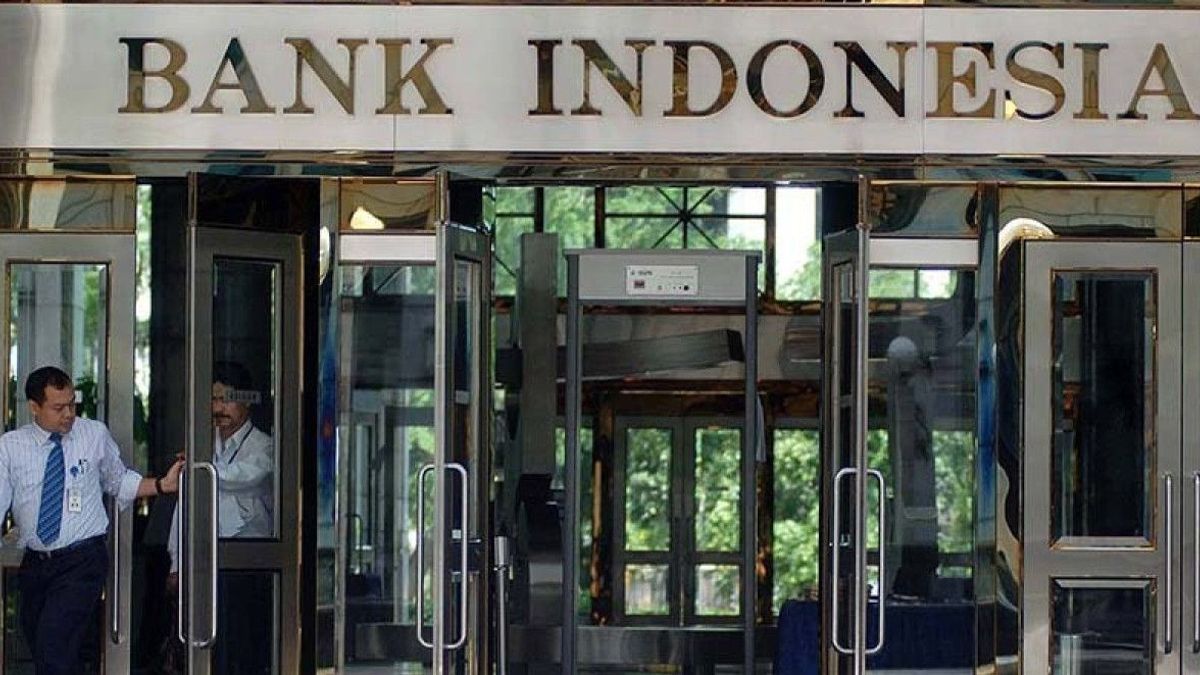


JAKARTA - Economists have expressed different views on the direction of the BI-Rate between staying at the level of 4.75 percent or rising to the level of 5 percent, facing the rupiah exchange rate which reached its lowest point in history at the level of Rp17,600 per US dollar.
Today or Wednesday (20/5) afternoon, Bank Indonesia (BI) is scheduled to announce the interest rate policy in the results of the April 2026 Governor's Board Meeting (RDG).
Macroeconomic and Financial Market Economist LPEM FEB UI Teuku Riefky in his statement in Jakarta, Wednesday, considered that the increase in the BI-Rate by 25 basis points (bps) to the level of 5 percent was feasible for the central bank in the current conditions.
Although the interest rate hike has the potential to slow down credit growth, he assessed that the main priority of the Bank Indonesia (BI) at this time must focus on stabilizing the rupiah.
Indonesia recorded a capital outflow of US$15 million from the stock market on April 15-May 12 and an outflow of US$0.4 billion from the SBN market on April 15-May 8, before again recording an inflow of around US$0.22 billion on May 11-12.
Riefky highlighted the phenomenon of flattening the yield curve or narrowing the gap between long-term and short-term SBN yields, which indicates that investors view the short-term risk as higher so that the outflow of capital from short-term bonds is greater than long-term bonds.
To maintain foreign exchange supply and maintain flow, BI has increased outstanding SRBI by around Rp214 trillion throughout 2026, while the weighted average SRBI coupon rose to 6.4 percent on May 13 from 5.89 percent in mid-April and 4.9 percent at the beginning of 2026.
Foreign exchange reserves have also been eroded by more than 10 billion US dollars in the last four months to stabilize the rupiah. However, BI's intervention is considered less effective because the rupiah continues to weaken.
Riefky revealed that the rupiah's performance was relatively poor compared to other emerging market currencies with a weakening of 5.50 percent on a year-to-date (ytd) basis and only better than the Turkish lira and the Indian rupee.
Although external factors clearly play a role in the depreciation of the rupiah as experienced by other emerging market currencies, he reminded that domestic factors also contribute greatly to the weakening of the rupiah, one of which is related to investor concerns about fiscal sustainability due to low tax revenue. ratio.
Meanwhile, BCA Chief Economist David Sumual has a different view. According to him, BI will still hold the BI-Rate because inflation so far is still within the range of the central bank's projections.
However, if the government adjusts the price of fuel, especially subsidized fuel, the BI-Rate has the potential to be raised faster to anticipate an increase in inflation expectations.
Head of the Center for Macroeconomics and Finance at Indef M. Rizal Taufikurahman considers that the option to raise the BI-Rate is quite logical to dampen the pressure on the rupiah and maintain market confidence. But this option risks further squeezing credit, consumption, and the real sector which has begun to slow down.
On the other hand, if BI holds interest rates at the level of 4.75 percent, the growth space is more guarded, but the pressure on the rupiah and market perceptions could potentially increase.
According to him, the biggest possibility is that BI will still hold interest rates while strengthening stabilization through foreign exchange interventions, SRBI, Domestic Non-Deliverable Forward (DNDF), and liquidity management.
"This step is more realistic in the midst of domestic economic conditions that are not strong enough to withstand the impact of more aggressive interest rate hikes," said Rizal.
Global Markets Economist Maybank Indonesia Myrdal Gunarto assessed that an increase in the BI-Rate was not necessary because it had the potential to encourage the increase in other interest rates, which in the end would burden the real sector, especially in the midst of the high value of the US dollar exchange rate and the increasing cost of business expansion.
He views the strengthening of the rupiah as still achievable without raising the benchmark interest rate, even though the financial market is currently facing pressure from outflows and increased demand for dollars due to seasonal factors such as overseas dividend payments and the Hajj season.
According to Myrdal, the rupiah should be able to strengthen if the conversion of foreign exchange from exports is maximized. The aggressive monetary intervention steps from BI are considered to help anticipate potential outflows in the financial market. In addition, the rupiah also still has the opportunity to strengthen if the trade surplus increases and the potential for outflows in the financial market remains under control.
The English, Chinese, Japanese, Arabic, and French versions are automatically generated by the AI. So there may still be inaccuracies in translating, please always see Indonesian as our main language. (system supported by DigitalSiber.id)
Popular


