
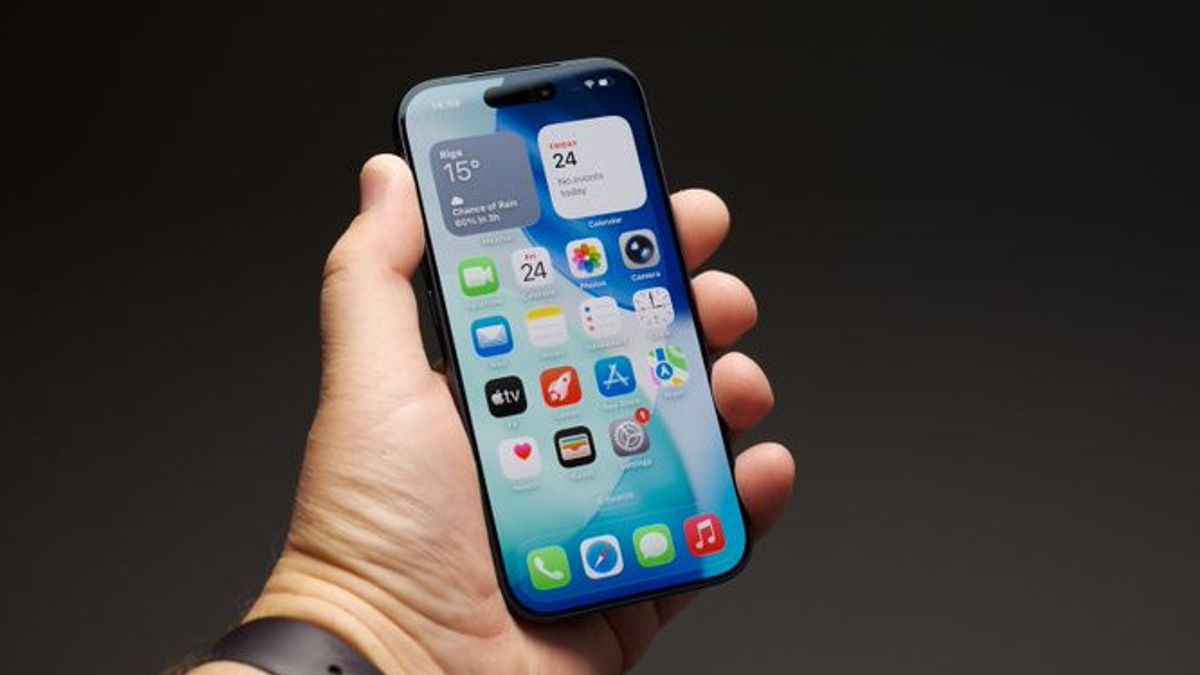


JAKARTA - Australia officially enforces strict rules regarding social media access on December 10, and although its main targets are platforms such as TikTok, Instagram, and Snapchat, Apple's ecosystem is dragged into the arena.
The rules are simple but bite: no user under 16 years old is allowed to have an account, and the platform is required to close a violating account. Fail to comply, be prepared to face fines that can penetrate tens of millions of dollars.
Interestingly, this regulation suppresses applications instead of devices. But all these services live on iPhones and iPads. When the government asks the platform to filter ages, Apple automatically becomes a technical link between legislation and apps that must comply with the rules.
Apple responded with a new tool for developers. The compliance package, which was released December 8, contains a API called Declared Age Range, which allows the app to find out the user's age group estimates without forcing them to upload physical identities. Through this API, the app can block creating new accounts for users under 16 in Australia or automatically disabling existing accounts.
SEE ALSO:
-
 | TEKNOLOGI
Google Rilis Film Year in Search 2025, Indonesia Masuk Daftar Trending Global
09 Desember 2025, 20:35 -
 | TEKNOLOGI
King of Tokyo, Gim Adaptasi dari Board Game Ternama akan Dirilis untuk PC dan Konsol
09 Desember 2025, 20:01 -
 | TEKNOLOGI
Ingram Micro Soroti Risiko Kegagalan Adopsi AI, Dorong Adopsi Private Cloud AI
09 Desember 2025, 19:05 -
 | TEKNOLOGI
Katsuhiro Harada Pamit dari Bandai Namco Setelah 30 Tahun Bersama TEKKEN
09 Desember 2025, 18:34

The App Store is pulled into an intermediary layer, providing a standard' way to follow the law. The app can now mark its description that their services are not available to users under 16 years of age rating, include information about age assurance, and even add specific links containing age policy information per region.
Australian regulators indeed reject document-based identity verification mechanisms. They prefer behavioral and data-based approaches that already exist, such as Apple provides. This also protects users from the risk of sensitive data leaking to third parties.
Australia has previously driven Apple further than other markets on child safety issues. From a boost to strengthening detection of harmful content, to testing inappropriate content reporting features on iOS 2024. This new API is a continuation of that pattern: Apple positions itself as a compliance infrastructure operator, not just a device maker.
For social media platforms, the regulatory burden remains on their shoulders. Accounts must be deactivated, new registrations are prohibited, and the age detection mechanism must be applied specifically to users in Australia. But Apple's solution makes the work more 'plug-and-play', especially for small platforms that don't have the resources to build their own systems.
There are wider consequences. When Apple provides regulatory fulfillment tools in its operating system, the company's power over the ecosystem is getting bigger. Regulators in other countries can ask why apps don't use this mechanism in their territory either. In the long term, Apple has the potential to be treated as a global technical standard in age assurance.
Meanwhile, criticism still mentions that teens can circumvent rules through VPN or fake data. Apple can't stop such tricks, but the company's move shows how big platforms are increasingly playing a regulatory mouthpiece standard body' de facto governing how a law is translated into application technicals.
This Australian rule may be just one country, but the effect of the reflection can be much bigger: from here, the world can see how future regulations will put pressure on platforms and operating systems more often, not just apps.
The English, Chinese, Japanese, Arabic, and French versions are automatically generated by the AI. So there may still be inaccuracies in translating, please always see Indonesian as our main language. (system supported by DigitalSiber.id)
Most Popular Tags
#Prabowo Subianto #donald trump #firearm #8791 #giias 2026Popular


