
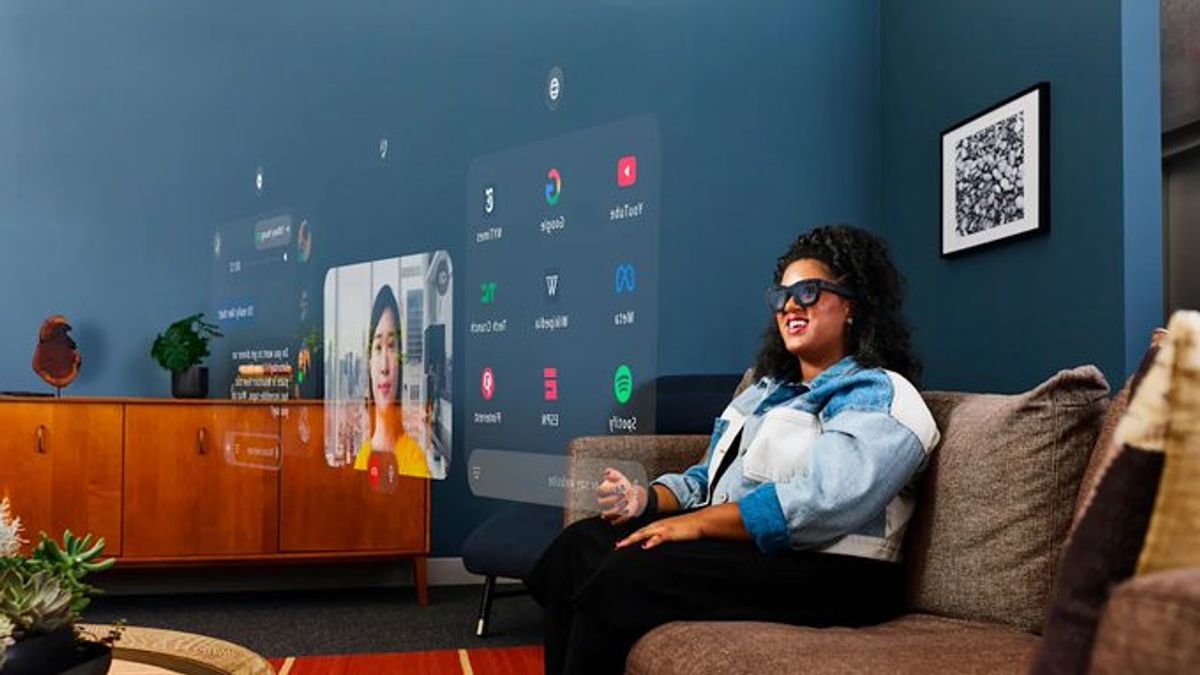


JAKARTA - Meta has postponed the launch schedule for its newest mixed reality glasses using the code name Phoenix. The device, which was originally planned to launch in the second half of 2026, is now scheduled to be released in the first half of 2027, according to an internal memo written by Maher Saba, Vice President of Reality Labs Foundation, to employees.
In a separate memo as reported by Business Insider, Meta metaverse leaders Gabriel Aul and Ryan Cairns, said that this delay provided an "additional breathing room" so the team could "equit every detail".
They insist that a tight schedule and major changes to the user experience make the company not want to compromise with quality. "We want to make sure this device is completely mature and reliable," they wrote.
SEE ALSO:
-
 | TEKNOLOGI
Komdigi dan UNP Tekankan Pembatasan Gawai untuk Anak Pascabencana Aceh dan Sumatera
07 Desember 2025, 16:45 -
 | TEKNOLOGI
Netflix Resmi Akuisisi Warner Bros Senilai Rp1.378 Triliun, Perkiraan Rampung Q3 2026
07 Desember 2025, 15:58 -
 | TEKNOLOGI
Cloudflare Tumbang Lagi untuk Kedua Kali, Ternyata Ini Penyebabnya
07 Desember 2025, 14:50 -
 | TEKNOLOGI
RI-Uni Eropa Sepakat Perangi Kekerasan Digital terhadap Perempuan dan Anak
07 Desember 2025, 13:42 -
 | TEKNOLOGI
Investor Institusional Meningkat, Tokocrypto: Fase Baru Pertumbuhan Pasar Kripto RI
07 Desember 2025, 12:22
Meta declined to comment on the delay.
The mixed reality Phoenix glasses have previously been reported by The Information. Two Meta employees who have seen the prototype say that the device has a shape resembling a goggle glasses and is connected to an external mock that helps give power.
They said the design was similar to the Apple Vision Pro. Despite doubts among leaders about the existence of the puff, the device was maintained because it helped keep the glasses light, comfortable, and prevent excessive heat.
In the same memo, Saba wrote that at the latest meeting with CEO Mark Zuckerberg, Reality Labs leaders received directions regarding the 2026 plan. According to him, the company's focus is on ensuring that businesses are more sustainable and provide additional time to improve the quality of user experience.
"On that basis, many teams in the RL must adjust their plans and schedules," he said. He emphasized that this extra time is not an opportunity to add new features or expand the scope of work.
In addition to the Phoenix project, Meta also plans to launch a limited edition wearable device under the code name Malibu 2 in 2026. Saba calls the device part of a new product portfolio that will strengthen Meta's position in the wearable market.
Meta is also starting to develop the next generation of Quest headsets, which Aul and Cairns describe as devices focused on immersive gaming experiences. The new product is claimed to bring a major increase in capabilities, as well as provide significant improvements in production cost efficiency.
In October 2025, Meta overhauled its metaverse division and appointed Aul and Cairns as leaders alongside Reality Labs, replacing the previous structure. The company is also considering a 30% cut in budget for Reality Labs, which could impact employees working on Horizon Worlds, Meta's virtual space platform.
On the other hand, Meta continues to expand push in the field of AI hardware. The company announced on Friday that it had acquired Limitless, a startup developing AI-based wearable devices in the form of smart pendants.
With this change in direction and rescheduling, Meta appears to be working to balance its technological ambitions with demands for quality and business sustainability amid intense competition in the mixed reality industry.
The English, Chinese, Japanese, Arabic, and French versions are automatically generated by the AI. So there may still be inaccuracies in translating, please always see Indonesian as our main language. (system supported by DigitalSiber.id)
Popular


