


JAKARTA - OmniVision officially announced its newest flagship camera sensor, OVB0D, which is directly positioned as the main challenger for the 901 Sony LYTIA premium sensor. This sensor carries a 200MP resolution of 1/1.1 inches, slightly larger than the 901 LYTIA which measures 1/1.12 inches.
According to a report circulating in Korea, OVB0D carries a Bayer filter with a different re-mosaic dual on-chip structure from Sony's QQBC technology. However, Sony's QQBC structure is expected to be able to provide a slightly superior image detail.
OmniVision highlights the advantages of its new sensor through its very high full-well capacity, reaching 400K, as well as a large dynamic range. The sensor is also equipped with DCG + LOFIC Gen 2 technology for HDR multi-frame processing, which promises excellent performance in extreme HDR conditions, including situations with sharp light differences.
SEE ALSO:
-
 | TEKNOLOGI
Prompt Gemini AI Edit Foto Winter di Luar Negeri, Ini Pilihannya!
02 Desember 2025, 18:05 -
 | TEKNOLOGI
Pengontrol DualSense Genshin Impact Edisi Terbatas akan Dirilis Januari 2026
02 Desember 2025, 17:31 -
 | TEKNOLOGI
Apple Tolak Perintah India untuk Pasang Aplikasi Keamanan Siber di iPhone
02 Desember 2025, 17:05 -
 | TEKNOLOGI
NVIDIA Luncurkan Model AI Alpamayo-R1 untuk Pengembangan Kendaraan Otonom
02 Desember 2025, 16:35 -
 | TEKNOLOGI
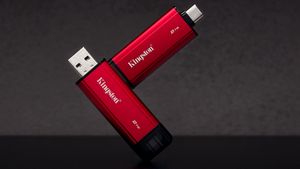
Kingston Rilis Dual Portable SSD, Bawa Koneksi USB-A dan USB-C di Satu Perangkat
02 Desember 2025, 16:05
Although the official announcement has not yet appeared on the OmniVision website, a number of leaks provide an early picture of the sensor's ability.
According to the famous Ice Universe leaker, both the OmniVision OVB0D and Sony LYTIA 901 sensors will certainly be used in flagship smartphones in 2026. Some brands that are said to be adopting include:
Vivo
OPPO
Xiaomi
HONOR
The most likely model carrying this sensor includes Vivo X300 Ultra and OPPO Find X9 Ultra. Meanwhile, his presence at Xiaomi 17 Ultra is still a question mark, because the device is rumored to be only a rebranding of Xiaomi 17 Pro Max.
These two new sensors show the camera manufacturer's aggressive steps in bringing the quality of smartphone photography closer to the level of professional cameras. With the sensor size approaching 1 inch and the improvement in image processing technology, the competition between Sony and OmniVision in the premium segment is confirmed to be even tighter.
Users of flagship smartphones next year can look forward to a significant increase in photo quality, especially in detail, HDR, and low light performance.
The English, Chinese, Japanese, Arabic, and French versions are automatically generated by the AI. So there may still be inaccuracies in translating, please always see Indonesian as our main language. (system supported by DigitalSiber.id)


