
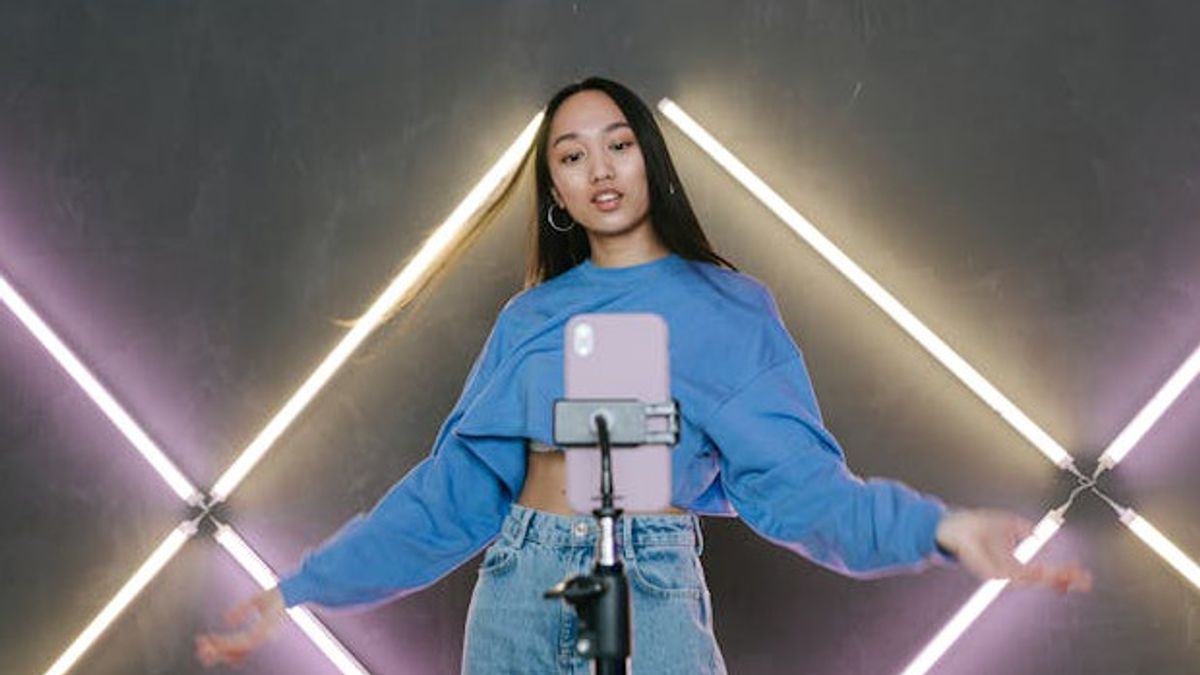


JAKARTA - Australia's new ban on the use of social media for children under 16 has begun to spark serious concerns among content creators. YouTubers, influencers, and digital industry players predict the loss of advertisers and the decline in revenue. Some are even considering moving overseas to keep their business.
Jordan Barclay, an Australian YouTube star who builds a gaming company worth 50 million Australian dollars (IDR 537.8 billion) and has 23 million subscribers on seven of its channels, said he may have to leave his Melbourne studio.
"We will move abroad because that's where the money lies. We can't survive if advertisers leave Australia," Barclay said, quoted by VOI from Reuters.
Australia's social media industry, valued at around $9 billion per year, admits it cannot confirm its overall financial impact. However, nine industry players interviewed by Reuters agreed that the ban could potentially reduce the number of advertisers and spectators.
The new law, which takes effect from December 10, 2025, requires the platform to block accounts of more than one million users below the age limit. Systematic violations could be fined up to USD 49.5 million.
SEE ALSO:
-
 | TEKNOLOGI
Gamer Wajib Tahu! Begini Cara Mudah Membuat File Cadangan di Steam
24 November 2025, 18:34 -
 | TEKNOLOGI
MyRepublic Rilis Layanan MyGamer, Hadirkan Pilihan Kecepatan hingga 1 Gbps
24 November 2025, 18:05

Although teens can still watch YouTube without an account, the algorithm will no longer recommend content, so the number of views is expected to decline sharply. This is estimated to have the most impact on YouTubers who earn 55% of ad revenue or around 18 cents of Australian dollars per 1,000 shows.
"If all the teenage accounts disappear, it will immediately hit the influencer economy," said social media researcher Susan Grantham, from Griffith University.
Barclay-owned company Spawpoint Media, which is working with Lego and Microsoft, is starting to see a decline in sponsorship interest ahead of the ban.
They are worried about what the ban will mean later. If it expands, it makes sense for us to invest abroad," he said.
Several other creators have already left, such as the family of influencer The Empire Family who announced a move to England last October.
According to Crystal Abidin, Director of Influencer Ethnography Research Lab, creators featuring children under 16 such as family vloggers and children influencers are among the most threatened.
"To be able to continue working, many of them see changing countries as an easy decision," he said.
Children's musician Tina and Mark Harris from the Lah-Lah channel who have 1.4 million subscribers say the income impact is one of the concerns, but they are more worried about reputational damage.
"Parents can be afraid and stay away from YouTube. We don't know how big the impact will be," said Mark Harris.
YouTube was initially excluded from the ban, but later entered after Australia's internet regulator showed that 37% of minors reported seeing malicious content on the platform the highest number compared to other platforms.
Shannon Jones, owner of the Bounce Patrol channel with 33 million subscribers, said the ban "harms creators who create quality content for children."
Meanwhile, Byron Bay creator Junpei Zaki with 22 million cross-TikTok and YouTube followers estimates a significant decrease in interactions from Australian users.
"This makes me seem to ignore the Australian audience that has been supporting me," he said.
Zaki estimates it will lose about 100,000 'small-relative followers to a large creator like him' but he warns that small creators with local audiences will be more severely affected.
Dimi Heryxlim, a 15-year-old teenager who owns a House of Lim food stall in Sydney, said she builds a customer base via vlogs on TikTok and Instagram.
"If you lose an account, it's obviously bad," he said. He plans to return to creating content after the age of 16.
"If my account can't come back, I'll make it new and start from scratch," he said.
The English, Chinese, Japanese, Arabic, and French versions are automatically generated by the AI. So there may still be inaccuracies in translating, please always see Indonesian as our main language. (system supported by DigitalSiber.id)


