
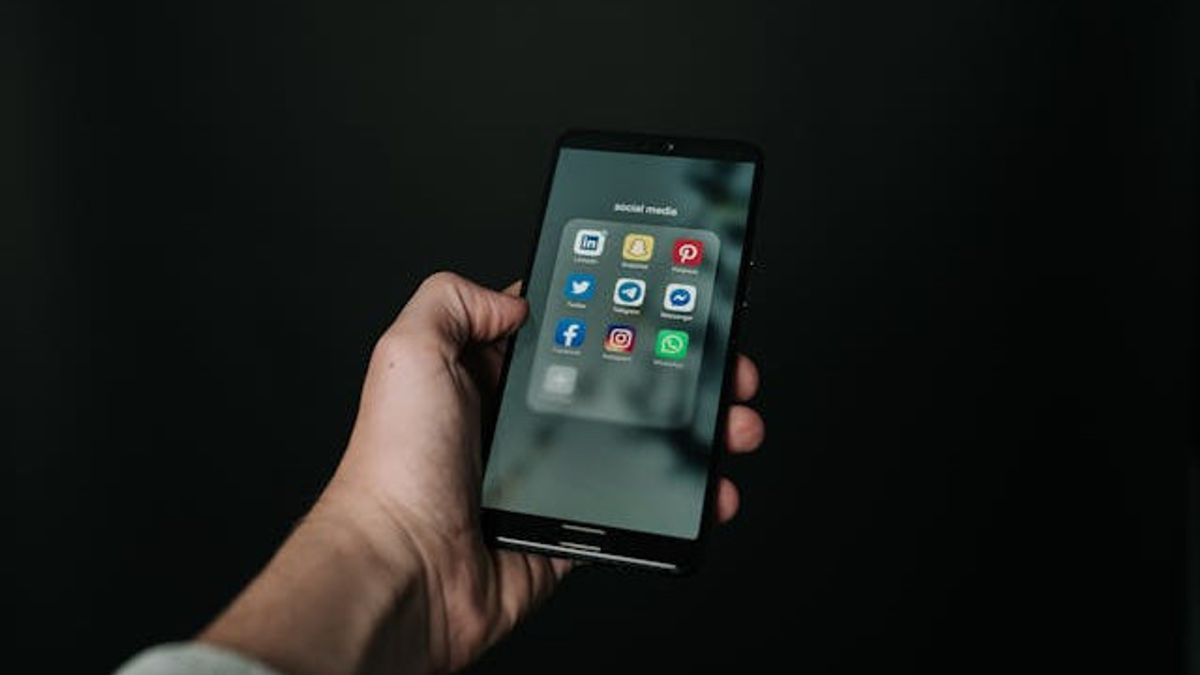


JAKARTA - Social media platforms will soon send notifications to more than a million teenage accounts in Australia in the next few days. These users are given three options: downloading their data, freezing accounts, or losing access entirely when the ban on the use of social media for children under 16 comes into effect on December 10, 2025.
Apps like TikTok, Snapchat, as well as Meta-owned platforms Facebook, Instagram, and Threads are rumored to be disabling registered accounts on behalf of users under the age of 16, according to five sources familiar with the plan.
For about 20 million other social media users in Australia (about 80% of the population), this change will not have a significant impact. Tech companies have promised to comply with the new rules in a way that does not interfere with user comfort.
The move marks a major change in concerns that have surfaced over the past year, as platform operators warn of potential loss of users and the threat of fines of up to USD 49.5 million (approximately IDR 520 billion) if they do not comply with the rules.
SEE ALSO:
-
 | TEKNOLOGI
JBL Rilis Lima Perangkat Open-Ear Terbaru di Indonesia dengan Pengalaman Audio Lebih Baik
12 November 2025, 20:09 -
 | TEKNOLOGI
Siap Rilis Desember, Ini Deretan Fitur yang Akan Hadir di iOS 26.2
12 November 2025, 19:05 -
 | TEKNOLOGI
Apa yang Dimaksud Algoritma? Berikut Pengertian, Fungsi, dan Jenis-Jenisnya
12 November 2025, 18:35 -
 | TEKNOLOGI
MRT Jakarta Gandeng GoPay dan Tahilalats, Hadirkan Tiket Digital allride
12 November 2025, 18:05

In practice, the company will use existing artificial intelligence (AI)-based software to estimate user age for example through interaction patterns such as the number of "likes" and types of content accessed rather than requesting repeated birth date verification.
This software was originally developed for marketing purposes. A third-party age verification application will only be used if the user objected because he felt he was wrongly blocked, the sources said.
However, this system has the potential to experience initial problems. Trials show that age verification applications often misdetect for example refusing a user aged 1617 years or actually allowing users 15 years old. Such errors can expose companies to sanctions.
According to Julie Dawson, Head of Policy at digital verification company Yoti, in collaboration with Facebook, Instagram, and TikTok, disruptions due to this process will be temporary.
"It only takes two to three weeks for people to get used to this new system, then everything will run normally," he said.
The ban is part of the Australian government's efforts to protect children from the negative effects of social media, after Meta's internal documents in 2021 show the company's awareness of the bad effects of its platform on teens.
Political push was also triggered by the best-selling book The Anxious Generation (2024) and a campaign led by the Australian branch of News Corp.
This new rule requires companies to block children's accounts under 16 without requiring parental permission, and must be implemented no later than December 2025.
TikTok, which claims to have 200,000 Australian users aged 1315, told parliament it was setting up an underage user reporting button.
Meanwhile, the only affected local company, live broadcast platform Kick, said it would comply with the rules and set up a series of new measures after coming into the spotlight on the live broadcast case that led to death this year.
The age verification application works by guessing the user's age from a selfie (selfie). If the result is considered wrong, the user can upload an identity document for confirmation.
However, the accuracy of this technology is decreasing for the 16'17 age group, which also rarely has an official identity such as a SIM. The government noted that around 600,000 Australians are in that age range.
Many digital age verification methods will fail in that age range, said Professor Daswin De Silva of La Trobe University. For the wrong ones to be blocked, there may be service disruptions for a few days or weeks until the system is repaired.
If the implementation of this rule goes smoothly, Australia could set an example for global efforts to limit child exposure to online risks, such as bullying and mental health problems.
Britain and France have already required age verification for pornographic sites, while Denmark recently announced plans to ban social media for children under 15 years of age. However, in some countries such as France and Florida, similar policies face challenges because they are considered impractical and violate freedom of expression.
The whole world is now looking at Australia. They see this as a new weapon to deal with the dangers that arise from digital platforms," said Stephen Wilson, founder of credit identity verification consulting firm Lockstep.
The rules require companies to take reasonable measures to block accounts of minors, including detecting the use of the VPN used to hide device locations.
However, according to Hassan Asghar, a senior computer science lecturer at Macquarie University, the company also needs to be aware of the emergence of new platforms that are not covered by regulations.
"It's not impossible that other platforms will emerge that will replace their roles," he said.
The English, Chinese, Japanese, Arabic, and French versions are automatically generated by the AI. So there may still be inaccuracies in translating, please always see Indonesian as our main language. (system supported by DigitalSiber.id)
Most Popular Tags
#Prabowo Subianto #donald trump #Febrie Adriansyah #8791 #giias 2026Popular


