
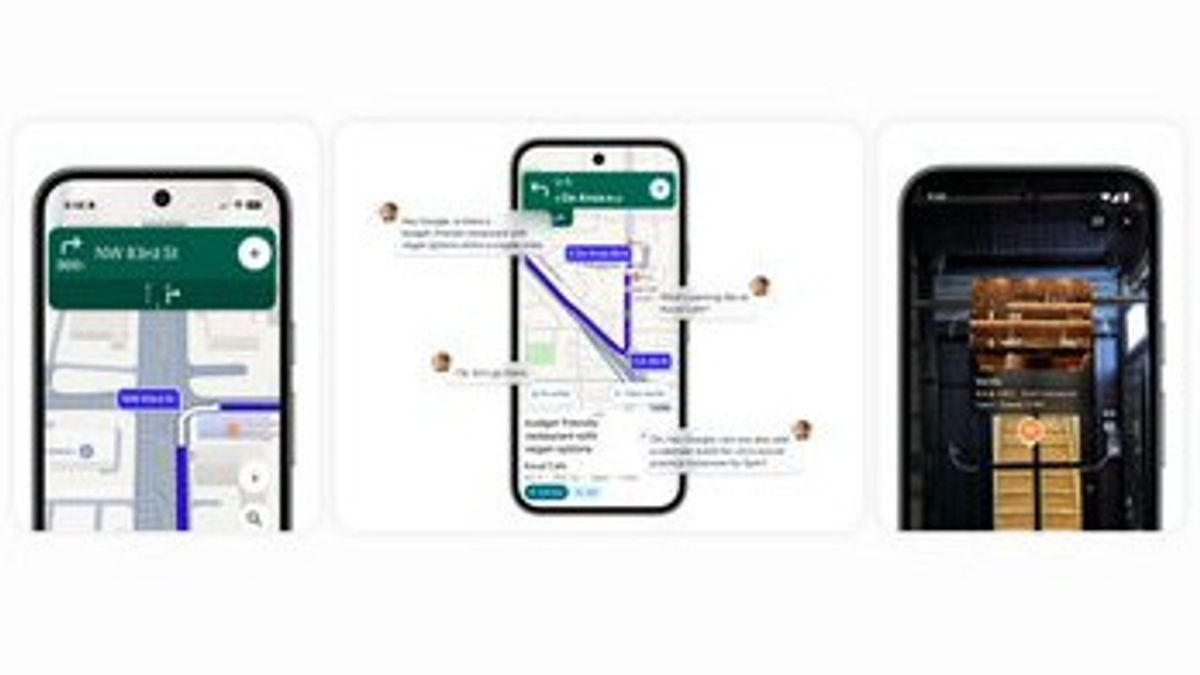


Jakarta Google Maps launched a series of new features based on artificial intelligence (AI) that are getting smarter and feel more humane. Starting November 2025, users in the United States will begin to enjoy landmark-based navigation and improved Lens features now supported by Gemini, Google's newest multimodal AI model.
This landmark-based navigation replaces the directional force of another 500 meters with clues that feel more natural like a right turn after the Thai Siam restaurant. The iconic building, gas station, or a restaurant that is easily recognized is now used as a reference in directional guidelines.
Google explained that this system uses Gemini's computer vision capability to recognize landmarks from Street View and match them with 250 million locations already listed on Maps. Buildings with low visibility will not be used as directional reference.
SEE ALSO:
-
 | TEKNOLOGI
Dokumen Internal Ungkap Meta Raup Miliaran Dolar dari Iklan Penipuan
10 November 2025, 16:35 -
 | TEKNOLOGI
Komdigi: Indonesia Jadi Negara Kedua di Dunia yang Batasi Penggunaan Medsos untuk Anak
10 November 2025, 16:08 -
 | TEKNOLOGI
Blue Origin Tunda Peluncuran Kedua Roket New Glenn Hingga 12 November
10 November 2025, 15:35 -
 | TEKNOLOGI
Infrastruktur, Regulasi, dan Edukasi Jadi Pilar Keberhasilan Rencana Stablecoin Nasional
10 November 2025, 15:05 -
 | TEKNOLOGI
YouTube TV Penuhi Janji, Beri Kredit 20 Dolar Setelah Saluran Disney Ditarik
10 November 2025, 14:35
This feature is designed to make navigation more intuitive, especially for users who are easier to recognize places than distance figures. Landmark is easier to remember, especially in densely populated areas," Google representatives said in their official statement. This feature has started rolling out for Android and iOS users in the US, and has become a new default setting.
Additionally, Google Maps is also adding proactive traffic alignments automatic notifications that will alert users about major bottlenecks, road closures, or delays on frequently traversed routes, even when users are not opening navigation. This feature is currently available for Android in the US.
Another interesting innovation is the increase in Google Lens in Maps. Now users can direct the camera to a location and direct talk' with Maps using Gemini. For example, by asking, What place is this and why is it popular? or Are they taking a walk-in? Gemini will provide answers based on a summary of the information taken from Maps data and user reviews. This feature is scheduled to launch in stages in the US later this month for Android and iOS.
With all these updates, Google Maps seems to want to make the experience of exploring the world feel more contextual and intelligent not just a direction, but a travel assistant who understands the environment around us.
The English, Chinese, Japanese, Arabic, and French versions are automatically generated by the AI. So there may still be inaccuracies in translating, please always see Indonesian as our main language. (system supported by DigitalSiber.id)
Popular


