

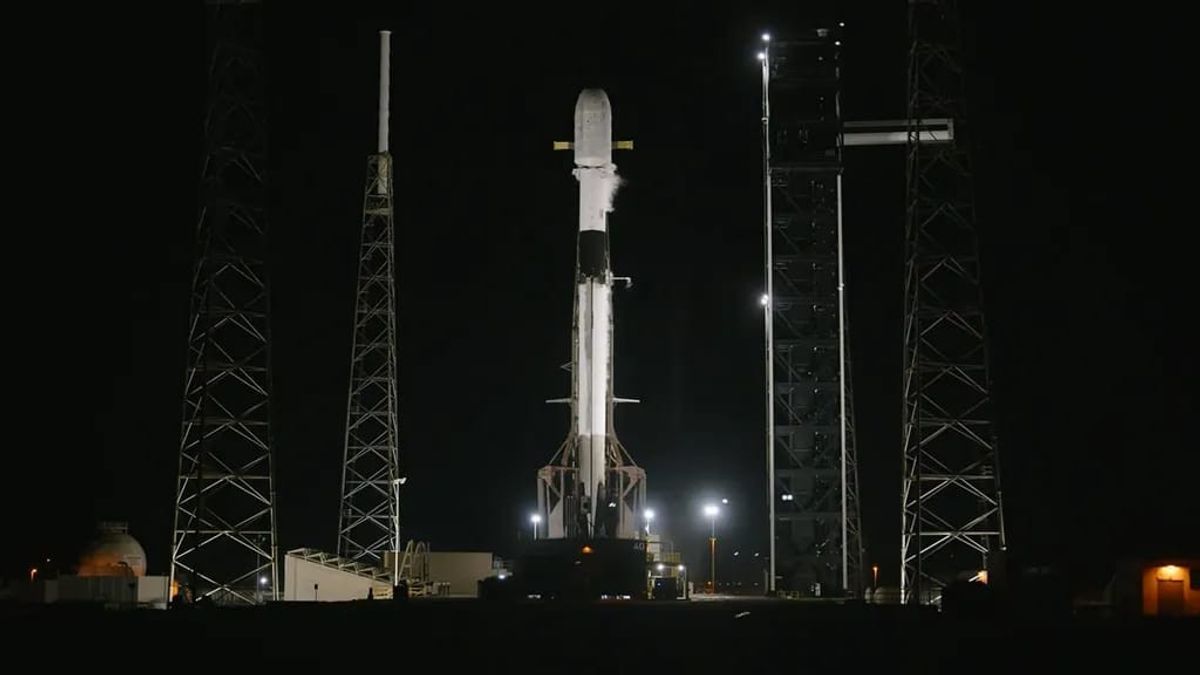


JAKARTA Falcon 9, SpaceX's rocket, took off again on Thursday, October 16 at 16.57 WIB. The rocket was launched from the Cape Canaveral Space Force Station in Florida.
On this flight, Falcon 9 again delivered 28 Starlink satellites into orbit. This launch is also a concern because SpaceX has successfully flown Falcon 9 for the 130th time this year.
As usual, the first stage of the rocket returning to Earth is about 8.5 minutes after takeoff. The driver managed to land in the Atlantic Ocean. The landing was carried out aboard a SpaceX drone ship called Just Read The Instructions.
This booster rocket, which has the name series B1095, has now completed the launch and third landing in its history. The previous two flights of this booster were also Starlink satellite delivery missions.
While the main boosters are back, the upper stage of Falcon 9 continues to carry 28 Starlink satellites towards low Earth orbit (LEO). The satellites are scheduled to be placed into orbit about 64 minutes after takeoff.
SEE ALSO:
-
 | TEKNOLOGI
HONOR Bagikan Bocoran Soal Perangkat Robot Phone Barunya Tahun Depan
16 Oktober 2025, 15:35 -
 | TEKNOLOGI
Implementasi AI dan Keamanan Data, Mana yang Harus Jadi Prioritas?
16 Oktober 2025, 17:05


This launch brings Falcon 9 closer to its one-year record. In the next two flights, SpaceX will break the record they set last year.
More than 70 percent of this year's Falcon 9 flight was carried out to build Starlink megaconstellation. The satellite-based internet network now consists of nearly 8,600 operational satellites in orbit.
In addition to Falcon 9, SpaceX has also launched five other spacecraft this year, namely the Starship megarocket test. Starship is still in the process of developing for future missions that will take humans to the Moon and Mars.
The English, Chinese, Japanese, Arabic, and French versions are automatically generated by the AI. So there may still be inaccuracies in translating, please always see Indonesian as our main language. (system supported by DigitalSiber.id)
Popular


