
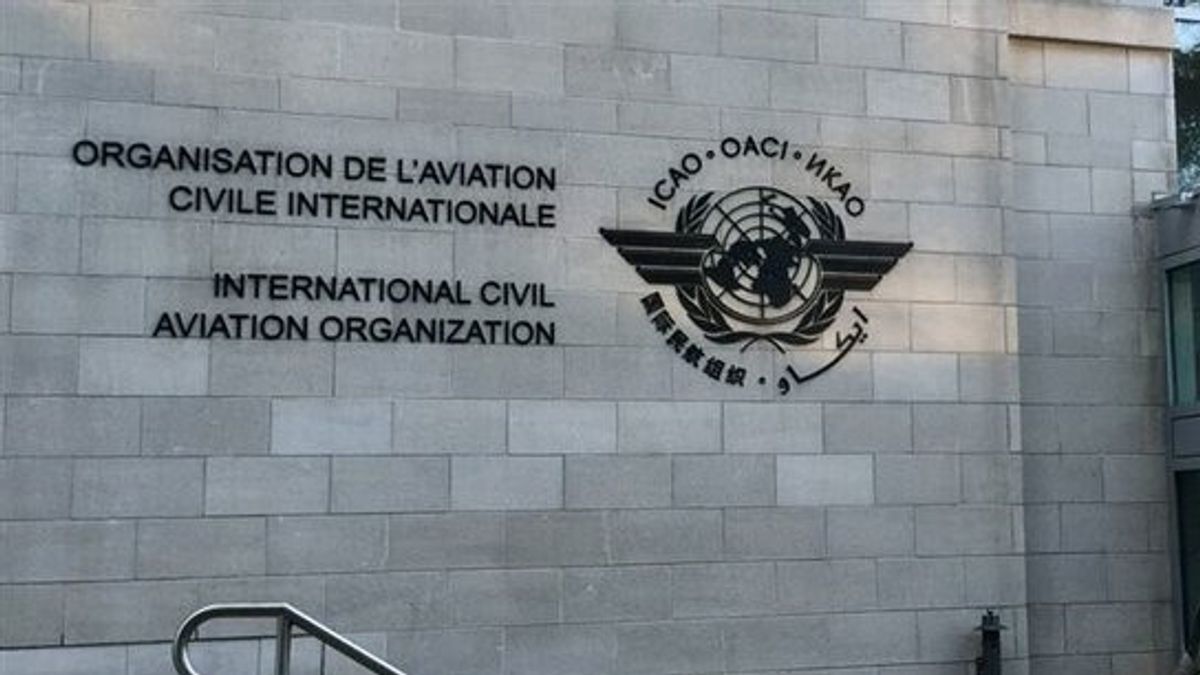


JAKARTA - The three-year public session of the United Nations aviation agency, the International Civil Aviation Organization (ICAO), officially opened Tuesday, September 23 in Montreal. The global meeting which will last until October 3 was held in a challenging atmosphere, ranging from the threat of cyber attacks, environmental issues, to geopolitical tensions.
Technology has indeed made it easier for the aviation sector, but its vulnerability to digital attacks has been proven again. Several major European airports are still experiencing disruptions on Monday after the check-in system was automatically paralyzed due to hacking. This attack caused long queues, delays, and flight cancellations.
Delegations from various countries call for international cooperation to deal with these cyber threats. ICAO, which stands since 1944 with a consensus-based approach, is now facing a major test.
SEE ALSO:
-
 | TEKNOLOGI
Oracle Tunjuk Clay Magouyrk dan Mike Sicilia Jadi Co-CEO Baru Perusahaan
23 September 2025, 18:00 -
 | TEKNOLOGI
Jaguar Land Rover Perpanjang Penghentian Produksi Imbas Serangan Siber
23 September 2025, 17:05



The 36-member council has previously denounced Russia's 2022 invasion of Ukraine as well as North Korea's actions that disrupted the aviation satellite navigation system, which was deemed to have violated international rules.
Even during the Cold War, after the Soviet Union joined ICAO, there was technical cooperation that did not occur in other fields. So I am still optimistic, although the current tension is very high," said Vincent Correia, Director of the Joint Institute of Air and Space Law, University ofturbation, Montreal.
In the work documents submitted, North Korea accused ICAO of being a double standard for not taking action against South Korea regarding alleged military drone infiltration into its airspace. Meanwhile, Russia, which lost its seat on the ICAO board in 2022, is working on re-membership and lobbying for a boycott of flights to its country to be relaxed.
Beyond geopolitical issues, the aviation industry has also been pressured to accelerate pollution reduction measures. Even so, the International Airlines Association (IATA) admits the 5% emission reduction target by 2030 does not appear to be achieved.
"Some airlines are still struggling to finance the transition to net zero. But the commitment to reduce pollution remains," said IATA Director General Willie Walsh.
In addition to environmental problems, labor shortages are also in the spotlight. The spike in post-pandemic travel has made many countries remote. India even proposed a recruitment code of ethics to prevent its pilots from being hijacked by foreign airlines.
ICAO estimates global passenger traffic will reach 7.2 billion people by 2035, up from 4.6 billion by 2024. This means that an additional 670 thousand pilots will be needed in 2043.
Brazil, whose travel sector is predicted to grow 10% per year, is also facing similar problems. Samba Country lacks mechanics and risks experiencing a greater labor crisis.
Separuh populasi Brasil adalah perempuan, tapi hanya 3% dari pilot kami yang perempuan, kata Tiago Faierstein, Presiden baru badan pengulator penerbangan penerbangan sipil Brasil, ANAC, yang menegaskan perlunya menarik lebih banyak perempuan dan kelompok minoritas untuk masuk ke industri ini.
This year's ICAO session is an important stage for member states to find common ground: how to keep the world's skies safe from digital attacks, reduce emissions for a greener future, and overcome labor shortages while facing geopolitical turmoil.
The English, Chinese, Japanese, Arabic, and French versions are automatically generated by the AI. So there may still be inaccuracies in translating, please always see Indonesian as our main language. (system supported by DigitalSiber.id)
Most Popular Tags
#Prabowo Subianto #donald trump #firearm #8791 #giias 2026Popular


