

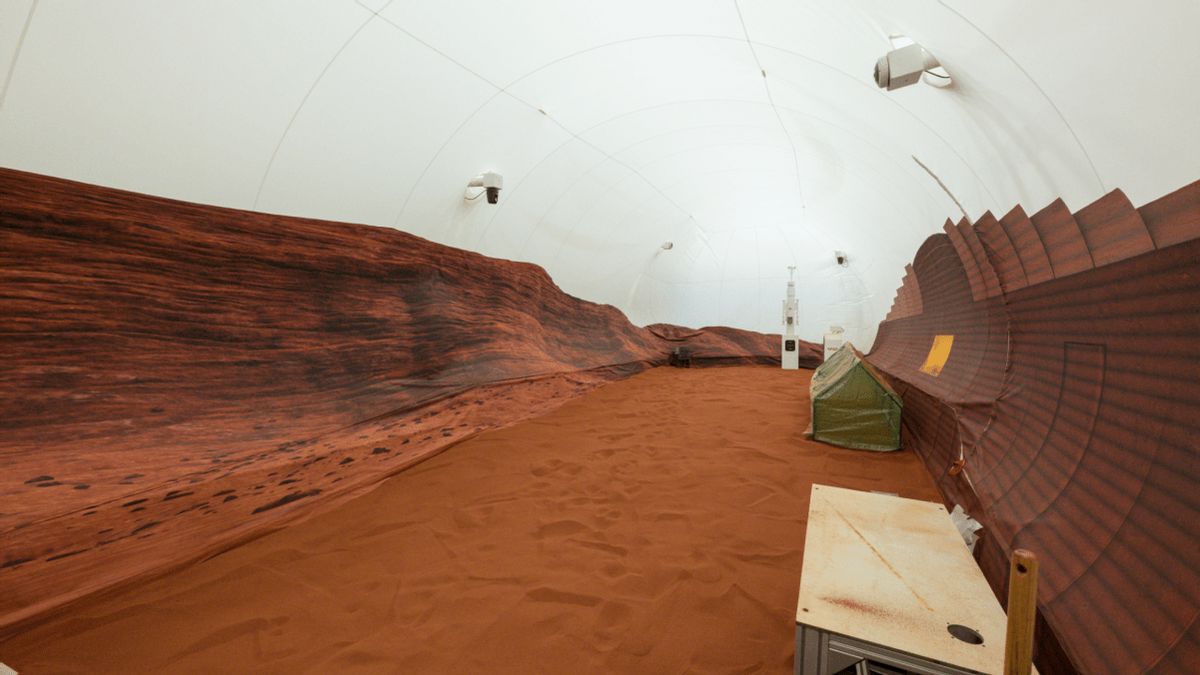


JAKARTA NASA announced four volunteer researchers who will join the Mars simulation mission. The mission is planned to begin on October 19 at a facility in Houston.
The volunteers include Ross Elder, Ellen Ellis, Matthew Montgomery, and James Spicer. The four of them will enter the habitat known as Mars Dune Alpha and stay for a year.
The simulation, which is part of the Analog Exploration Program for Health and Crew Performance (CHAPEA), will end on October 31 next year. As long as this Mars simulation runs, NASA will evaluate the health and performance of the volunteers.
"This simulation will allow us to collect cognitive and physical performance data," said Grace Douglas, CHAPEA lead researcher. "This information will help NASA design and plan a successful human mission to Mars."
The crew will face difficult conditions, such as resource constraints and equipment failures. They will also experience communication and isolation delays. This condition is simulated to measure the resilience of the volunteers.
SEE ALSO:
-
 | TEKNOLOGI
Microsoft Alihkan Trafik Setelah Kabel Laut di Timur Tengah Putus
08 September 2025, 08:34 -
 | TEKNOLOGI
Trump Gelar Jamuan Makan Malam dengan Petinggi Teknologi di Gedung Putih, Elon Musk Absen
08 September 2025, 09:05 -
 | TEKNOLOGI
Rusia Rilis Daftar Aplikasi Lokal yang Tetap Berfungsi Saat Pemadaman Internet
08 September 2025, 09:35
Under these circumstances, the four volunteers will carry out various operational and scientific tasks. They will conduct simulations running on Mars, gardening, and operating robots. New technologies such as water dispensers and diagnostic medical devices will also be tested.
"CHAPEA and other ground analogs help determine which capability could best support future crews," said Sara Whiting, NASA Johnson's Project Scientist. "All that before we sent humans to Mars."
This mission facilitated by NASA's Human Research Program is the second surface simulation of Mars conducted by the US space agency. The first mission was completed on July 6, 2024.
The English, Chinese, Japanese, Arabic, and French versions are automatically generated by the AI. So there may still be inaccuracies in translating, please always see Indonesian as our main language. (system supported by DigitalSiber.id)
Most Popular Tags
#Prabowo Subianto #donald trump #Febrie Adriansyah #8791 #giias 2026Popular


