


JAKARTA - A technology company from Spain, GMV, officially launched an advanced navigation system called LUPIN, specifically designed for the Moon. This project aims to make travel on the Moon's surface as easy as using Google Maps or Waze on Earth, as well as pave the way for more ambitious future explorations, including towards Mars.
LUPIN is part of the European Space Agency (ESA) program that tests new technologies for the position-determining, navigation and timing (PNT) system in space. The presence of this system is in line with the increasing global interest in lunar exploration, both for scientific purposes, mining opportunities, and the potential for space tourism.
"With this software, we are bringing Europe one step closer to building a human presence on the Moon, and potentially a stepping stone to Mars exploration," Steven Kay, project director of LUPIN, told Reuters.
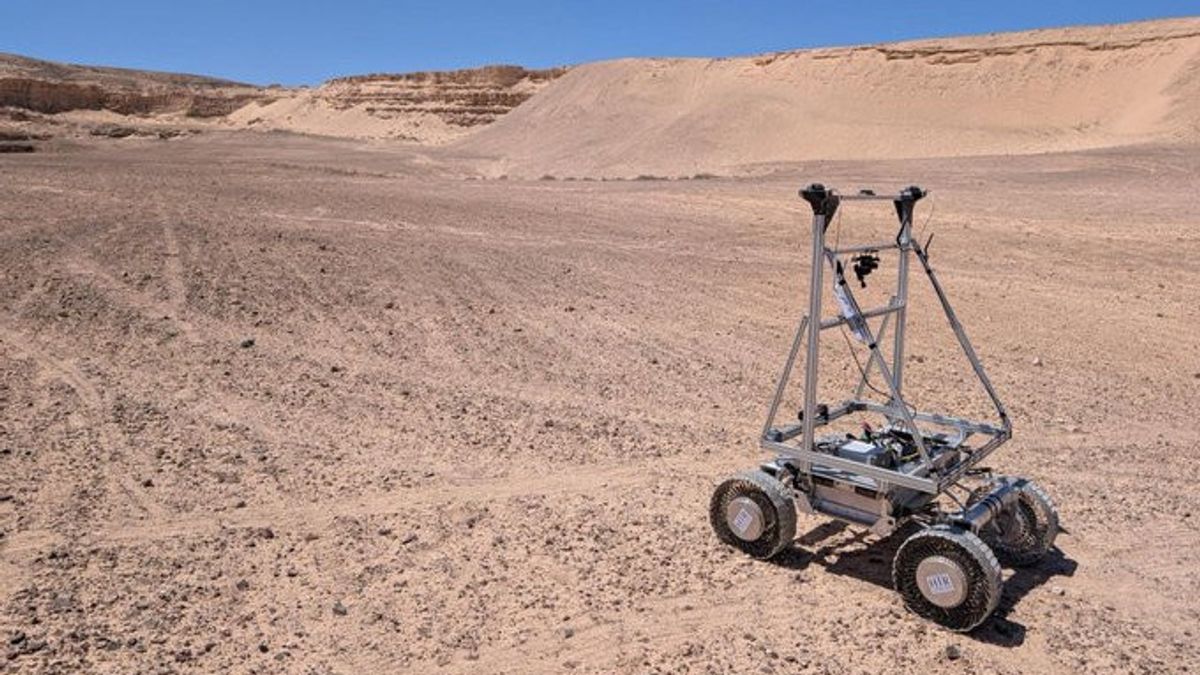
To test the system's capabilities, GMV conducted simulations in the barren landscape of Fuerteventura Island, Canary Islands, which are similar to the Moon's surface. During the test, the LUPIN system utilized signals from satellites orbiting the Moon to determine the position of the rover or astronaut in real-time.
Currently, navigation on the Moon's surface is still very complicated. Space and exploration vehicles rely on complex calculations and data sent from Earth, which are often slow and less accurate. GMV explains that communication to and from the Moon today relies heavily on direct visibility to Earth or connecting satellites, which creates a shadow zone of communication'' and a pause time that slows down decision making.
SEE ALSO:





In addition, the latest changes to the surface of the Moon due to meteorite collisions or movement of lunar dust are often not detected directly, making land travel difficult there.
To overcome these obstacles, GMV combines existing lunar cartography maps with new data from satellites orbiting dark and remote areas, such as the southern pole and the far side of the Moon.
"We want the rover to be able to map the Moon's surface quickly and safely, so astronauts can return in the next few years, work there, and build a permanent base," said GMV Chief of Strategy, Mariella Graziano.
With the launch of LUPIN, GMV hopes to contribute greatly to the new era of more efficient, secure, and independent exploration of the Moon without continuously relying on control from Earth.
The English, Chinese, Japanese, Arabic, and French versions are automatically generated by the AI. So there may still be inaccuracies in translating, please always see Indonesian as our main language. (system supported by DigitalSiber.id)
Most Popular Tags
#Prabowo Subianto #donald trump #2026 World Cup #Febrie Adriansyah #8791Popular


