

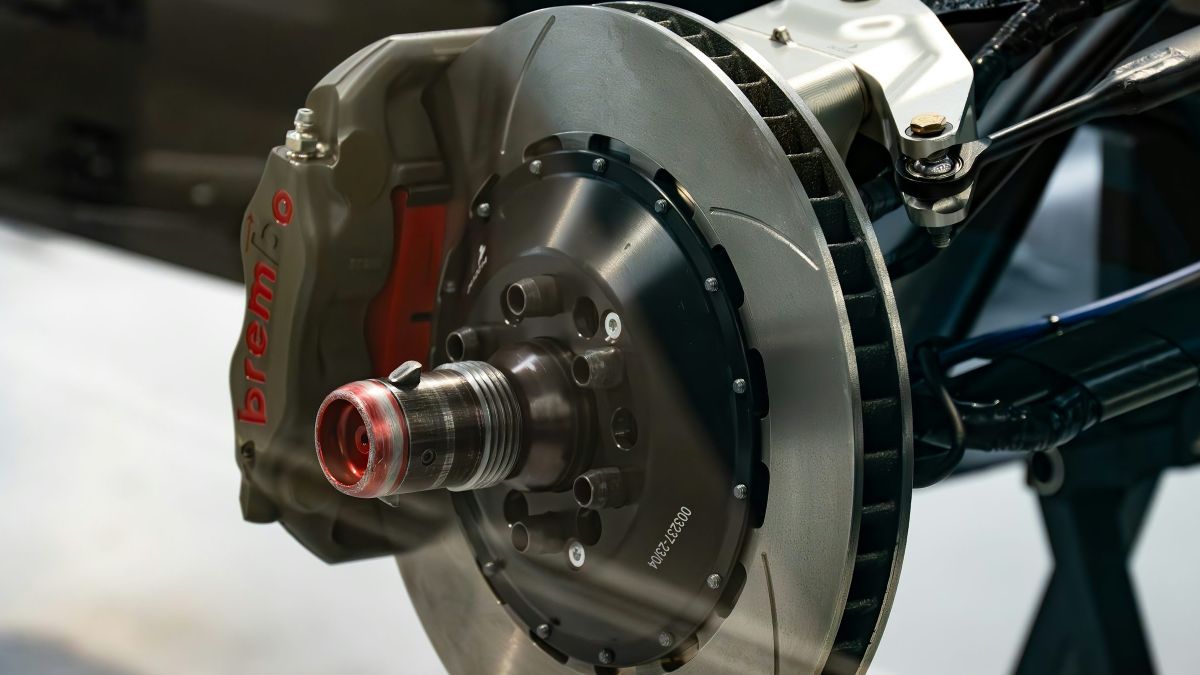


YOGYAKARTA Although both are used to withstand vehicle speeds, the disk brake components on motorcycles and cars are very different. Knowing the disc brakes on the vehicle helps the owner identify the damage quickly.
Please note, the disc brake is one of the braking systems that works by clamping the disk plate attached to the wheel. When the disk is gripped, the speed of the wheels will slow and even stop completely.
The motor disc brake system consists of various components of the compiler. The brake component is as follows.
This component is a round disk made of iron and sticks to the wheels. This plate has several holes to help lower the temperature.
The brake camp is a disc clamp component. When the brakes are pulled, the axle will narrow and drive the disk until the wheels slow down.
This component serves to charge hydrolylic pressure from a piston to energy movement in the form of pressure.
This component is a small pipe that functions to distribute brake oil. The oil will put pressure on the Kaliper.
This component serves to encourage the brake camp to take clamps.
Brake oil will be accommodated on the tank. If the tank is empty, it means that the brake oil is leaking or experiencing other problems.
This section serves to remove the air from the brake system so that the brakes can work optimally.
This component serves to hold down the Kaliper so that it is not easy to move or waver when carrying out its functions.
Car disc brakes have more complicated components than in the motorcycle braking system. This type of car brake has several main components, namely as follows.
The part that rotates with the wheel of the car. Cakram will be flanked by a brake camp when the pedal is pressed, creating friction to slow down the speed of the vehicle.
Located in the Kaliper, the brake camp clamps the disk when the brake pedal is pressed. This brake impact needs to be replaced periodically because it will be eroded due to friction.
The function of the Kaliper is to press the brake camp to the disk. The Kaliper can be a floating caliper that moves to follow the fixed caliper that does not move.
This component distributes hydraulic pressure from the brake pedal to the Kaliper. This pressure drives the Kaliper to clamp the axles on the disk.
This post distributes the brake liquid from the cylindrical master to the Kaliper. This post must be checked to ensure there is no leakage.
SEE ALSO:
-
 | EKONOMI
Syailendra Capital dan Bank Victoria Hadikan Empat Jenis Reksa Dana
19 Januari 2025, 00:43


This liquid flows in a hydraulic system to forward pressure from the brake pedal to the Kaliper.
That's the disc brake component. Visit VOI.id to get more interesting information.
The English, Chinese, Japanese, Arabic, and French versions are automatically generated by the AI. So there may still be inaccuracies in translating, please always see Indonesian as our main language. (system supported by DigitalSiber.id)
Most Popular Tags
#Prabowo Subianto #donald trump #firearm #8791 #giias 2026Popular


