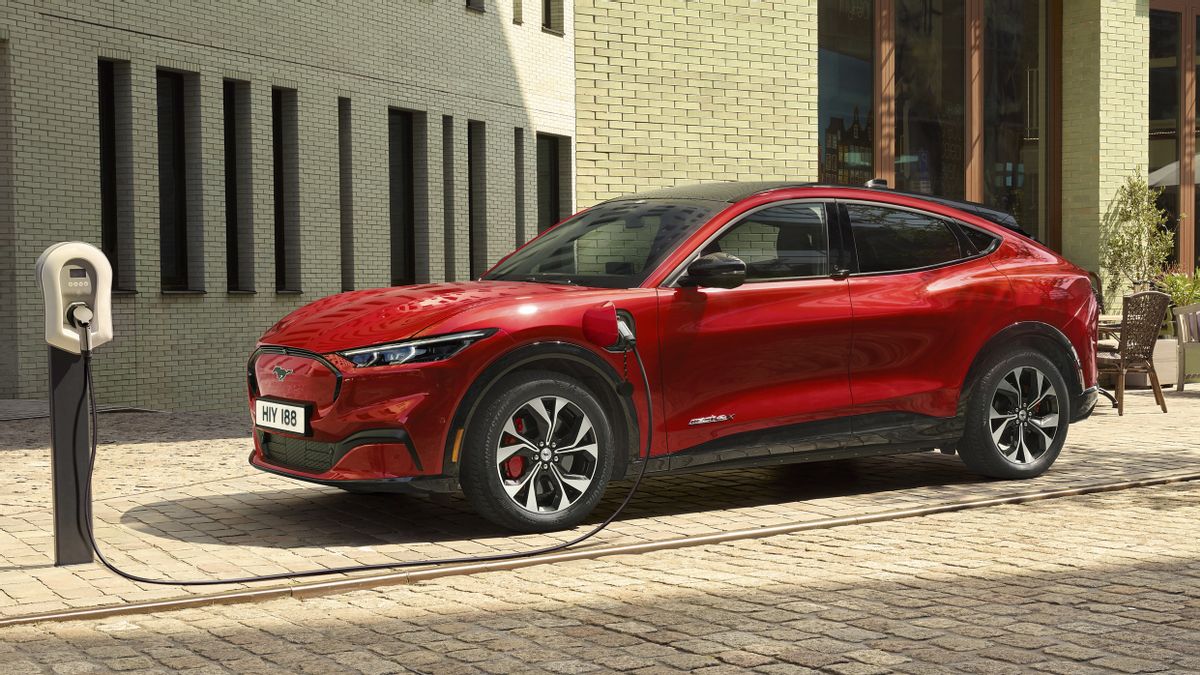


JAKARTA - Ford Motor announced a dramatic decision on Monday, December 15, after recording a huge loss of 19.5 billion US dollars (equivalent to Rp324 trillion) and canceling several flagship electric vehicle (EV) models that had been planned.
The retreat is the clearest indication yet that the auto industry is pulling back on massive investments in battery-powered cars, driven by weakening market demand and a shift in U.S. government policy that reduces federal support for EVs. Ford is quickly shifting its focus back to gasoline and hybrid engines.
As a direct impact, Ford will replace the F-150 Lightning full electric pickup truck with an extended-range (EREV) model that uses a gasoline engine to recharge the battery. In addition, they canceled the development of the next generation electric truck, T3, as well as the already scheduled electric commercial van.
Quoted from Reuters, Tuesday, December 16, Ford CEO Jim Farley said that the sharp change in the EV market over the past few months was the main trigger for this decision, with about US$8.5 billion (Rp133 trillion) of the total losses directly related to the cancellation of the EV models.
Ford's strategic shift is driven by significant changes in the regulatory landscape in the US, where the Trump administration's policies removed consumer incentives of up to $7,500 and loosened tailpipe emission rules. This policy effectively cut federal support for EVs, which directly impacted sales; US EV sales fell by about 40 percent in November after the end of the tax credit. The F-150 Lightning truck, which was once greeted with enthusiasm, is now facing a sales decline of 10 percent year-on-year.
Ford has effectively scrapped its entire second-generation EV line-up, including plans to build a new electric truck at its Tennessee plant. Instead, it will switch to producing gasoline-powered trucks at the plant from 2029. Andrew Frick, Ford's head of gas and EV operations, stressed that funds previously allocated to large EVs that are now unprofitable will be moved to areas with higher potential returns.
For the future, Ford is shifting its EV focus to a much more affordable model, developed by a dedicated team in California. The first mid-sized EV model from this team is planned to be sold for around 30,000 US dollars and will be marketed from 2027.
The English, Chinese, Japanese, Arabic, and French versions are automatically generated by the AI. So there may still be inaccuracies in translating, please always see Indonesian as our main language. (system supported by DigitalSiber.id)
Most Popular Tags
#Prabowo Subianto #donald trump #firearm #8791 #giias 2026Popular