



Mercedes-Benz is reviewing how to assemble cars in order to make the production process more environmentally friendly. Instead of relying on new technology, the German manufacturer is considering a simple solution, namely replacing glue with screws.
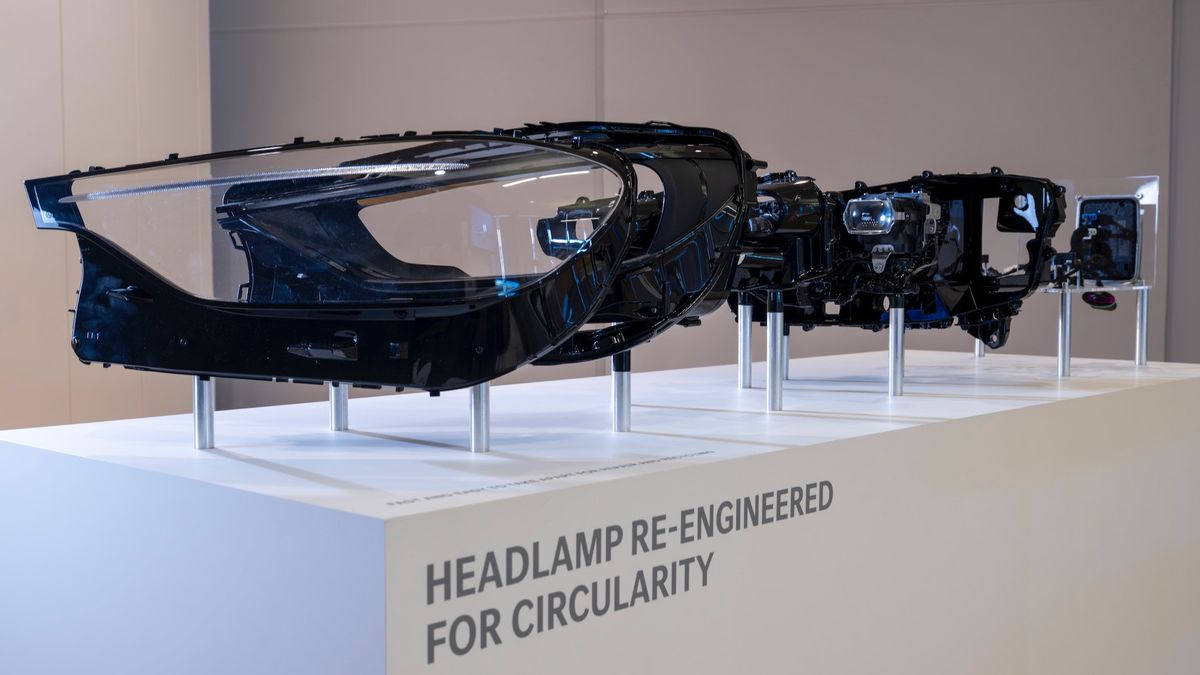
Through the sustainability initiative Tomorrow XX, Mercedes-Benz plans to use screws in the assembly of the headlights. This way, each headlight part can be removed and replaced separately if it is damaged, without having to throw away the entire unit.
The lens of the headlights that are often damaged by pebbles is one example. If the lens can be replaced by itself, the life of the headlights can be longer.
In addition to facilitating repairs, this step is also considered to be able to reduce carbon emissions because the need for new headlight production is reduced. As reported by The Drive, Monday, December 15.
English:
English:
Mercedes-Benz also wants to make each headlight component from one type of material so that it is easier to recycle. The recycled material can then be reused to produce new headlights, so that the use of recycled materials increases and carbon emissions can be suppressed.
Similar efforts are also applied to other parts, such as interior door panels. Mercedes-Benz plans to replace the welding method with a more easily removable fastening system, so that components can be disassembled and recycled when the vehicle is no longer in use.
As a first step, the latest CLA-Class has used a glass cleaning liquid tank made from 100 percent recycled plastic, as well as a bumper with recycled material content. In the future, Mercedes-Benz is also testing the use of old tires and airbags for various vehicle components.
These steps are part of efforts to build a circular economy, where new cars are made from materials from the recycling of old cars. Although not a pioneer of this concept, Mercedes-Benz considers this approach to be increasingly relevant, because the environmental impact of vehicles does not only come from exhaust emissions, but also from the production process and extraction of raw materials.
The English, Chinese, Japanese, Arabic, and French versions are automatically generated by the AI. So there may still be inaccuracies in translating, please always see Indonesian as our main language. (system supported by DigitalSiber.id)
Most Popular Tags
#Prabowo Subianto #donald trump #Febrie Adriansyah #8791 #giias 2026Popular


