

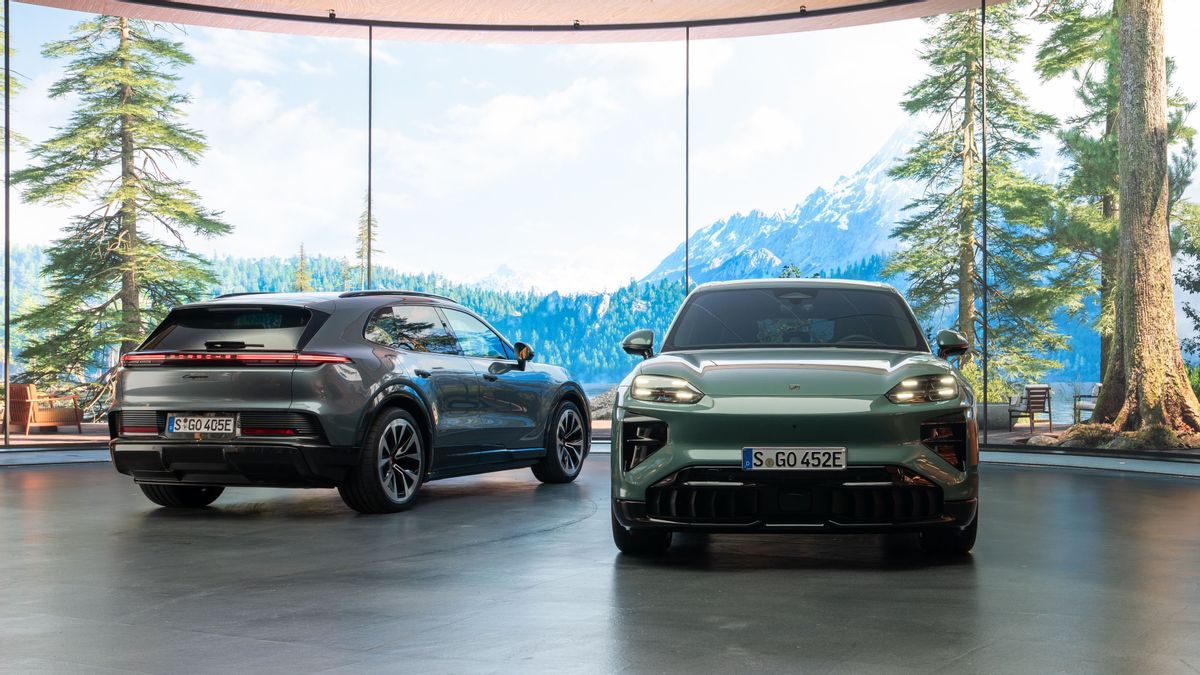


JAKARTA Porsche is facing heavy pressure on the Chinese market, sales of the German brand fell 28 percent to 56,887 units by 2024. They also admit that cars from China are indeed serious threats.
Porsche's negative trend until September 2025 continued with shipments falling again by 26 percent. In response to this condition, Porsche prepared a new strategy titled "Restoring China", although the company acknowledged that achieving back in sales volume was not a realistic target.
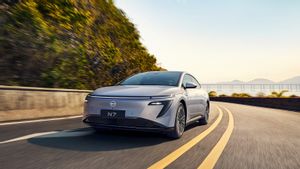
In an interview with Automobilwoche, Chinese Porsche CEO Alexander Pollich, said that competition in China's automotive industry is now very tight. He remembers Taycan's success at launch, but then the flood of electric sedans in the price segment was completely different.
"The innovation rate in China is astonishing, as well as the various products offered, and price and marketing strategies appear to change every day," said Alexander Pollich, quoted from Motor1, Friday, December 12.
"Suddenly, you are faced with a lot of market players. And these cars are attractive to customer tastes, to be honest. But we are ready to face these challenges," he added.
Porsche's decline in sales was not only influenced by increased competition from local electric vehicle (EV) manufacturers, which was of aggressive value. But also by new policies related to luxury tax.
The tax threshold, which since 2016 has been at 1.3 million yuan, has been lowered to 900 thousand yuan starting July 20, 2025. This policy makes a number of Porsche models fall into a higher price category and is increasingly difficult for consumers to reach.
SEE ALSO:
-
 | OTOINFO
Rivian Unjuk Gigi Chip Mobil Otonom Buatan Sendiri yang Lebih Unggul dari Tesla
12 Desember 2025, 13:20
Currently, Porsche's average selling price in China is slightly below 1 million yuan. The challenging market conditions make Porsche reduce the number of dealers from 150 outlets by 2024 to 120, and the number is expected to fall again to only 80 outlets by the end of 2026.
The remaining Dealers are now waiting for the newly announced internal combustion engine SUV. Porsche confirmed that the first-generation Tigers will be replaced by a new gasoline-fueled model, while the three-line SUV originally designed as EVs will actually be introduced to gasoline engines.
Even so, electric vehicles remain an important part of Porsche's strategy in China. Cayenne Electric will be produced locally, while 718 EVs will also come with characters that are claimed to be unique in China in terms of sportsmanship. Pollich did not provide further explanation, but Boxster and the next generation of Cayman will still offer gasoline-engined variants for the highest type.
Pollich stated that 2026 will be a challenging period, especially as Porsche's latest gasoline SUV will not launch before the end of the decade. He also confirmed that Porsche had no plans to launch a second brand in China, and rejected local assembly options through the SKD or CKD systems due to cost factors.
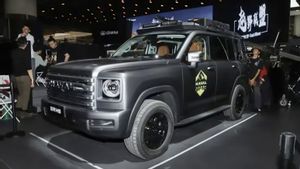
Porsche is not the only one under pressure. The BMW Group (including MINI) recorded a 13 percent drop, Mercedes down 7 percent, and Audi contracted 10.9 percent. The competition is now triggered by the strong local Chinese manufacturer, which offers more competitive prices, particularly in the electric vehicle segment.
The English, Chinese, Japanese, Arabic, and French versions are automatically generated by the AI. So there may still be inaccuracies in translating, please always see Indonesian as our main language. (system supported by DigitalSiber.id)
Popular


