


JAKARTA - The European Union (EU) is rumored to be announcing a major decision that has the potential to change the global automotive electrification roadmap. According to a report by The Sunday Times, reported by the Auto Express, Monday, December 8, citing senior industry leaders, the EU will announce a postponement of the ban on the sale of gasoline and diesel cars from the start of 2035 to 2040. Automakers have reportedly received preliminary information about this delay personally.
If this delay does occur, significant pressure will most likely increase on the UK Government to delay their similar ban. Britain currently has a more aggressive target of banning the sale of new gasoline and diesel cars from 2030, which is an acceleration of the previous 2035 target set by the previous government.
However, despite the similarities in issues, there are substantial differences in the details of the ban. The UK ban in 2030 is said to still allow the sale of several hybrid cars until 2035, as long as the car can cover a distance "meaning" using electric power (although its definition has not yet been established). On the other hand, the EU deadline in 2040 is believed to only allow pure electric cars (pure-electric) to remain for sale.
The EU has indeed faced pressure to reconsider its 2035 ban schedule. This pressure comes not only from the German government, the center of European automotive power but also from Italy, Portugal, Slovakia, and Bulgaria. These countries last summer proposed alternative plans to support neutral-technology targets. The plan mandates a 90 percent reduction in car CO2 emissions by 2035 and 100 percent by 2040, providing flexibility to automakers on how to achieve the target.
The EU announcement will also come amid changing global dynamics, following US President Donald Trump's move to cancel several policies designed to encourage American consumers to switch to electric cars.
SEE ALSO:
-
 | OTOINFO
Lagi, Tumpahan Air di Mobil Listrik Bikin Rugi hingga Rp200 Jutaan
08 Desember 2025, 09:42
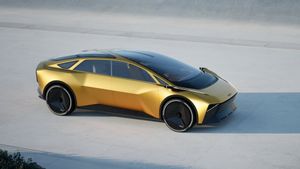
Although German automakers are vocal in their rejection of the 2035 ban, several other manufacturers who are progressive in electrification have urged the EU to stick to its stance.
Volvo CEO Hakan Samuelsson recently stated, "I don't see any logic to slow down."
This situation adds to the complexity in major markets like the UK. Although electric car sales in the UK grew strongly by 26 percent throughout 2025 to date, its growth rate has slowed in recent months, with November sales only rising 3.6 percent compared to 2024. Many manufacturers are also struggling to meet ZEV Mandate (Zero-Emission Vehicle) targets which require 28 percent of their sales to be zero-emission vehicles by 2025, and 33 percent by 2026.
Messages received by consumers in the UK also appear mixed. The electricity car grant (Electric Car Grant) announced in August was followed by a pay-per-mile eVED tax plan for electric cars that will take effect in 2028, causing confusion for consumers considering switching to EVs.
The English, Chinese, Japanese, Arabic, and French versions are automatically generated by the AI. So there may still be inaccuracies in translating, please always see Indonesian as our main language. (system supported by DigitalSiber.id)


