
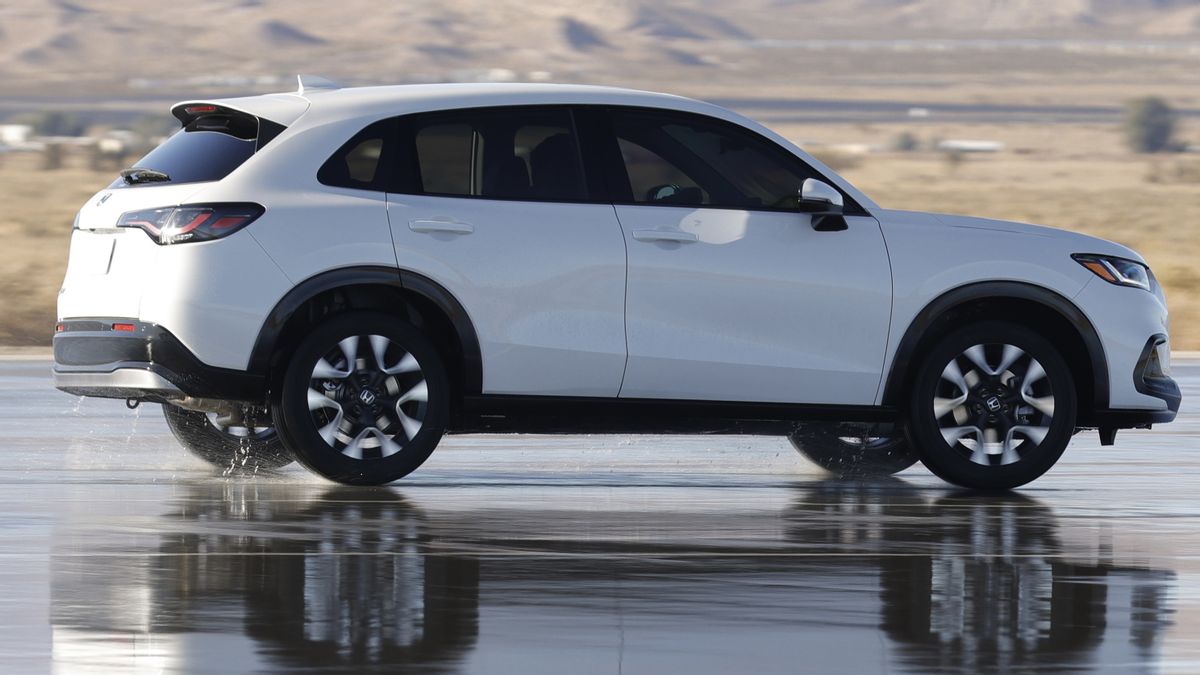


JAKARTA - Japan's auto giant Honda recently made a surprising move by cutting their annual operating profit projection by up to a fifth.
Honda acknowledged the short-term pressure comes from the impact of the United States tariffs and a global shortage of chip supplies, but an in-depth analysis was cited from a Reuters report on Tuesday, November 11, showing that a more significant long-term challenge and threatening lies in the fierce competition of China's electric vehicle (EV) manufacturers, which are now increasingly aggressive in the Southeast Asian market.
Earlier, late last week, Honda announced a full-year profit outlook cuts, citing one-off EV costs and component shortages using the Nexperia chip (a company under Chinese control).
In addition, the company estimates a loss of 385 billion yen (approximately IDR 41.6 trillion) due to US rates, although this figure is slightly lower than the initial estimate.
Atas pengumuman ini, dunia pasar merespons negatif yang membuat saham Honda penjlok sebesar 4,7 persen pada hari Senin, 10 November.
The main concern for Honda and indirectly, for other Japanese automakers is the erosion of a stable market share in Southeast Asia, the region they have historically dominated for a long time without significant challenges.
"In markets like Thailand, the competitive landscape is quite intense and overall we have lost a competitive advantage in terms of pricing," said Honda Executive Vice President Noriya Kaihara.
SEE ALSO:
-
 | OTOINFO
Honda dan Hayomoto Rayakan Kreativitas Komunitas Lewat Lensa Fotografi
10 November 2025, 21:43 -
 | OTOINFO
Pemenang Utama Ajang IAPVC 2025 Boyong New Air ev Lite ke Garasi Rumah
10 November 2025, 21:23 -
 | OTOINFO
Jaecoo Mulai Kirim J5 EV ke Konsumen Serentak Melalui 17 Jaringan Dealer
10 November 2025, 20:42
The Onslaught Of The Chinese Rival
Competition from Chinese EV manufacturers, especially BYD, is becoming increasingly difficult for Japan across Southeast Asia, including Thailand and Indonesia.
China's EV growth in Thailand over the past two years has been described as "extraordinary", as they expand aggressively abroad amid a brutal price war on China's domestic market.
Honda retail sales data showed a significant impact in key areas, from a decline of nearly 30 percent in Indonesia, 18 percent in Malaysia, and 12 percent in Thailand.
While previously reported by VOI, based on the latest data from Gaikindo, the total sales of wholesale cars in January 'October 2025 reached 635,844 units. This figure is down 10.6 percent compared to the same period last year which broke 711,064 units. Toyota again leads the market with an achievement of 202,376 units or controls 31.8 percent of the market share. Meanwhile, the electric car manufacturer from China, BYD, increasingly stole attention after making 30,670 units and entered the sixth rank of the best-selling brand.
Honda also now expects to sell 75,000 fewer cars in Asia outside China than last year, a sharp decline from their previous targets.
With the increasing challenges and the significant absence of new models planned for the Southeast Asia region, Honda is starting to shift strategies. The Japanese automaker has begun to appoint India, a nearly closed market for Chinese EV makers, as an important manufacturing hub and export base. Honda announced it would make India a production base for one of their electric car plans, signaling the country's growing importance in the company's future global strategy.
The English, Chinese, Japanese, Arabic, and French versions are automatically generated by the AI. So there may still be inaccuracies in translating, please always see Indonesian as our main language. (system supported by DigitalSiber.id)
Most Popular Tags
#Prabowo Subianto #donald trump #Febrie Adriansyah #8791 #giias 2026Popular


