


JAKARTA In recent years, car manufacturers from China, especially those focused on electric vehicles, have shown extraordinary success. Their various achievements have even managed to compete, and in some cases surpassed major automotive manufacturers who have long dominated the global market.
But now the government itself has sent a clear signal that they are ready to end a massive subsidy for the electric vehicle industry (EV). This comes after years of government support sparked an explosion that now leaves a massive oversupply, forcing Chinese manufacturers to expand into the global market.
Reuters reported, quoted Thursday, October 30, that major policymakers in China have now removed electric vehicles from the list of strategic industries in their latest five-year 2026-2030 development plan, a first exclusion in more than a decade for the industry.
Analysts interpret this move as evidence that Beijing considers the EV industry to be mature and no longer need the same level of financial support, leaving its development on the market mechanism.
"This is an official acknowledgment that electric vehicles no longer need priority policies. Electric vehicle subsidies will fade," said Dan Wang, director of consulting firm Eurasia Group.
Although the EV industry was once a "golden boy" criticized by President Xi Jinping for over-competition, the removal from this strategic list does not mean the industry is no longer liked. On the other hand, this reflects a strategic decision to allocate resources to other technologies where China seeks to improve its capabilities, especially amid global trade and security tensions.
另请阅读:
-
 | MOTOR
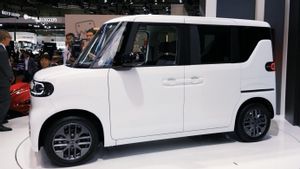
Honda Genio Terbaru Hadir dengan Desain Retro dan Penuh Warna, Harganya Jadi Segini
29 Oktober 2025, 17:22
Capacity Boosts More Changes
New energy vehicles (NEVs) that include EVs, plug-in hybrids, and fuel cell vehicles were previously included as strategic industries in the previous three five years' plans. This support helps China control the supply chain and make it the world's largest NEV market.
In July 2024, NEV accounted for more than 50 percent of total car sales in China, far exceeding the early targets of policymakers.
However, this rapid growth and support also caused domestic producers to produce cars to exceed market absorption. According to research firm Jato Dynamics, 93 of the 169 car manufacturers operating in China have a market share of less than 0.1 percent.
"From a state point of view, there is no need to pay too much attention (NEV), or it can lead to greater overcapacity," explained Tu Xinquan, Dean and Professor of China Institute for WTO Studies.
The English, Chinese, Japanese, Arabic, and French versions are automatically generated by the AI. So there may still be inaccuracies in translating, please always see Indonesian as our main language. (system supported by DigitalSiber.id)
Most Popular Tags
#Prabowo Subianto #donald trump #Febrie Adriansyah #8791 #giias 2026Popular


