
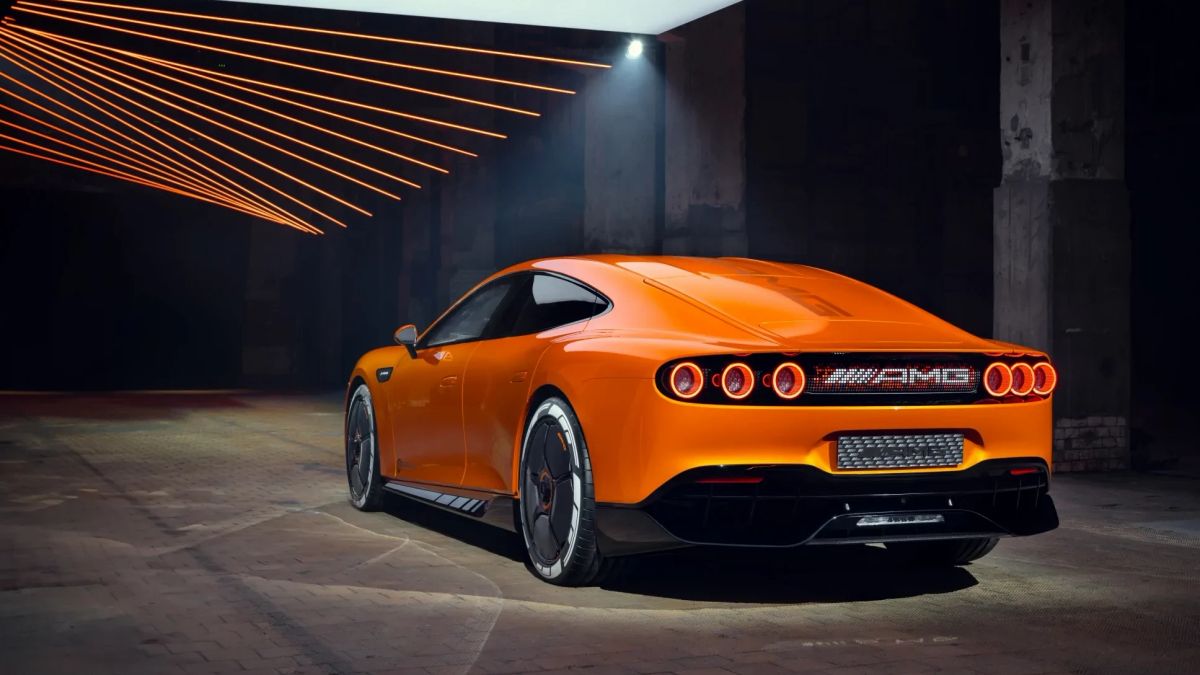


JAKARTA YASA, the global leader in the design and production of axial flux motors, has again shocked the automotive industry. The company recently announced its success in breaking an unofficial world record for the power density of ultra-performance electric motors, with an extraordinary achievement of 59 kW/kg.
The axial flux motor YASA is known to have the highest density of power and torque in its class for very small sizes and weights, making it a high-performance game-changer in the electric and hybrid vehicle sector.
So far, YASA has partnered with the world's most innovative car manufacturers to design and develop fully integrated electric motors into driving systems.
For example, Lamborghini Temerario, which is equipped with a hybrid powertrain V8 twin-turbo with three axial YASA electric motors. The V8 twin-turbo engine was fully developed from scratch and became the only mass production super sportscar engine capable of reaching 10,000 rpm.
There is also a Ferrari 296 GTB, which was launched in 2021 as the second Ferrari using a YASA motorbike. This car is powered by a twin-turbo 2,992 cc (3,0L) twin-turbo 120°V6 engine, combined with an YASA electric motor with a power of 123 kW (165 hp; 167 PS), producing a total system of 819 cellphones.
YASA itself is a subsidiary wholly owned by the Mercedes-Benz Group since 2021, with the mandate of producing electric motors and high-performance electronics for the premium automotive industry.
SEE ALSO:
-
 | OTOINFO
Jaecoo Bakal Hadirkan Sesuatu yang Spesial di GJAW, Peluncuran Produk Baru?
24 Oktober 2025, 17:28
Loss Of Main Weakness Of Electric Cars: Heavy Weight
High-performance electric cars have often had a large weight due to the size of electric motors and significant battery weight. This condition often has a negative impact on the dynamics of driving, handling, and fun-to-drive which is a characteristic character of a true luxury car.
YASA's latest record with a power density of 59 kW/kg is a very important technological achievement. The impact on the luxury automotive world, especially in the high performance and supercar segments, is estimated to be very significant in the next few years.
This extraordinary achievement was obtained through testing the latest version of the prototype motor of the JASA axial flux. With a weight of only 12.7 kg, the motor is capable of producing a short-term peak power of up to 750 kW, or the equivalent of more than 1,000 horsepower, in the latest test using a high-capacity dynamometer.
The figure of 59 kW/kg reflects a significant increase of about 40 percent compared to the previous YASA unofficial record of 42 kW/kg, which was achieved at the beginning of last summer. At that time, the version of the motorcycle weighing 13.1 kg was able to generate 550 kW (738 bhp) power.
Not only focusing on peak power, YASA also highlighted the practical usefulness of this motorbike. The company estimates that the sustainable power of the new motor is in the range of 350 kW to 400 kW (469536 bhp).
As a result, because these electric motors are small enough, light, and have high torques so they can be used as hubs (direct on wheels). This allows the removal of many complex and heavy components, such as reductive/transmission, differential, driving axis (driveshafts), and as wheels (cv axles). Vehicles as a whole become simpler and much lighter.
The Woolmer Team, Founder and CTO YASA, expressed its pride for the result and emphasized that this motorbike is not just a digital concept.
"Achieving a short-term rating of 750 kW and a density of 59 kW/kg is the main validation of next-generation axial flux technology," Woolmer said, quoted from the manufacturer's official website, Saturday, October 25.
This is proof of what focused engineering innovation can achieve. We have built electric motors with a much larger power density than anything before using materials and measurable processes. This bike will bring game change technology to the high-performance automotive sector," he added.
This prototype motorcycle was designed and developed at the Oxford Innovation Center YASA, with the support of the Advanced Propulsion Center, UK. The motorbike is claimed to be compact, scalable, and does not use exotic materials, but is able to achieve extraordinary performance thanks to advanced precision engineering and thermal management.
YASA CEO Joerg Miska added that their current technology has a performance density of up to three times compared to the leading radial flux motors currently available.
"YASA continues to redefine possible limits in the design of electric motors turning pure innovation into real engineering advances," he concluded.
The English, Chinese, Japanese, Arabic, and French versions are automatically generated by the AI. So there may still be inaccuracies in translating, please always see Indonesian as our main language. (system supported by DigitalSiber.id)
Most Popular Tags
#Prabowo Subianto #donald trump #2026 World Cup #venezuela #Bhayangkara hut #konflik timur tengahPopular


