

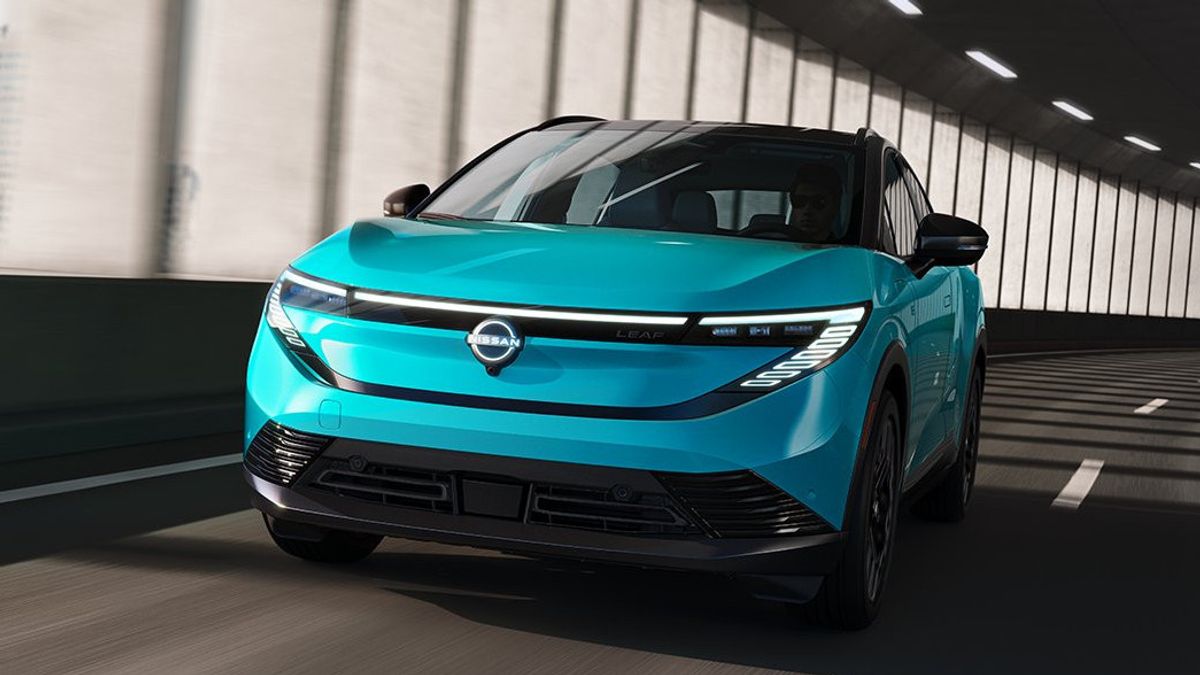


JAKARTA Nissan is again facing serious problems related to the safety of its electric vehicle, the Leaf. The Japanese producer made a recall of about 43,000 Leaf units in the United States after a potential fire was found in the battery while carrying out fast charging.
According to documents from the National Highway Traffic Safety Administration (NHTSA), high voltage batteries in several Leaf units are suspected of producing excessive lithium deposits in battery cells. These conditions increase internal electrical barriers that can cause excessive heat, and in extreme cases, risk triggering a fire.
This latest recall includes 19,077 Leaf units produced between June 15, 2021, to May 23, 2023. This number adds to the previous withdrawals to 23,887 model units in 2019 and 2020. Thus, the total affected vehicles reached nearly 43,000 units, including batteries with a capacity of 40 kWh and 62 kWh produced at the Nissan plant in Smyrna, Tennessee.
SEE ALSO:
-
 | OTOINFO
Mazda Siap Operasikan Pabrik Baru di Jawa Barat pada 2026, Investasi Capai Rp400 Miliar
07 Oktober 2025, 09:48 -
 | OTOINFO
Sebulan Terhenti Akibat Serangan Siber, JLR Bakal Lanjutkan Produksi
07 Oktober 2025, 09:35 -
 | OTOINFO
AWD vs 4WD: Memahami Perbedaan Sistem Penggerak dan Kelebihannya di Kondisi Ekstrem
07 Oktober 2025, 08:18
Nissan initially scheduled fixes via software updates in November 2024. However, the schedule was delayed until spring 2025 and is now expected to be only ready in the third quarter of 2025.
During this process, vehicle owners are asked not to use fast charging and switch to Level 1 or Level 2 charging to avoid risks. Nissan spokesperson Jannelle Grigsby said the company was preparing a long-term solution.
"A software solution will be available so that affected customers can return to using Level 3 fast charging, and final preparations for its implementation are in process," Jannelle Grigsby said, quoted from Insideevs, Tuesday, October 7.
"A repair invitation letter will be sent to customers when the software is ready for use," he continued.
This case again highlighted the importance of monitoring battery management systems on electric vehicles, especially when charging quickly. Nissan promised to provide free software updates through the official dealers after repairs were declared safe, fortunately there have been no official reports of similar incidents outside the United States.
The English, Chinese, Japanese, Arabic, and French versions are automatically generated by the AI. So there may still be inaccuracies in translating, please always see Indonesian as our main language. (system supported by DigitalSiber.id)
Most Popular Tags
#Prabowo Subianto #donald trump #2026 World Cup #Febrie Adriansyah #8791Popular


