
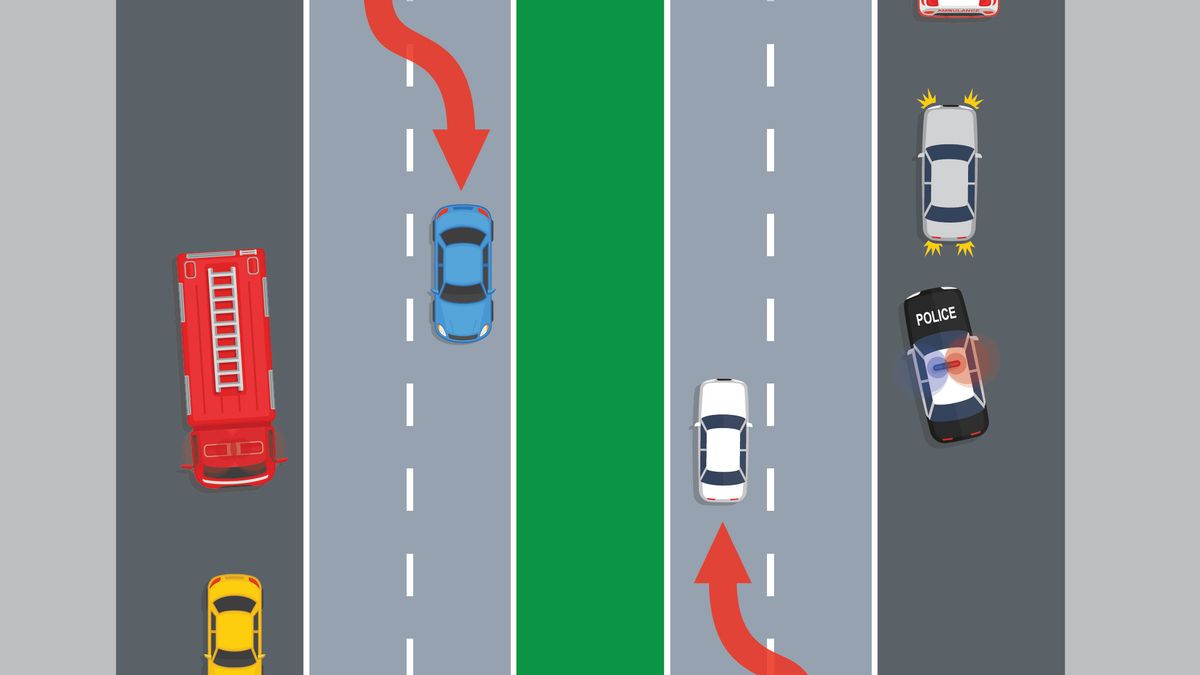


JAKARTA The United States National Highway Traffic Safety Administration (NHTSA) has reportedly postponed the implementation of stricter standards for a five-star safety rating on vehicles. The rules, which originally would apply to the 2026 model, have now been pushed back to the 2027 model after automakers stated that they needed more time to adapt.
The five-star safety rating, although voluntary and separate from mandatory federal safety standards, is a marketing tool that is very important for automakers and a benchmark for consumers.
This delay, according to a report from Reuters, was quoted from Autoblogging, Wednesday, September 24, focusing on the New Car Assessment Program (NCAP) which is the main guide for consumers when buying a new car. The new rules require certain driver assistance features to become standard to get the highest ranking, namely five stars.
SEE ALSO:
-
 | MOBIL
Volvo EX90 Model 2026 Kini Gunakan Arsitektur 800-Volt, Isi Baterai 10 Menit Tembus 250 Km
24 September 2025, 11:17

Tighter Standards For Safety
Please note, under updated rules, a vehicle must be equipped with safety features such as a blind spot monitoring and intervention system (blind-spot), lane-to-see assist assistance, and an automatic emergency braking system (AEB) capable of detecting pedestrians, in order to gain a five-star rating. This standard is a response from NHTSA to an increase in pedestrian mortality rates in recent years.
This delay came after the Automotive Innovation Alliance, a trading group representing most of the major automakers, expressed their objections. The group argued that the NHTSA had not yet issued a new pedestrian hit-and-run test procedure for the 2026 model launch. According to them, this would lead to very few eligible vehicles to rank five stars in the initial schedule.
The English, Chinese, Japanese, Arabic, and French versions are automatically generated by the AI. So there may still be inaccuracies in translating, please always see Indonesian as our main language. (system supported by DigitalSiber.id)
Most Popular Tags
#Prabowo Subianto #donald trump #2026 World Cup #venezuela #konflik timur tengahPopular


