
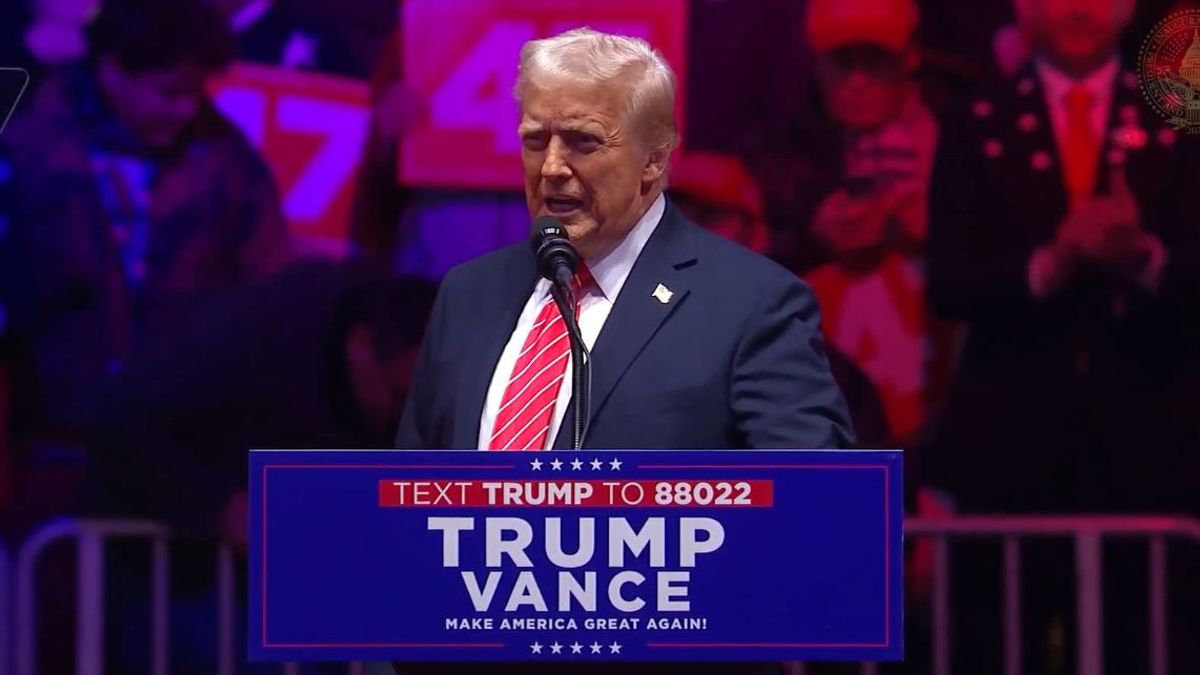


JAKARTA US President Donald Trump in his inaugural speech as the 47th president of the United States (US) announced a massive plan to encourage domestic oil and gas production through a national energy emergency declaration. In a controversial move, he also stated that he would stop various previous government initiatives that support the development of electric and renewable energy vehicles.
Trump, reported by Reuters on Tuesday, January 21, in a speech stated that America will again become a powerful manufacturing country by utilizing the world's largest oil and gas reserves. He also signed an executive order that withdrew the US from the 2015 Paris Agreement, which was previously a milestone in global cooperation in tackling climate change.
"We will lower energy prices, fill strategic reserves to full, and export American energy around the world," Trump said confidently.
Blow For The Future Of Electric Vehicles
One of Trump's most controversial policies is the plan to cancel incentives for electric vehicles (EVs) imposed by the Biden administration. Previously, Biden encouraged the adoption of electric vehicles through consumer subsidies and strict emission standards for automotive manufacturers. Trump assessed that the move was not in line with his vision to increase domestic fossil energy consumption.
There will be no more electric vehicle policies that force manufacturers and consumers. We will return to real energy, oil and gas," Trump said in one statement.
SEE ALSO:
-
 | MOBIL
Jaecoo J7 SHS, Mobil Irit yang Sanggup Tempuh Jakarta-Bali 1.327 Km Sekali Jalan
21 Januari 2025, 09:52 -
 | OTOINFO
VinFast Masuk Pasar India dengan Peluncuran VF 6 dan VF 7, Bakal Dirakit Lokal
20 Januari 2025, 21:42

This step is expected to have a major impact on the global automotive industry, especially the European Union, even including Indonesia, which has recently been actively encouraging the electric vehicle ecosystem.
This decision has the potential to change the competition map in the automotive world. With the decline in support for electric vehicles in the US, the focus of global producers is likely to shift to other markets such as Europe and Asia, which are still actively providing subsidies and incentives for EVs, but this focus could shift in the future.
Meanwhile, environmentalists have criticized this policy, calling it a step back that endangers the planet's future. Environmental activist groups have stated that they will bring Trump's policy to court.
Indonesia itself, through various policies such as electric vehicle tax incentives and the development of the battery industry, is currently strengthening its position as one of the main players in the energy transition. However, with US policies again prioritizing fossil energy, there is a possibility that the global supply chain for electric vehicles will experience disruption.
Whether Trump's move will strengthen America's fossil energy sector or actually slow global innovation towards clean energy, remains to be seen. However, what is clear, the global auto industry is now facing new challenges in determining the direction of its future development.
The English, Chinese, Japanese, Arabic, and French versions are automatically generated by the AI. So there may still be inaccuracies in translating, please always see Indonesian as our main language. (system supported by DigitalSiber.id)


