

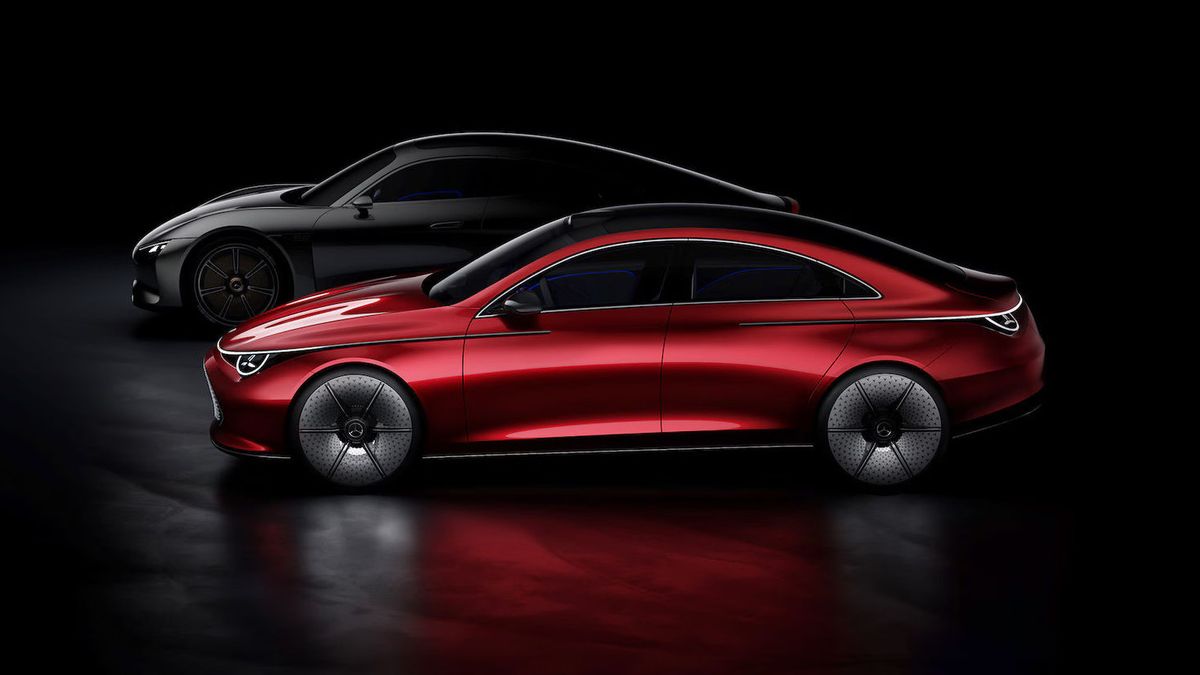


JAKARTA - Sales of electric cars in Europe fell 6 percent last year compared to the previous year's score.
In the midst of uncertain EV market conditions, car manufacturers in Europe must pay fines if the average carbon dioxide emissions across their ranks exceed the limits set starting this year. This is the first step of several steps known as the European Green Deal.
The policy is implemented to reduce greenhouse gas emissions by at least 55 percent by 2030 which is expected to eliminate 100 percent of air pollution by 2050.
This is the same regulation that effectively prohibits the sale of the latest gasoline-powered cars starting in 2035 in order to pave the way for future EVs. However, this policy has caused controversy among automotive players such as Mercedes-Benz.
CEO of Mercedes-Benz, Ola Kallenius has sent an open letter to European Commission and the European Parliament to voice the discontinuation of future fines.
"The automotive industry in particular needs to know how to mitigate the risk of significant non-compliance," said Kllenius as quoted by InsideEVs, Monday, January 20.
The man, who also serves as President of the European Automobile Manufacturers Association (ACEA), added the fine would cost the industry and the money could be used for research and development needs for the latest more affordable EVs.
"Difficult punishment for non-compliance with CO2 can be transferred to the necessary funds for research and development and other investment needs," Kallenius added.
Kallenius argues that the European Green Deal policy should be reviewed and adjustable so that the regulations set are not too rigid and more flexible.
"This agreement must be reviewed and re-arranged so as not to be too rigid and more flexible, so that it can turn automotive industry decarbonization into a more environmentally friendly and profitable business model," explained Kllenius.
SEE ALSO:
-
 | OTOINFO
NHTSA Buka Penyelidikan Lebih dari 870.000 Unit Mobil GM, Ini Masalahnya
20 Januari 2025, 13:23 -
 | OTOINFO
BYD Dominan dan Kuasai Pasar China di 2024, Tesla Unggul di Segmen SUV
20 Januari 2025, 12:18
The Swedish-blooded man said the presence of more incentives could be a solution to increase EV sales in Europe as well as cooperation with energy companies, telecommunications operators, and other parties.
Nevertheless, Kallenius argues that manufacturers in Europe still agree with the decarbonization plan by 2050 as well as the shift to zero-emissions transportation and mobility.
The EU's automotive industry remains committed to climate neutrality goals by 2050 as well as a transition to zero-emissions transportation and mobility. However, the decarbonization strategy in the automotive sector must create economic growth and competitiveness, not curb it," explained Kllenius.
Starting this year, the average emission rate in all vehicles with passengers must be lower than 95 g/km or down from 116 g/km. Meanwhile, light commercial vehicles must be below 147 g/km.
However, these restrictions can vary depending on the average weight of cars sold in 2025, as well as additional ones obtained from sales of vehicles without or with low emissions.
The English, Chinese, Japanese, Arabic, and French versions are automatically generated by the AI. So there may still be inaccuracies in translating, please always see Indonesian as our main language. (system supported by DigitalSiber.id)


