
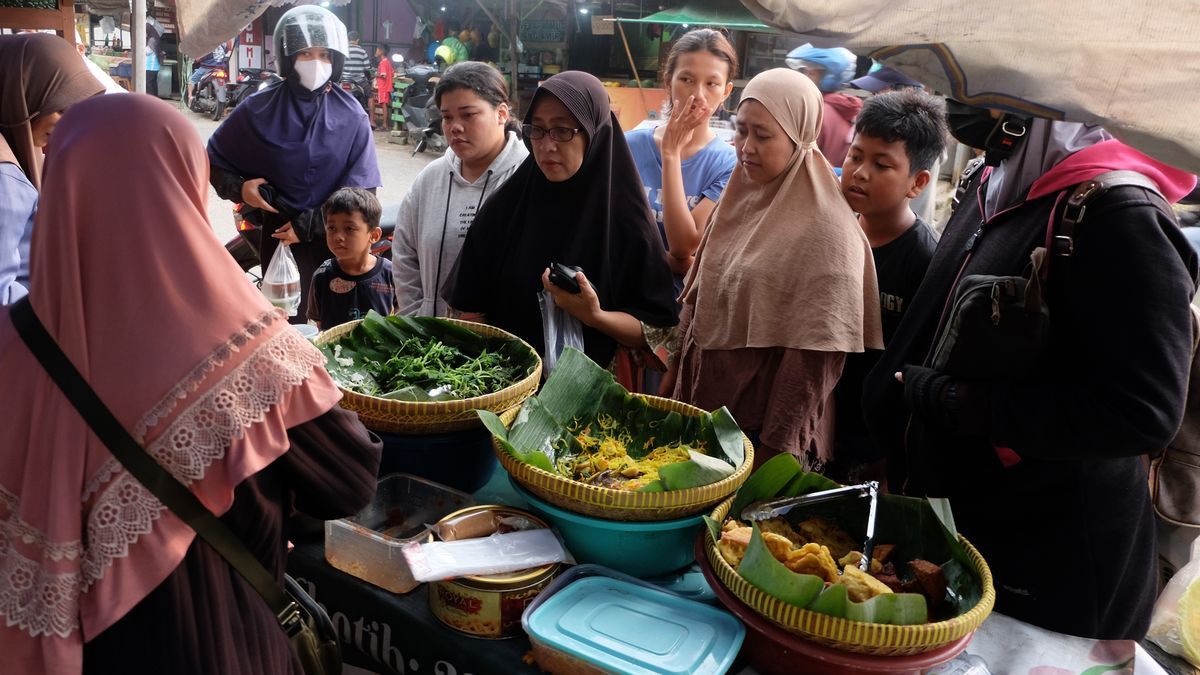


Minister of Culture Fadli Zon threw an interesting idea. The tradition of Indonesian iftar is encouraged to be included in UNESCO. He called Ramadan a "cultural event". It makes sense. Because what we call iftar is not just breaking the fast. It is also a way for Indonesians to meet, share, and take care of their village, from dusk to dawn. And at the end of the dusk, takjil moves. MSMEs come to life.
BRIN provides an insight that makes the idea feel grounded. Quoted from the BRIN website, the Head of the Archaeological, Language, and Literature Research Organization of BRIN, Herry Yogaswara, said that the fasting tradition in Indonesia was born from the meeting of global, national, and local values, which resulted in religious practices with distinctive characteristics in each region. Meanwhile, Researcher at the Center for Research on Religious Heritage and Civilization of BRIN, Zusneli Zubir, said, in Minangkabau, for example, there is Balimau, which is bathing the day before Ramadan with water mixed with lemon and natural herbs, as a marker of purification. Or as another BRIN researcher, Dede Burhanudin, said, in Sunda there is a tradition of "ngabuburit" to call the time of waiting for Maghrib. In the Minang realm, there is a similar term, namely malengah puaso - filling the afternoon while waiting for Iftar.
Diversity, in the end, meets at one point in time. Dusk before Maghrib. It is at this hour that Indonesia moves in the most tangible way. The tradition of meeting changes into a flow of people. The flow of people changes into a transaction. And it is this transaction that makes Ramadan, secretly, a season of life for many small traders.
If the recognition of UNESCO comes, it is agreed. It can become a umbrella for more neat data collection, protection, and promotion. The tradition that lives in many regions does have a strong reason to be recorded as a heritage. But the important thing is, don't stop at the label. Don't let iftar turn into a ceremonial package, while the social roots are left fragile. Or worse, the small residents only get banners, not protection.
This year's Indonesian Ramadan also feels different, but not in the sense of being noisy. The rhythm is not uniform. Muhammadiyah started fasting on Wednesday, February 18, 2026. The government set Thursday, February 19, 2026 through the Kemenag isbat session. A day apart. And that's not a problem. The community is used to it. Family groups can be crowded, the invitation is not adjusted, but at the lapak takjil people still meet in the same way, namely relaxed, understanding each other, moving on.
Here is the main point. The meaning of fasting is also economic. Fasting holds the day, but brings life to the afternoon. Towards Maghrib, cities, especially densely populated office and residential areas, have a new pulse. Takjil markets grow in many corners. Home-made kolak sellers reap the harvest. Fried food sells. Ice cream moves quickly. The atmosphere is exciting. And small economies live without the need for a big stage.
Data speaks. Bank Indonesia has prepared Rp185.6 trillion worth of cash to distribute for Ramadan and Idulfitri 2026 needs. That is a strong signal that retail transactions and cash withdrawals usually increase during this period. This means that there is real money turnover at the citizen level.
And it happened when the world was in a fuss about tariffs. President Prabowo even just completed reciprocal tariff negotiations with President Donald Trump. Indonesia locked in certain tariffs and some commodities obtained exemptions. At the same time, the US Supreme Court overturned Trump's previous global tariff scheme, forcing Washington to seek other ways to raise tariffs. The turmoil above could change in a matter of days. However, the pulse of the economy before Maghrib under the command is actually repeated, almost without command.
BPS also reminded of the recurring pattern. At the beginning of Ramadan, the food, beverage, and tobacco groups are often the main factor for price pressure. This is not just an inflation figure. This is a map of soaring demand. Then, support for the iftar tradition should touch the practical, namely, safe supply, smooth distribution, and orderly selling space, without turning off small traders.
Here, the local government is often tested. The order should not turn into subtle eviction. The arrangement should not end in unclear levies. If the lapak takjil is considered to be disturbing, provide human-like selling bags. If cleanliness is an excuse, help the facilities. Provide garbage cans, clean water, and waste management. If food security is a concern, conduct reasonable training, not raids that make traders return empty-handed.
So, please encourage UNESCO. Okay-okay. But don't forget, the most real "heritage" of iftar is on the streets before Maghrib. In the hands of small traders (SMEs) who survive. In buyers who still share. In the people's economy that moves slowly, but is real. If that is taken care of, the world's recognition is only a bonus. The main thing remains one, namely Ramadan gives life, not just a name.
The English, Chinese, Japanese, Arabic, and French versions are automatically generated by the AI. So there may still be inaccuracies in translating, please always see Indonesian as our main language. (system supported by DigitalSiber.id)
Most Popular Tags
#Prabowo Subianto #donald trump #firearm #8791 #giias 2026Popular


