
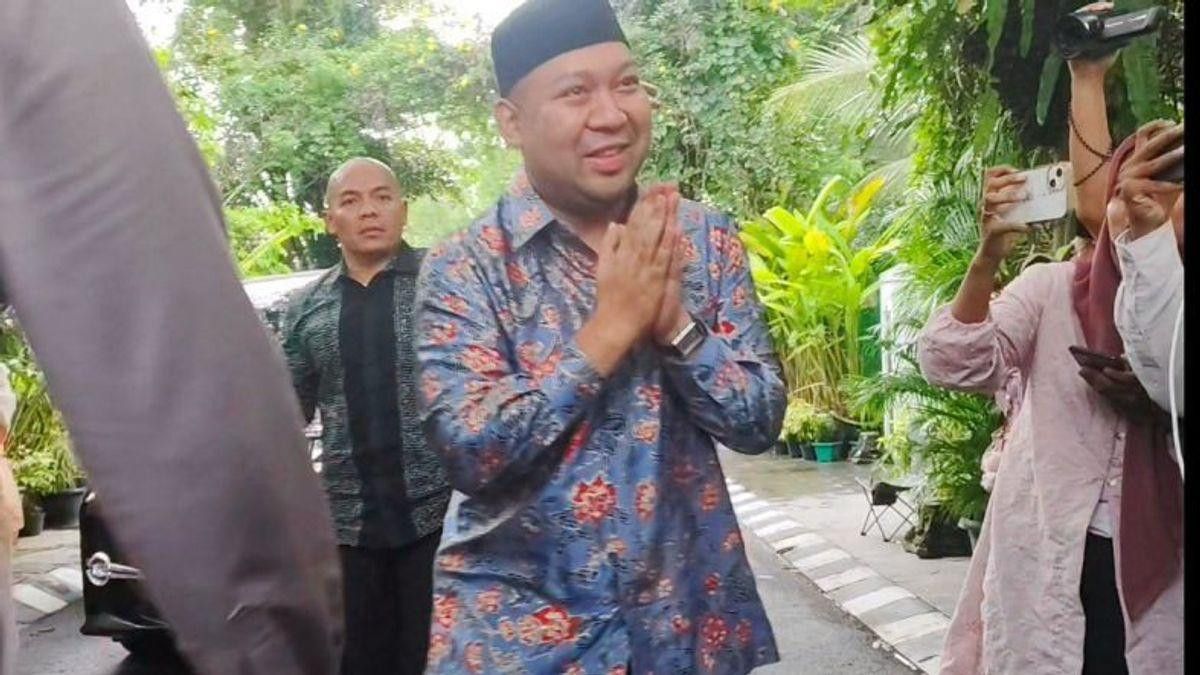


Ragowo Hediprasetyo Djojohadikusumo, also known as Didit Hediprasetyo, is not a politician. But during the 2025 Eid al-Fitr political campaign, he emerged as a key actor in Indonesia's political reconciliation. He did not carry a party flag, nor did he make any electoral promises. However, his walk to Teuku Umar, the home of PDI-P Chairwoman Megawati Sukarnoputri, carried an undeniable message: a peaceful path for the elite can be pursued without microphones and formal stages.
President Prabowo Subianto's only son conveyed his father's greetings. He also carried a message back from Megawati to Prabowo. His role was not merely symbolic. Precisely because he did not appear like a politician, he was trusted. He did not speak loudly, but was heard.
Amid the tensions following the 2024 elections, Didit's quiet steps offered a new approach. He served as an informal bridge connecting the elite without any fuss. But more interestingly, he was not the only one. There were also Puan Maharani and Prananda Prabowo. Three names from three political dynasties: Sukarno, Suharto, and Prabowo Subianto. But their styles differ. Puan is structural, Prananda is strategic, and Didit is cultural.
As the son of Titiek Soeharto, Didit Hediprasetyo is President Soeharto's grandson. He is widely known as a world-class fashion designer. He once designed the interior of a limited-edition BMW 7 Series. He graduated from Parsons School of Design in New York and École Parsons à Paris. Far from the hustle and bustle of politics, he entered it through the cultural door.
His 41st birthday was further evidence of his quiet influence. All the children of Indonesian presidents were present: Gibran Rakabuming Raka, Kaesang Pangarep, Agus Harimurti Yudhoyono, Puan Maharani, Guruh Sukarnoputra, Ilham Habibie, Yenny Wahid. Of course, his mother, Titiek Soeharto, and a number of other public figures. A diplomatic forum for the second generation of Indonesian elites, which is more fluid but full of political meaning.
Amidst uncertain economic issues—the weakening rupiah, soaring prices, and the threat of import tariffs from the United States—the presence of figures like Didit is intriguing. He creates space for dialogue. But it also raises the question: if only the children of political elites can resolve elite conflicts, where does that leave the people?
Democracy is truly about public participation. If the path to the Palace can only be reached from Teuku Umar or another elite family home, then this is not reconciliation for the people, but merely a redistribution of power among the elite.
At the meeting between Megawati and Prabowo at Teuku Umar, Deputy Speaker of the House of Representatives and Gerindra Daily Chairperson Sufmi Dasco Ahmad and Speaker of the People's Consultative Assembly (MPR) and Gerindra Secretary General Ahmad Muzani were present. Coordinating Minister for Political, Legal, and Security Affairs Budi Gunawan and senior PDIP politician Sidarto Danusubroto were also present. They articulated the elite's voices, ensuring a frictionless dialogue. But the one who captured the attention was Didit Hediprasetyo, whose presence transcended formal positions and structures. "We'll talk about Indonesia's future and how we can work together to build Indonesia going forward," Sufmi Dasco Ahmad told reporters about the meeting's content.
Didit Hediprasetyo has paved the way. But it's only the beginning. The lonely path he's taken could be an inspiration—or a symbol of political exclusivity that's increasingly alienated the people. It all depends on whether that path will open up the system or simply perpetuate hereditary politics.
The English, Chinese, Japanese, Arabic, and French versions are automatically generated by the AI. So there may still be inaccuracies in translating, please always see Indonesian as our main language. (system supported by DigitalSiber.id)


