
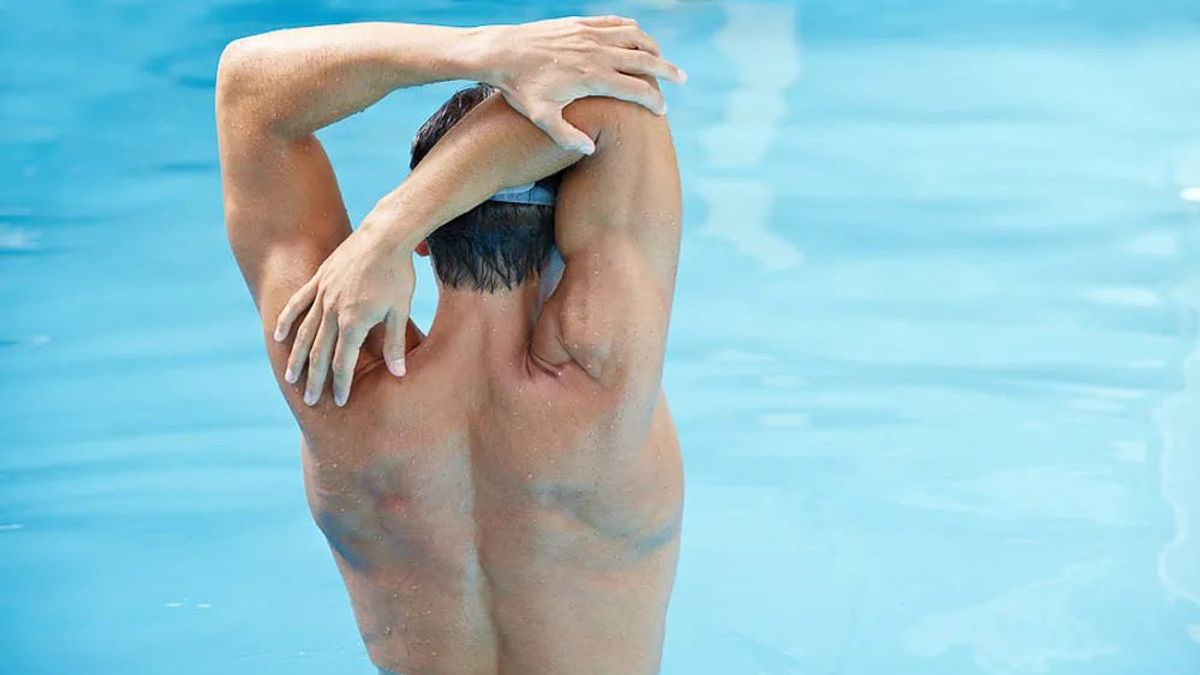


YOGYAKARTA - Swimming is a fun sport as well as healthy because it involves almost all the muscles of the body. Many people feel it is enough to just stop after completing a swimming session. In fact, the body is still in an active condition and requires transitional time to stabilize again.
Ignoring cooling after swimming can cause various complaints, ranging from cramps, soreness, to dizziness. This condition occurs because the body is forced to stop suddenly after working hard in the water. Therefore, cooling is very important so that the body can adjust gradually.
Unfortunately, cooling after swimming is still often considered a trivial thing. In fact, by doing the right cooling, the risk of injury can be minimized. Cooling is not just an additional routine, but an important part of a series of swimming sports.
Cooling after swimming has many benefits for the body. One of them is to help reduce body temperature which increases during activities. This process also keeps the enzyme function that plays a role in the production of muscle energy optimal.
In addition, cooling supports the process of muscle repair after swimming. The muscles used intensively in water have the potential to experience repeated contractions. Cooling helps muscles recover faster. This is very important especially for swimmers who take part in routine training or competition.
Cooling also helps the body clean up metabolic remnants such as lactic, phosphate, and hydrogen ions that accumulate after exercise. If not issued, these substances can cause a feeling of soreness, stiffness, and decrease in muscle function. With cooling, the body is better prepared for the next training session.
SEE ALSO:
-
 | OLAHRAGA
Marseille Mengejutkan PSG, Mengakhiri Awal Sempurna sang Juara Bertahan
23 September 2025, 14:20 -
 | OLAHRAGA
Bintang Barcelona dan Spanyol, Aitana Bonmati, Meraih Ballon d'Or Ketiga Beruntun
23 September 2025, 16:20 -
 | OLAHRAGA
Maresca Akui Mungkin Mustahil Menghentikan Liverpool Pertahankan Gelar Liga Inggris
23 September 2025, 17:35
In addition, studies show that active cooling can improve the next sporting performance. This is because cooling accelerates overall body recovery. Good recovery will allow swimmers to return to training or compete with excellent physical conditions.
For athletes who undergo several competitions in one day, cooling is key. Body temperature and stable muscles will maintain the consistency of the swimming movement. In addition, the risk of repeated cramps or injuries can be suppressed with the right cooling.
Not only for athletes, but this benefit is also felt by recreational swimmers. With cooling, the body feels lighter, does not get tired easily, and is more comfortable in daily activities after swimming.
The first step that can be done is to slow down the movement gradually. After swimming, don't stop immediately, but do a round for 510 minutes with a more relaxed style. You can change styles such as freestyle, back, or chest to give the muscles a chance to rest slowly.
Next, stretch the leg muscles both inside and outside the pool. The method is quite easy, namely by standing upright and then climbing and repeating it 8-10 times. This movement is effective to prevent cramps that usually appear after an intensive swimming.
The third movement is arm stretch. Range up your hands, link your fingers, then bend your waist to the left and right sides alternately. This simple step helps to relax the muscles of your shoulders and arms that are active while swimming.
Finally, don't forget to stretch your back by lying on your back and stretch your hands to the shoulder. Bend your knees and raised your thighs to touch your stomach. Move your legs to the side until one of the thighs touches the floor. Repeat this movement in the opposite direction.
Cooling after swimming is as important as warming up before starting swimming. Simple cooling for a few minutes can have a long-term positive impact on the health of the body. If in doubt determines the right cooling movement, you can consult a swimming instructor.
The English, Chinese, Japanese, Arabic, and French versions are automatically generated by the AI. So there may still be inaccuracies in translating, please always see Indonesian as our main language. (system supported by DigitalSiber.id)


