
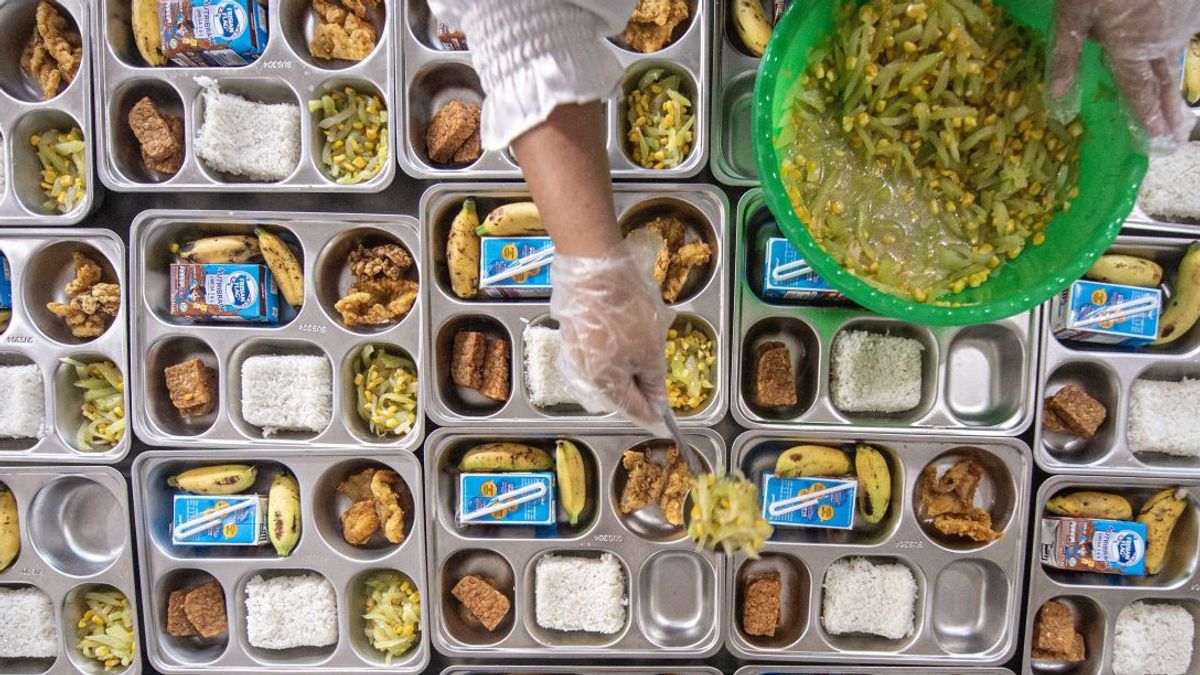


JAKARTA - The Free Nutritious Meal (MBG) program is not merely an effort to distribute food at schools, but a strategic intervention to break the chain of nutritional problems in vulnerable groups. This was emphasized by Dewi Marfuah, S.Gz., M.P.H., representative of the Scientific Field of the Nutritionists Association (Persagi) of the Surakarta City Branch Leadership Council, as well as Lecturer of the S1 Nutrition Program, Faculty of Health Sciences (FIK) Muhammadiyah University PKU Surakarta (UMPKU).
Dewi highlighted the real dilemma found in the field, many schoolchildren go to school on an empty stomach due to economic constraints at home.
"Hopefully, this MBG program can replace one meal time that is often lost, especially breakfast," he said in a written statement, Saturday, May 16.
Based on his experience while serving in schools, the number of students who do not have breakfast is often more than those who have breakfast. Dewi's experience in the field was also strengthened by data from the Research Institute of Socio-Economic Development (RISED) in early February 2026. 81 percent of vulnerable families expressed their support for the sustainability of the MBG program. The reason is, especially in small cities, MBG is considered by parents to provide nutritional certainty for schoolchildren.
One of the stories comes from a student's parent named Mrs. Adriana Hedmunrewa, a resident of Kalinawano Village, South West Sumba, NTT. His story reinforces the positive changes experienced by his son, Antonio Adrian Stefanus, a student in grade VI of Weetabula II Elementary School.
Mrs. Adriana admitted that she was very helped by the MBG program because her son was now more active and enthusiastic in the learning process.
"If you ask me, this is very helpful. While waiting for the break, they have already eaten MBG. Their learning activities at school are also more active. Now he is learning mathematics, he can do it himself, no longer helped. When my child receives a report card, his grade has increased by an average of eight. Physically it also looks fresher and more energetic," said Adriana.
According to Dewi herself, MBG is indeed designed to meet almost a third of the nutritional needs of its recipients.
"The MBG program is designed to meet a quarter to a third of children's daily nutritional needs. With a balanced nutritional menu that includes carbohydrates, animal dishes, vegetable dishes, vegetables, and fruit, students are expected to have enough energy to concentrate on learning without feeling tired," added Dewi.
Focus on the First 1,000 Days of LifeAlthough the main focus is currently on schoolchildren, Dewi explained that the sustainability of this program through the Nutrition Food Service Unit (SPPG) also targets other vulnerable groups, namely toddlers, pregnant women, and nursing mothers.
"So too with toddlers; regular provision of nutritious food, not just once a month at Posyandu, is the key to reducing stunting rates in Indonesia," added Dewi.
However, there are still people who are still hesitant about the MBG program because of food safety issues that are still being improved. Responding to public concerns about food safety and the risk of spoiled food, Dewi explained that each SPPG unit must have a nutritionist who is fully responsible. The standard operating procedure (SOP) is now very strict.
"There is a tight time frame between the processing process and the food being consumed to prevent food from going bad due to packaging while it is hot. Then, before being distributed to students, teachers act as testers to ensure that the taste and quality of the food is safe to eat," he explained.
Dewi also encourages the active role of parents and teachers to provide input to the SPPG if they find menus that are not suitable or the child's acceptance of the menu distributed is low.
"Nutritionists in the field are tasked with educating and monitoring food waste. If there is a lot of food waste, it means that something must be evaluated from the acceptability of the menu," explained Dewi.
Dewi invites all levels of society, teachers, and parents to supervise and provide education. He argues that this program belongs to us together. With safe, healthy, and nutritious intake, we are building a foundation for Indonesian children to grow into a smart and competitive generation in the future.
The English, Chinese, Japanese, Arabic, and French versions are automatically generated by the AI. So there may still be inaccuracies in translating, please always see Indonesian as our main language. (system supported by DigitalSiber.id)
Most Popular Tags
#Prabowo Subianto #donald trump #firearm #8791 #giias 2026Popular


