

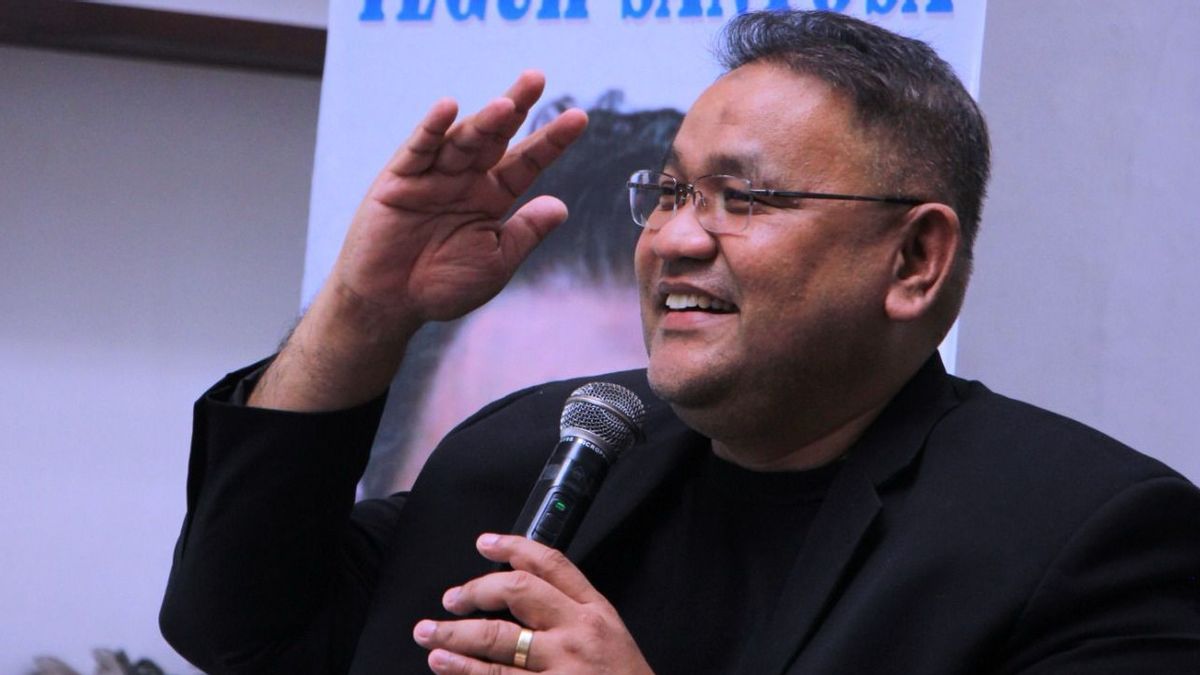


JAKARTA - The Director of Geopolitics of the GREAT Institute, Teguh Santosa, assessed that President Prabowo Subianto's policy direction began to show efforts to build Indonesia out of the trap of a stagnant developing country.
In his view, policies such as Free Nutritious Meals, People's Schools, Red and White Cooperatives, industrial downstreaming to the development of renewable energy (EBT), are not stand-alone programs. They are all interrelated and lead to the great ideal of building a more independent and just country.
Teguh in a written statement received in Jakarta, Monday, May 11, linked the direction of the policy to the contents of the book Breakout Nations by global investors and international economic analysts, Ruchir Sharma. In the book, Sharma explains how a country can leapfrog into a new world power if it is able to break out of the old trap of commodity dependence, economic inequality, and the dominance of certain elites.
According to Teguh, the Free Nutritious Meal program is not just about food assistance, but concerns the protection of future generations. People's Schools are seen as a way to open wider access to education. Meanwhile, the Red and White Cooperative is said to be an effort to strengthen the people's economy in the midst of a concentration of wealth that has been considered increasingly sharp.
On the other hand, the downstreaming and development of EBT is considered a strategy to reduce Indonesia's dependence on the old economic model which is based on the export of raw materials.
However, Teguh, who is also the Chairman of the Indonesian Cyber Media Network, reminded that the biggest challenge is not in the program, but in the political courage to face the elite group who have enjoyed economic privileges and power.
He quoted Sharma's warning that there is no magic formula for becoming a developed country. What determines is the consistency of policies, hard work, and courage against established interests that harm the country in the long run.
"Indonesia has a big capital: natural resources, demographic bonuses, and independence spirit," said Teguh.
Even so, he assessed that Indonesia's future still depends on the choices of political and economic elites. If they are willing to give up narrow interests for the sake of long-term national agendas, Indonesia has the opportunity to become one of the "breakout nations" of this century. If not, Indonesia is considered to be stuck in the old cycle of commodity exports, inequality, and economic power that revolves in a narrow circle.
For Teguh, the dream of independence is not measured by political speeches, but by the real condition of the people. Children are not hungry, education is open, the economy is not controlled by a few people, and the law stands without being subject to power.
The English, Chinese, Japanese, Arabic, and French versions are automatically generated by the AI. So there may still be inaccuracies in translating, please always see Indonesian as our main language. (system supported by DigitalSiber.id)
Most Popular Tags
#Prabowo Subianto #donald trump #2026 World Cup #Febrie Adriansyah #8791Popular


