

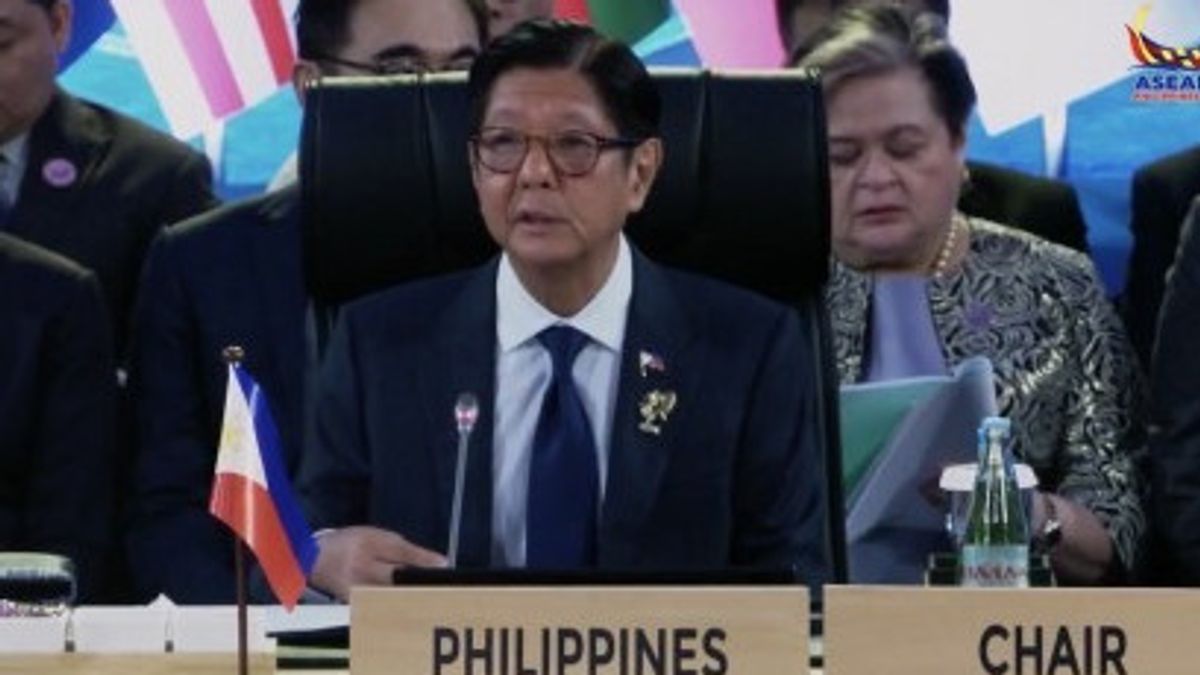


JAKARTA - Tensions in the Middle East are beginning to be felt in Southeast Asia. Philippine President Ferdinand R. Marcos Jr. reminded ASEAN countries not to be complacent in the face of threats to global sea lanes, especially after the conflict between Iran, Israel, and the United States triggered uncertainty in the Strait of Hormuz.
Citing the Philippine News Agency (PNA), Friday, May 8, the message was delivered by Marcos when opening the 48th ASEAN Summit Plenary Session in Cebu, Friday. He said that world trade was not going well, and Southeast Asia could be affected by it.
The Strait of Hormuz is not an ordinary sea route. This area is known as one of the world's main energy shipping corridors. If the route is disrupted, the effects can spread everywhere. Energy prices rise. Logistics costs soar. Imported goods are more expensive. Countries like Indonesia are also difficult to be completely safe from the effects.
"This development has disrupted sea and air transport routes, increased risks for merchant ships as well as non-combat ships and aircraft, and affected the flow of energy and essential goods," Marcos said, quoted by PNA.
Therefore, the Philippines encourages ASEAN to strengthen maritime cooperation. One of the proposals brought by Manila is the establishment of the ASEAN Maritime Center. This institution is expected to be a coordination space between member countries in the face of maritime security threats and disruptions to trade routes.
The proposal comes amid increasing geopolitical pressure in the region. The South China Sea has not calmed down. Global trade routes are starting to be vulnerable. Now the Middle East is heating up the situation.
Marcos said ASEAN needed to strengthen coordination to maintain regional stability and economic resilience. ASEAN leaders are also expected to adopt the ASEAN Leaders' Declaration on Maritime Cooperation at the forum.
Apart from trade and maritime security, Marcos again called for a peaceful resolution of disputes, the protection of civilians, and the restoration of safe and unimpeded transit routes in the Strait of Hormuz.
The ASEAN Summit in Cebu brought together leaders from 11 member countries. This forum took place as ASEAN faced new pressure from global conflicts, especially on maritime routes and energy trade.
The English, Chinese, Japanese, Arabic, and French versions are automatically generated by the AI. So there may still be inaccuracies in translating, please always see Indonesian as our main language. (system supported by DigitalSiber.id)
Most Popular Tags
#Prabowo Subianto #donald trump #2026 World Cup #Febrie Adriansyah #8791Popular


