

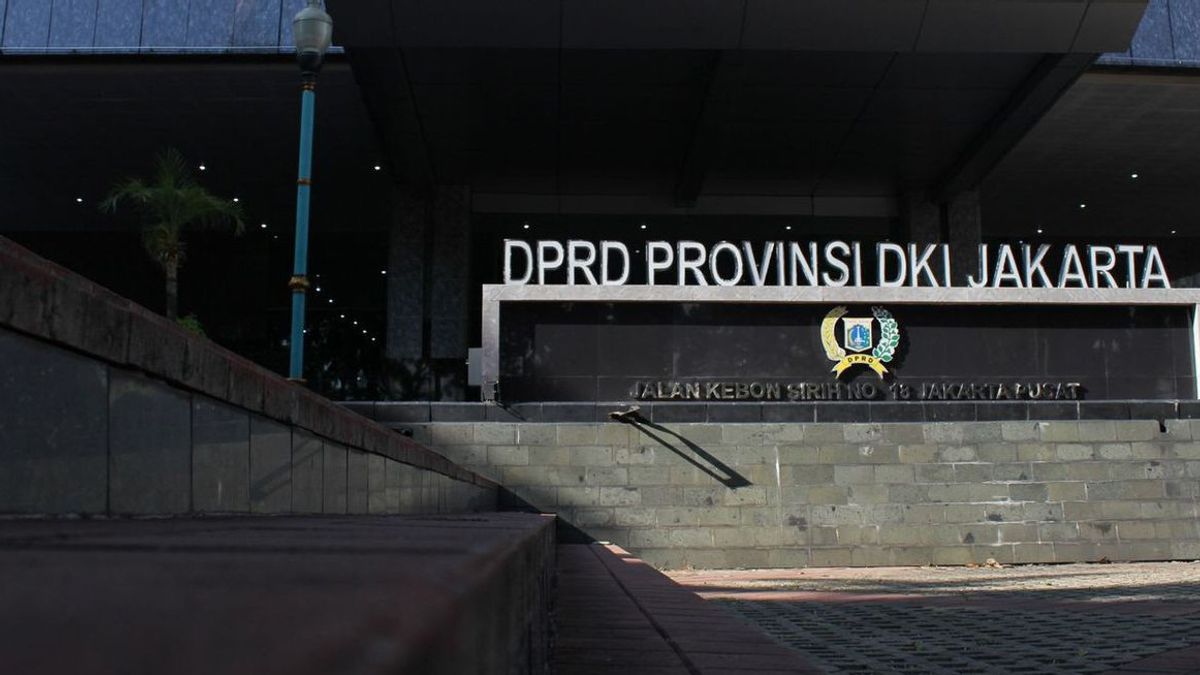


JAKARTA - The Special Committee (Pansus) for Waste Management of the DKI Jakarta DPRD highlighted the inequality between the encouragement of waste sorting at the household level and the readiness of facilities in the field. Without the support of facilities and infrastructure, the call for sorting is considered difficult to implement consistently by residents.
The Chairman of the Waste Management Sub-Committee of the DKI Jakarta DPRD, Judistira Hermawan, said the most urgent need at this time is the allocation of budget for the provision of separate garbage bins to a transportation system that is adjusted.
"Garbage cans need to be budgeted specifically," said Judistira at the DKI Jakarta DPRD Building, Wednesday, May 6.
According to him, the sorting scheme must also be made simple so that it is easy for the general public to implement. The model that is encouraged is the separation into three main categories: organic, inorganic, and residue.
"Sorting includes organic, inorganic, and residue," he said.
The committee assessed that the approach to waste management so far is still too dependent on general appeals. In fact, the challenges ahead require a change in behavior from the source of waste, namely households.
"Now we have to switch to sorting from the source," said Judistira.
The impetus is inseparable from the condition of the Bantargebang Integrated Waste Processing Site (TPST) which is increasingly limited. The central government will even limit waste disposal to the location starting August 1, 2026, by only accepting residual waste.
This situation makes sorting crucial so that the volume of waste sent to Bantargebang can be suppressed. Without sorting, the residual load will remain high and accelerate full capacity.
Therefore, the Sub-Committee encourages the involvement of all stakeholders, from the RT level to the local government. This effort is considered not to be partial.
Apart from infrastructure, the aspect of education is also highlighted. The DKI Environment Service is asked to expand the campaign through various communication channels, including social media and television.
The committee also opened the option of involving influencers to strengthen the message of waste management so that it is easier for the public to accept. "It can make waste management messages more effective," said Judistira.
The English, Chinese, Japanese, Arabic, and French versions are automatically generated by the AI. So there may still be inaccuracies in translating, please always see Indonesian as our main language. (system supported by DigitalSiber.id)


