

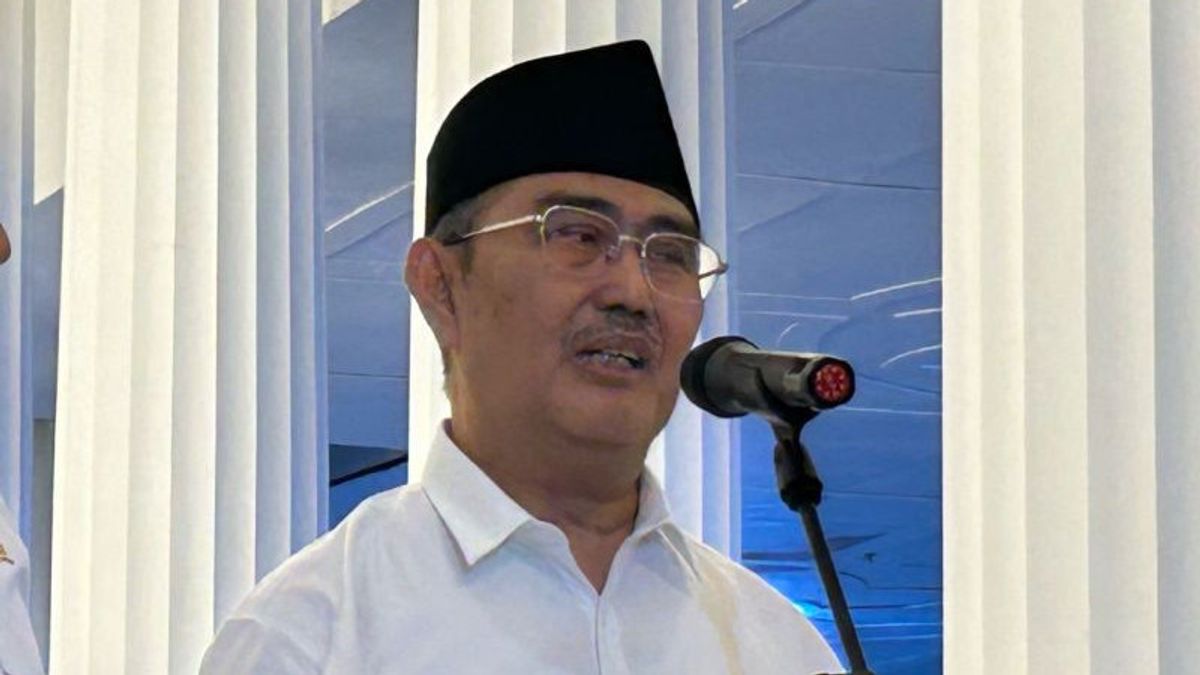


JAKARTA - Chairman of the National Police Reform Acceleration Commission (KPRP) Jimly Asshiddiqie stated that the appointment of the National Police Chief was still carried out by the President upon approval from the House of Representatives (DPR).
"So the National Police Chief will still be appointed by the President upon approval from the DPR as is the practice now," Jimly said at a press conference at the Merdeka Palace, Jakarta, Tuesday, May 5, as reported by ANTARA.
Jimly said KPRP members had several different views regarding the mechanism for appointing the National Police Chief.
Some argue that the appointment of the National Police Chief does not need to get confirmation or approval from the DPR. However, other members of the commission also have the view that the election of the National Police Chief will still run with the current mechanism.
Jimly explained that after a long discussion about the advantages and disadvantages of each option, President Prabowo Subianto finally gave directions that the current mechanism should be maintained.
"After discussing the pluses and minuses, the President gave directions, yes, it's just like now," he said.
He emphasized that the DPR's approval in the process of appointing the National Police Chief and the TNI Commander was not a fit and proper test, but rather the right to confirm.
In this mechanism, according to him, the President only submits one name to the DPR. Furthermore, the DPR has the authority to approve or reject the candidate submitted.
"Both for the National Police Chief and the TNI Commander in accordance with the provisions of the law, it is not a fit and proper test. But it is approved or disapproved. It is the right to confirm from the Parliament. So it's different, so the President only submits one name. The DPR can agree, can not," said Jimly.
However, Jimly admitted that in practice, the candidates proposed by the President almost always obtained the approval of the DPR.
He added that the decision to maintain the existing mechanism was taken after President Prabowo considered various constitutional aspects, as well as institutional dynamics and the results of discussions with the National Police Reform Acceleration Commission.
The English, Chinese, Japanese, Arabic, and French versions are automatically generated by the AI. So there may still be inaccuracies in translating, please always see Indonesian as our main language. (system supported by DigitalSiber.id)
Most Popular Tags
#Prabowo Subianto #donald trump #2026 World Cup #Febrie Adriansyah #8791Popular


