

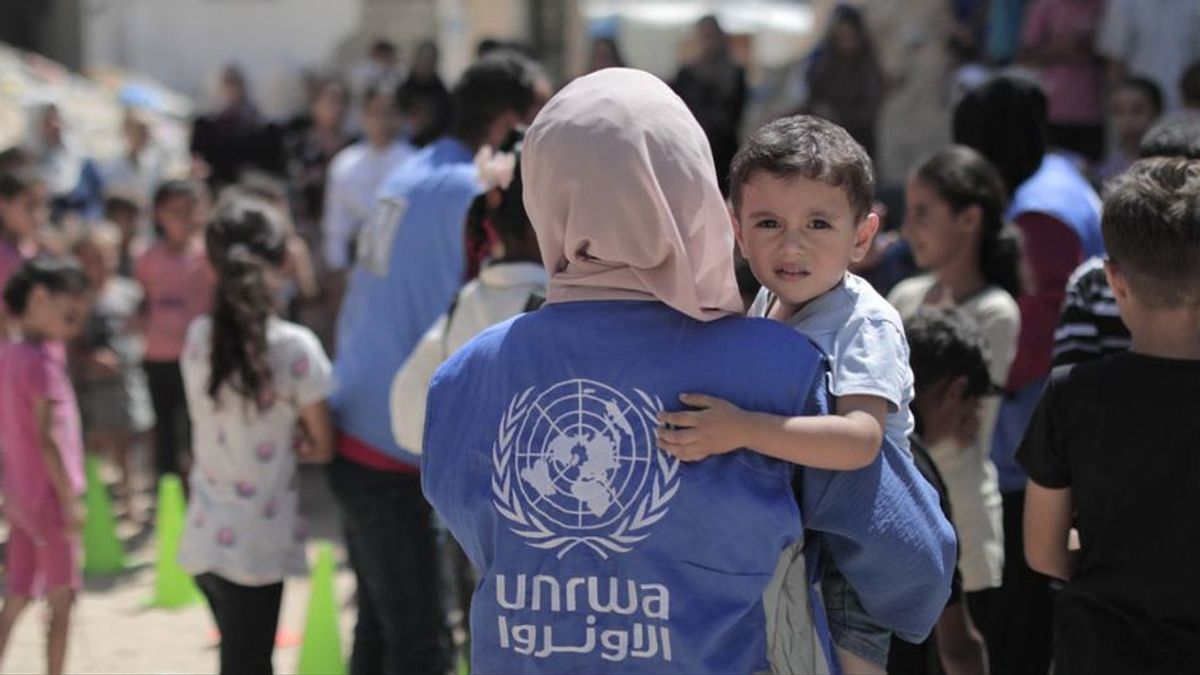


JAKARTA - More than a million Lebanese are at risk of starvation amid the ongoing conflict. Violence, mass displacement, and economic pressures are now weighing on the humanitarian conditions in the country.
According to a report by Arab News, Thursday, April 30, the warning was delivered by the United Nations (UN), Wednesday.
On the same day, Israeli authorities issued a new evacuation order for 16 areas in southern Lebanon's Litani River. Residents were asked to move to the city of Saida. This policy adds to the already widespread evacuation pressure.
UN spokesman Stephane Dujarric said civilians were the most affected parties. "We and our partners are working to respond to the increasing needs, as long as access is possible," he said in New York.
However, access to the affected areas is still limited. Aid cannot always reach all areas.
Women and children are the most vulnerable groups. Reports show that psychological stress is increasing, families are separated, and economic conditions are deteriorating. Crowded refugee camps also increase the risk of gender-based violence.
This crisis is getting heavier because food security is also disrupted. The latest analysis from FAO and WFP says that the condition, which had improved, is now back in the crisis phase due to the spike in violence.
The Integrated Food Security Classification (IPC) data estimates that around 1.24 million people - almost a quarter of the population surveyed - will face phase 3 or crisis-level food insecurity by August. At this stage, residents begin to reduce eating or selling important goods to buy food.
In the midst of this situation, funding for assistance is still far from sufficient. The Lebanon Flash Appeal program has only raised about US$ 117 million, or 38 percent of the US$ 308 million needed.
The United Nations has warned that without additional funding support and wider humanitarian access, conditions in Lebanon are expected to worsen in the near future, with millions of people increasingly threatened by famine.
The English, Chinese, Japanese, Arabic, and French versions are automatically generated by the AI. So there may still be inaccuracies in translating, please always see Indonesian as our main language. (system supported by DigitalSiber.id)
Most Popular Tags
#Prabowo Subianto #donald trump #firearm #8791 #giias 2026Popular


