

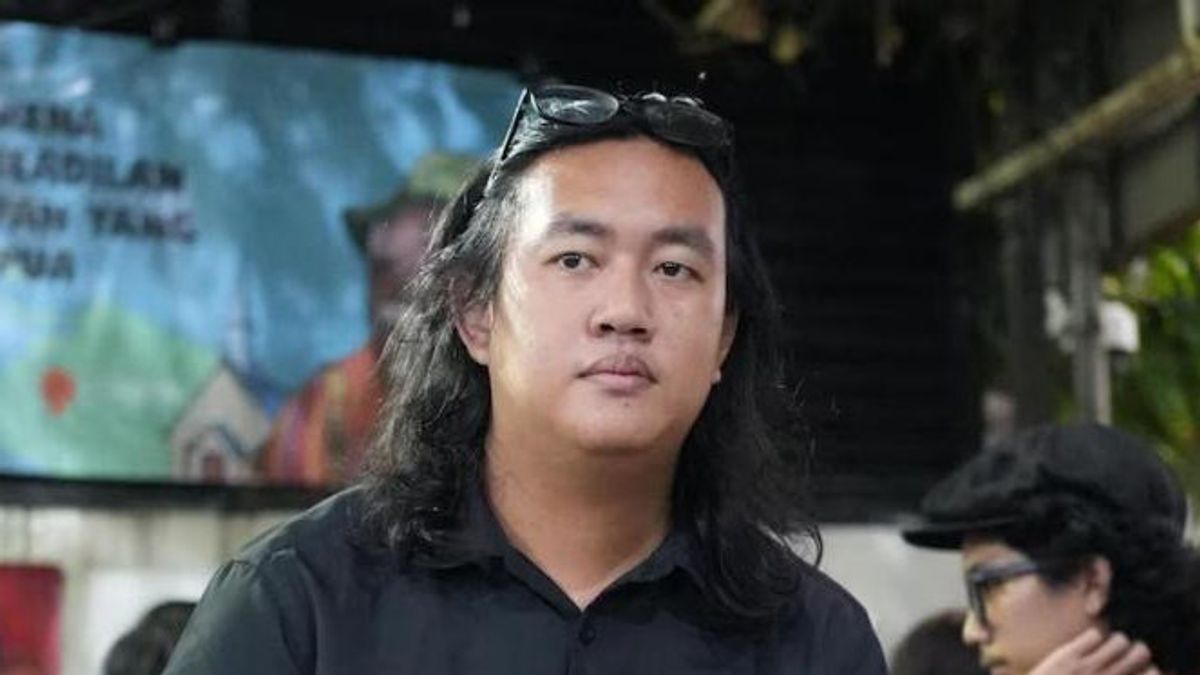


JAKARTA - The National Human Rights Commission (Komnas HAM) has highlighted the potential for lack of transparency in the legal process of the case of the attack on Kontras activist, Andrie Yunus. This concern arose after the handling of the case was delegated by the police to military authorities.
The Commissioner for Monitoring and Investigation of Komnas HAM, Saurlin P Siagian, revealed that his agency faced obstacles in carrying out independent monitoring functions. Limited access to the investigation process is considered to affect the objectivity of fact-finding.
"We know that the police quickly handed it over to the TNI. And then Komnas HAM's difficulty in accessing the investigation process or to the perpetrators," said Saurlin at a press conference in Jakarta, Monday, April 27.
According to Saurlin, Komnas HAM also found inconsistencies between the information provided by the TNI Military Police Center (Puspom) and the data collected from other sources in the field. This difference creates a need for further verification to ensure the accuracy of the material.
"A number of information provided by Puspom TNI to Komnas HAM, we also find that it still needs to be deepened. Because the facts that we found from other parties are not in accordance with the indications," said Saurlin.
He assessed that the rapid transfer of cases to the military justice system was a vulnerable point that could potentially reduce the openness of the legal process to the public. This condition is feared to create negative perceptions regarding the accountability of handling cases.
"Law enforcement by the TNI Puspom regarding the attack incident is at risk, in our opinion, it is less transparent and accountable," he said.
Komnas HAM emphasized that transparency and accountability are the main principles in law enforcement, especially in cases involving human rights defenders. The openness of the process is considered important to maintain public confidence while ensuring that there is no impunity for those proven to have violated the law.
The institution also urges that all legal processes be carried out openly and accessible, so that the public can monitor the development of the case objectively. This effort is expected to ensure justice for victims and strengthen protection for activists and human rights defenders in Indonesia.
The English, Chinese, Japanese, Arabic, and French versions are automatically generated by the AI. So there may still be inaccuracies in translating, please always see Indonesian as our main language. (system supported by DigitalSiber.id)


