
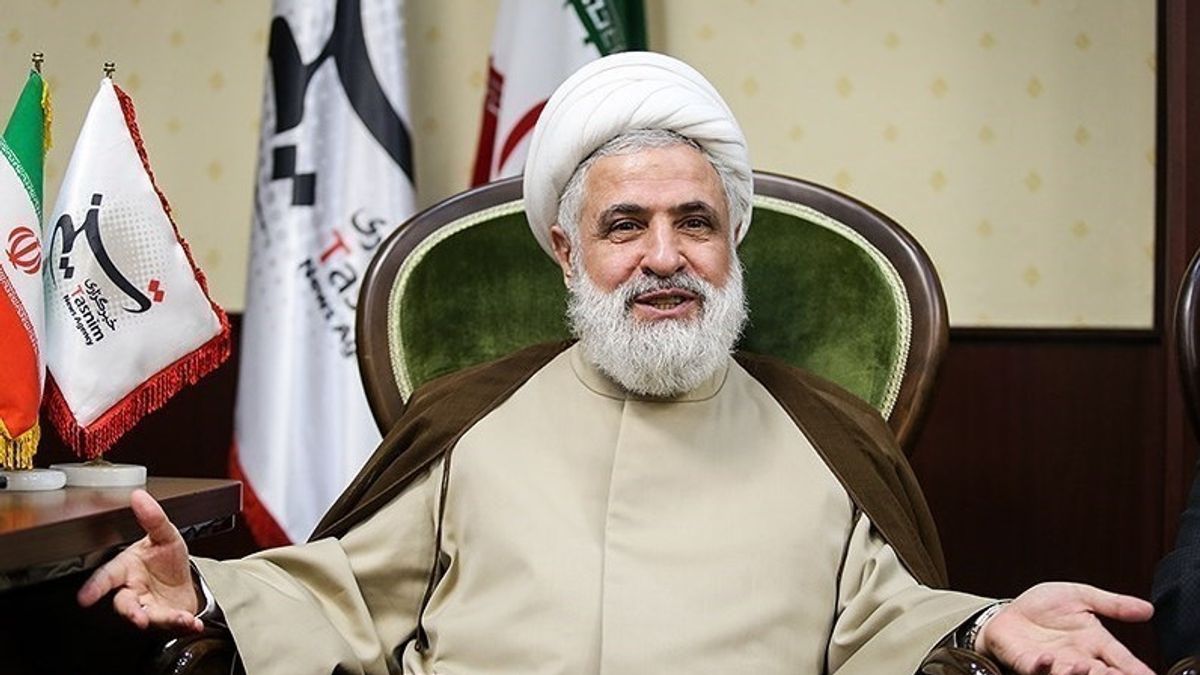


JAKARTA - Hezbollah leader Naim Qassem on Monday rejected Lebanon's plan for direct negotiations with Israel, calling it a "great sin" that would destabilize Lebanon.
Lebanon and Israel held two rounds of direct ambassador-level negotiations in Washington D.C. with the United States as a mediator to end tensions since the beginning of the Meret.
This is the first direct negotiation between the two countries in decades.
The first meeting on April 14 resulted in a ceasefire in the Israel-Hizbullah war, while Beirut has prepared for direct negotiations with the aim of reaching a peace agreement with Israel. The two countries have officially been at war since 1948.
Meanwhile, the second round of negotiations last week at the White House and attended by US President Donald Trump agreed to extend the ceasefire for three weeks.
"We categorically reject direct negotiations with Israel, and those in power must know that their actions will not benefit Lebanon or themselves," Qassem said in a statement carried by Al-Manar, as reported by Al Arabiya from AFP.
Furthermore, Qassem called on the authorities to "back down from their great sin of putting Lebanon in a spiral of instability."
He added that the Lebanese government "cannot continue to ignore Lebanon's rights, surrender its land, and face the resistance of its people."
Lebanese authorities have repeatedly said the goal of the US-sponsored negotiations is to stop the war, secure Israel's withdrawal from southern Lebanon, and return refugees to their homes after the fighting forced more than a million people to flee.
"This direct negotiation and the result seem to be nothing for us, and it does not concern us at all," Qassem criticized.
"We will continue our defensive resistance for Lebanon and its people," he continued.
"No matter how great the enemy's threats, we will not retreat, we will not bow down, and we will not be defeated," the Secretary-General of Hezbollah said.
"We will not surrender our weapons and the Israeli enemy will not remain in even an inch of our occupied land," he said.
Hezbollah dragged Lebanon into the Middle East war on March 2 by firing rockets into Israel in retaliation for the death of Iran's supreme leader, Ali Khamenei, in a US-Israeli attack.
Since the ceasefire came into force on April 17, Israeli attacks have killed at least 36 people, according to an AFP tally based on Lebanese Health Ministry data.
Meanwhile, Hezbollah claimed several attacks on Israeli forces in southern Lebanon, as well as the launch of missiles and drones into northern Israel, saying they were responding to Israeli "violations".
According to the details of the ceasefire released by the US State Department, which stated that Lebanon and Israel agreed to it, Israel reserves the right to continue targeting Hezbollah to prevent "planned, imminent, or ongoing attacks."
Hezbollah has firmly rejected this clause, saying the text of the agreement was not presented to the cabinet, where the group and its allies are represented.
"Has the government decided to cooperate with the enemy of Israel against its own people?" Qassem said in his speech.
Israeli attacks on Lebanon have killed more than 2,500 people since March 2, according to Lebanese authorities.
The English, Chinese, Japanese, Arabic, and French versions are automatically generated by the AI. So there may still be inaccuracies in translating, please always see Indonesian as our main language. (system supported by DigitalSiber.id)


