
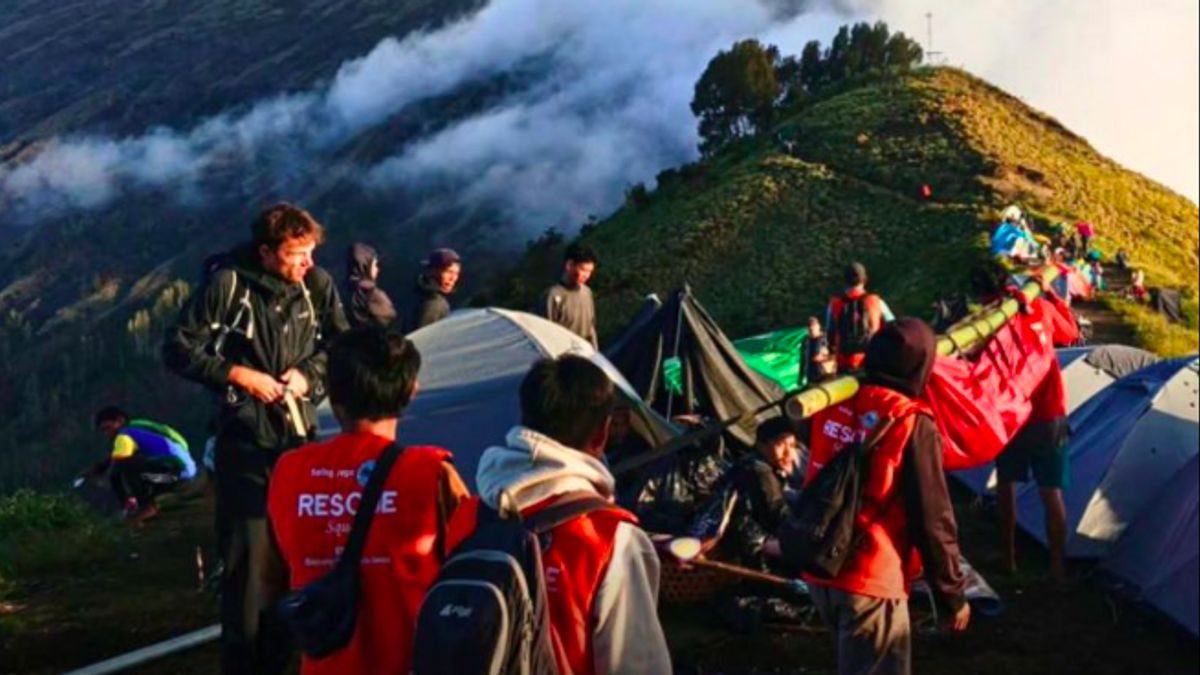


JAKARTA - The Mount Rinjani National Park Office confirmed that the victim of the accident on the Mount Rinjani climbing route, West Nusa Tenggara, had been successfully evacuated after being injured while climbing.
Head of the NTB TNGR Forest Ecosystem Control, Budi Soesmardi, explained that the victim was a foreign tourist from Belgium with the initials JMVA (25) who had an accident on the down route to Lake Segara Anak via the Sembalun route on Saturday (4/4).
He said the victim suffered an injury to the ankle which made it difficult for him to walk.
After receiving the report, the team immediately moved quickly by coordinating with guides and porters in the field to carry out the evacuation.
"With the spirit of mutual cooperation, the victim was successfully brought to the emergency shelter at Sembalun Stream to get initial treatment," said Budi.
The evacuation process was then continued by descending the climbing route until the victim was successfully brought to the Sembalun Health Center. Furthermore, the victim was referred to a hospital in Mataram to receive further medical treatment.
"The victim has been given medical assistance," he said.
Budi also expressed his appreciation to all parties involved in the evacuation process, from TNGR officers, the Kita Bisa Insurance team (EMHC), guides, to porters who have shown a quick response and good cooperation.
He emphasized that this incident was a reminder for climbers to always prioritize safety.
"This incident is a reminder to always prepare the physical condition and equipment properly before climbing," he said.
In addition, the TNGR also invites the public to continue to maintain environmental sustainability while carrying out activities in the open air. "Let's keep maintaining the ecosystem of the Mount Rinjani area," he added.
Previously, the Mount Rinjani climbing route had officially reopened since April 1, 2026 after being closed during the period from January to March due to weather conditions. The closure was carried out as an effort to maintain the ecosystem as well as improve supporting facilities for the safety of climbers.
The English, Chinese, Japanese, Arabic, and French versions are automatically generated by the AI. So there may still be inaccuracies in translating, please always see Indonesian as our main language. (system supported by DigitalSiber.id)


