

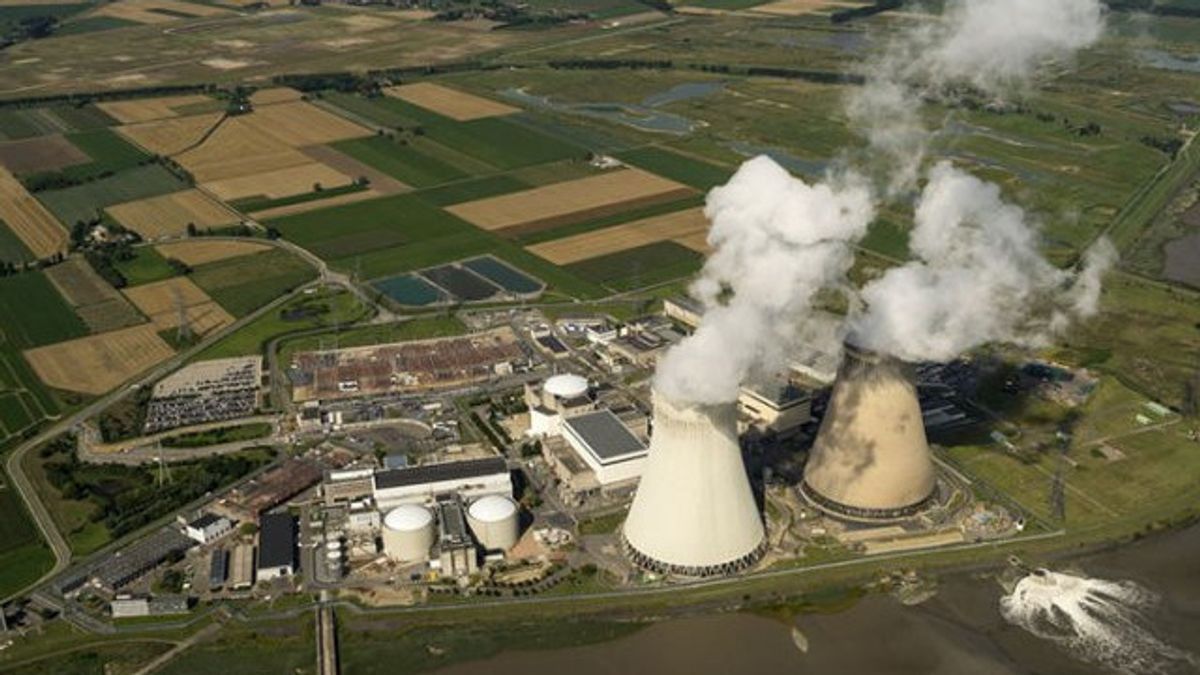


JAKARTA - Southeast Asian countries are beginning to look again at nuclear energy as electricity demand surges and the region's energy supply becomes more vulnerable amid the Iran war. The push comes alongside the expansion of AI-based data centers that suck in large amounts of electricity.
As reported by Kyodo News, quoted Tuesday, March 31, Southeast Asia has never produced electricity from nuclear power, although the ambition has long emerged. Now, the situation is changing. Pressure to reduce emissions, meet rising electricity demand, and reduce dependence on oil and gas makes the nuclear option back into the equation.
According to the International Energy Agency (IEA), Southeast Asia will account for a quarter of global energy demand growth by 2035. One of the drivers is the explosion of data centers in Indonesia, Malaysia, Singapore, Thailand, Vietnam, and the Philippines. Ember notes that the number of data centers in the six countries is more than 2,000 units, and many are still being planned.
As reported by Kyodo News, five ASEAN countries are now on record pursuing nuclear development, namely Indonesia, Malaysia, Thailand, Vietnam, and the Philippines. Vietnam is building two nuclear power plants supported by Russia. Indonesia includes nuclear in its new energy plan and targets two small modular reactors by 2034. Thailand is aiming for an additional 600 megawatt capacity by 2037, while the Philippines is targeting 2032 after forming a new regulatory authority and drawing up a roadmap for investors.
Malaysia is the most prominent example. The country wants to become the AI computing center in Southeast Asia and has attracted the interest of major technology companies such as Microsoft, Google, and Nvidia. At the same time, Malaysia is also reviving its nuclear program and targeting atomic energy to enter the system by 2031.
Analysts assess that the Iran war has made it clear that Asia's energy supply is fragile. The surge in crude oil prices due to the conflict has also encouraged countries in the region to accelerate the search for alternative energy sources. In this context, nuclear is again seen as one of the options.
But the road there is not easy. Concerns about safety, waste, and the risk of accidents remain high. The Chernobyl disaster in 1986 and Fukushima in 2011 are still a reminder that nuclear energy is not without consequences.
Therefore, the resurgence of Southeast Asian interest in nuclear is not just about pursuing cheap electricity or supporting AI data centers. This region is also facing a big choice of finding new energy sources amid global pressure, while weighing risks that they have never really faced.
The English, Chinese, Japanese, Arabic, and French versions are automatically generated by the AI. So there may still be inaccuracies in translating, please always see Indonesian as our main language. (system supported by DigitalSiber.id)


