
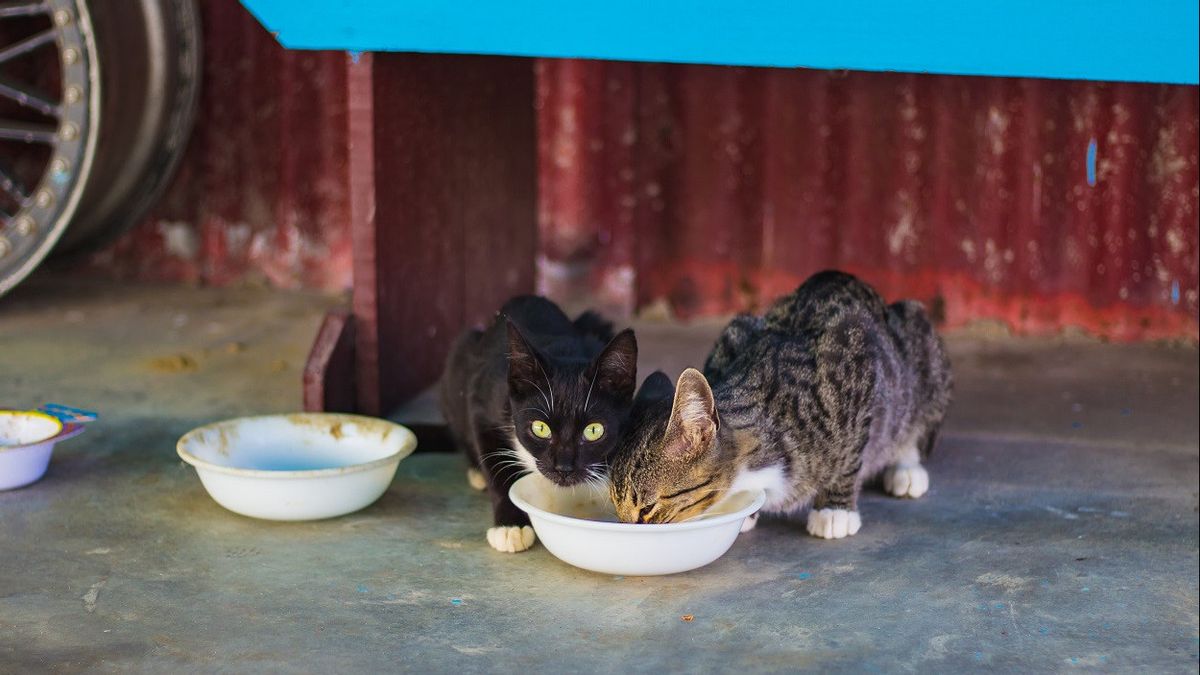


South Korea's government has launched revised guidelines on the care of stray cats, calling for individuals to obtain approval from property owners before installing feeding stations on land that does not belong to them.
The Ministry of Agriculture, Food and Rural Affairs said last week, the updated guidelines reflect input from experts, veterinarians and local government officials.
The revision comes amid an ongoing conflict between residents and feral cat carers in urban areas, with increasing calls for clearer rules on how feeding stations are operated and moved.
The installation of feeding places has emerged as a major source of tension.
While feeding stray cats is not illegal under current law, setting up feeding stations on private or public property without consent can lead to legal disputes.
In parks and green spaces managed by local governments, these facilities can be classified as illegal buildings and can be subject to demolition orders.
Meanwhile, in private land or in apartment complexes, it can cause problems of violations and potential liability for damages.
Caregivers can also face sanctions under waste management laws if feeding places are not properly maintained.
On the other hand, property owners who move the feeding place without the consent of the installer may face civil or criminal liability and are required to follow the applicable legal process.
"Many people start taking care of stray cats with good intentions, but often end up in conflict with residents and even legal disputes," an official from the ministry said, launching The Korea Times on March 23.
"Feeding places can only be installed after obtaining approval from the property owner through prior consultation, both in writing and orally," he said.
The ministry explained that the revised guidelines aim to achieve a balance between protecting stray cats and maintaining the residents' living environment.
This guideline is expected to help reduce complaints about abandoned feeding places and disputes surrounding the placement of feeding places.
The updated guidelines also provide additional guidance on habitat relocation and rescue procedures, along with more detailed information on cat behavior, prohibited foods, and disease prevention.
In addition, this guideline also outlines best practices and treatment plans, as well as strengthening hygiene standards, including requirements for maintaining cleanliness around feeding areas.
The English, Chinese, Japanese, Arabic, and French versions are automatically generated by the AI. So there may still be inaccuracies in translating, please always see Indonesian as our main language. (system supported by DigitalSiber.id)


