



JAKARTA - Pressure on the Corruption Eradication Commission (KPK) is getting stronger following the controversy over the import of 105,000 units of pick-up vehicles from India involving PT Agrinas Pangan Nusantara. The project, which is associated with the red and white village cooperative program, is considered a potential entry point for corruption in policy and state capture practices in government governance.
Researcher of Law and Strategic Litigation, Syaiful Hidayatullah, revealed that there were at least 10 legal entrances that could be used by the KPK to examine the project. He highlighted the alleged abuse of authority, the potential for state financial losses, to procurement engineering in this large-value project.
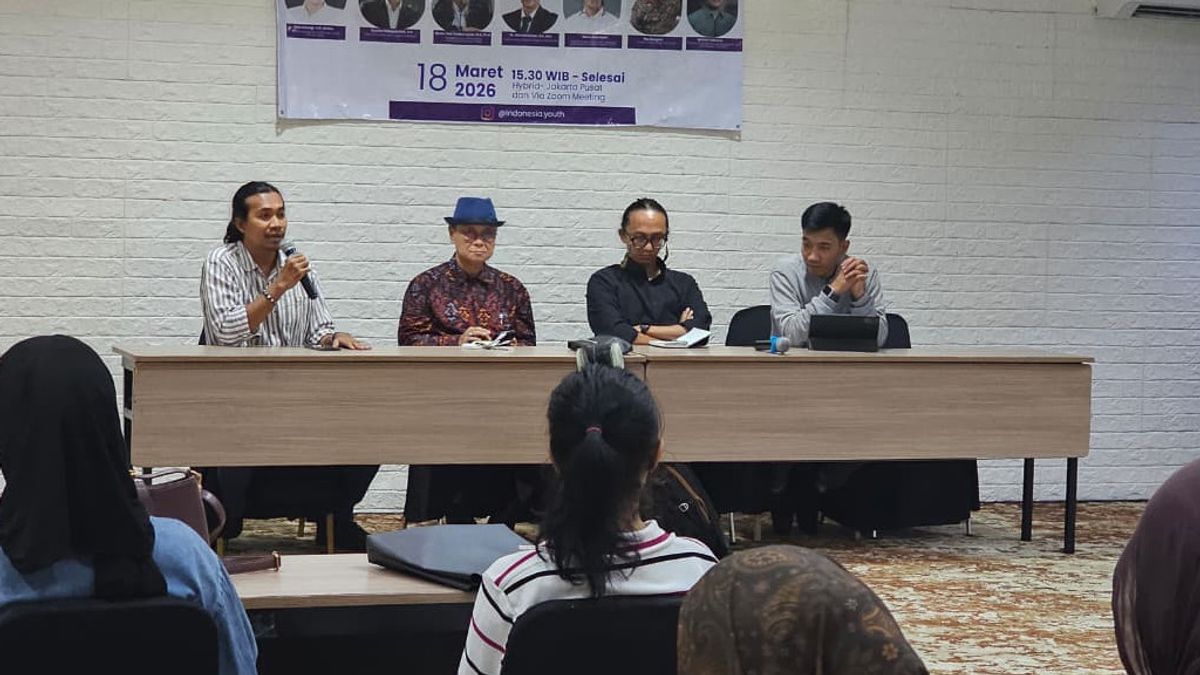
"If the policy is born not from public needs, but from certain power and interest relations, then it falls into the regime of criminal corruption. The law is clear, it's just the courage to enforce it," said Syaiful in a public discussion in Central Jakarta, Wednesday, March 18.
According to him, the financing scheme of the project - whether through the state budget, SOEs, or other public instruments - opens a wide legal audit space. He also touched on indications of tender conditioning, conflicts of interest between officials and business actors, and the role of intermediaries that have the potential to lock in competition from the start.
Syaiful assessed that this project showed symptoms of state capture, which is a condition when public policies are hijacked by the interests of certain groups.
"With the scale of the project, the involvement of state actors, and the widespread public attention, this qualifies as a strategic matter that deserves to be handled by the KPK," he said.
The findings were reinforced by Public Policy Researcher, Gian Kasogi, who identified at least 20 serious problems in this import policy.
From a human rights perspective, he assessed that the project ignored public participation and had the potential to violate the principle of free, prior and informed consent (FPIC). From a legal political perspective, decision-making was considered not transparent and lacked legislative oversight.
Meanwhile, within the framework of development economics, this project is considered risky for causing distortions in the national automotive market, wasting the budget, and deepening import dependence.
"This is not just a vehicle project. This could be a bad precedent in village development planning," said Gian.
The demand for the KPK to intervene also came from the Executive Director of Lingkar Madani Indonesia, Ray Rangkuti. He emphasized that there was no reason for law enforcement officials not to investigate the potential loss of the state in this project.
"This case has been illuminated by the initial findings. The question now is: does the KPK dare to investigate it?" said Ray.
He also encouraged the Prosecutor's Office of the Republic of Indonesia to also take a role if the KPK did not move. In addition, Ray questioned the reason for the selection of imports from India and the possible connection with the dynamics of government policy.
According to him, government and company transparency are the key to reducing public suspicion.
Similar criticism was made by Professor of Political Science Firdaus Syam who assessed that the import policy was contrary to the agenda of strengthening the domestic industry which had been encouraged by President Prabowo Subianto.
Meanwhile, the Head of the Legal and Investigation Division of Indonesia Corruption Watch, Wana Alamsyah, assessed that this policy was fraught with conflicts of interest and had the potential to become a practice of rent-seeking by business-political networks.
"This program must be canceled. It is not beneficial for domestic business actors and does not revive the people's economy," he said.
The public discussion held by the Indonesia Youth Congress brought together various academics, researchers, and anti-corruption activists to encourage the KPK and other law enforcement agencies to investigate alleged irregularities, potential corruption, and state capture practices in the national-scale project.
The English, Chinese, Japanese, Arabic, and French versions are automatically generated by the AI. So there may still be inaccuracies in translating, please always see Indonesian as our main language. (system supported by DigitalSiber.id)


