

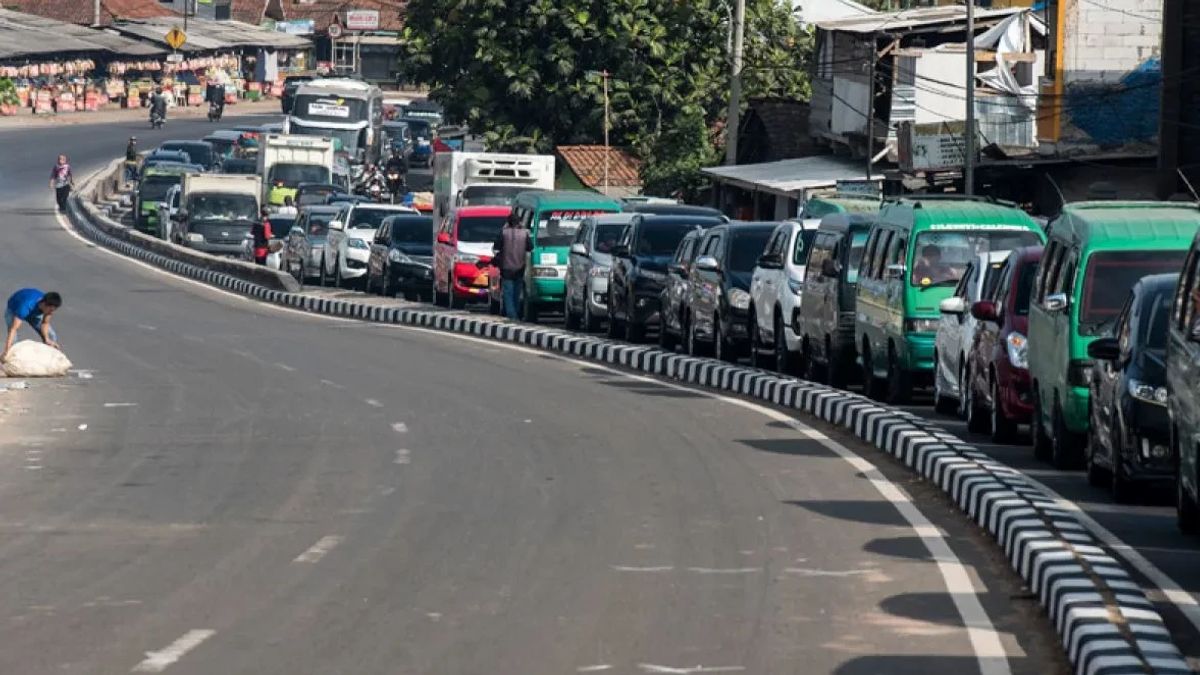


JAKARTA - Minister of Public Works (PU) Dody Hanggodo revealed that the level of stability of non-toll national roads reached 93.5 percent to support the homecoming and return flow this Eid.
He said that nationally, the non-toll national road network, which is the responsibility of the Ministry of PU, reaches around 47,603 km with a stability rate of 93.5 percent spread throughout Indonesia.
"The Ministry of PU is committed to ensuring the readiness of infrastructure and supporting services through the Instruction of the Minister of PU Number 01 of 2026 which serves as a guide for all work units in facing the Lebaran homecoming period," said Dody as quoted by ANTARA, Thursday, March 12.
The non-toll national road is one of the backbone of community mobility during the homecoming period, especially in the main corridor on the islands of Java and Sumatra.
Meanwhile, the current operational toll road network reaches around 3,115 km consisting of 76 toll roads throughout Indonesia. The network is equipped with 136 Rest and Service (TIP)/rest areas, 581 toll gates, and is managed by 54 Toll Road Business Entities (BUJT).
During the Lebaran homecoming and return period, 10 additional toll roads with a total length of around 291 km and 15 TIPs will also be functionalized on 9 toll roads.
The PU Ministry ensures the readiness of national road infrastructure, non-toll roads and toll roads to support the smooth flow of homecoming and return flow of Lebaran 2026.
Various steps have been prepared to ensure that the condition of national roads, toll roads, and other supporting facilities are in a stable, safe, and comfortable condition for the community to pass through.
For information, the Minister of Transportation (Menhub) Dudy Purwagandhi stated that private vehicles in the form of cars are projected to be the most widely used mode of transportation by the public during the Lebaran 1447 Hijriah/2026 Masehi transportation period.
The Minister of Transportation said that based on the government's survey results, the use of private cars reached around 25.98 percent of the total projection of community movement during the 2026 Lebaran transportation period.
He said that overall, the number of people who are expected to travel during this year's Lebaran period reached around 143.9 million people in various regions of Indonesia.
After private cars, the next most used mode of transportation is motorcycles and buses, which are also expected to accommodate large numbers of people.
The English, Chinese, Japanese, Arabic, and French versions are automatically generated by the AI. So there may still be inaccuracies in translating, please always see Indonesian as our main language. (system supported by DigitalSiber.id)
Most Popular Tags
#Prabowo Subianto #donald trump #firearm #8791 #giias 2026Popular


