
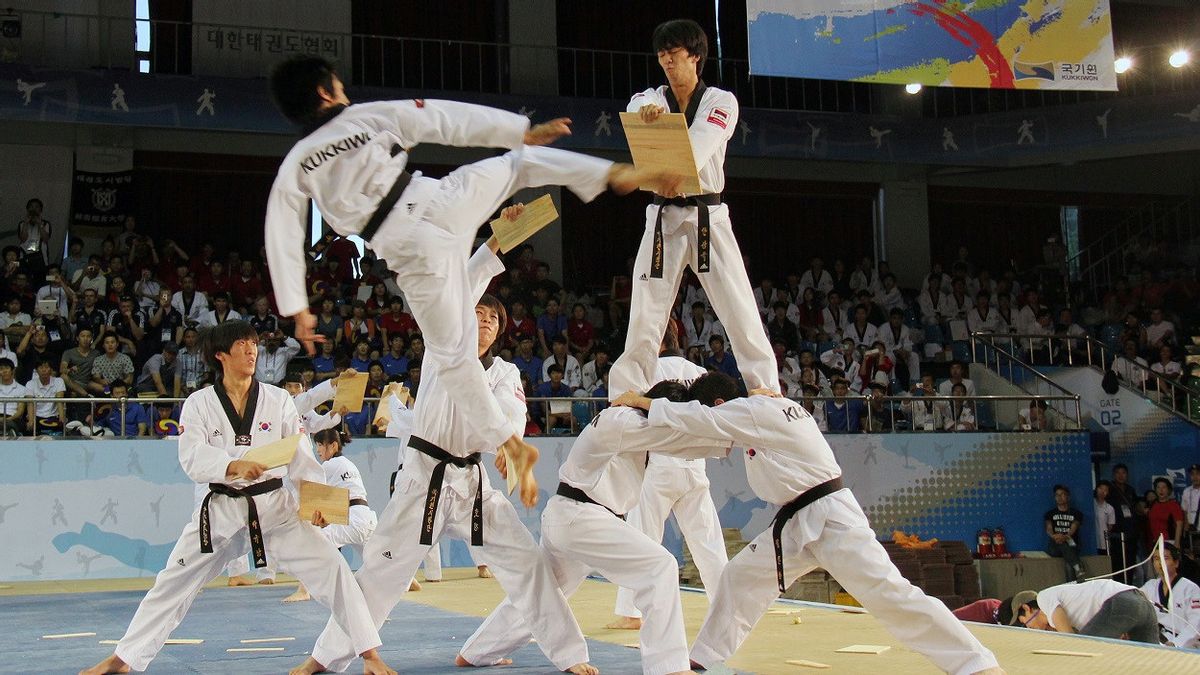


South Korea plans to join North Korea to gain UNESCO recognition of the traditional martial art of Taekwondo as a joint Intangible Cultural Heritage.
The Committee on Cultural Heritage, an advisory body to the Korea Heritage Service (KHS), has selected Taekwondo as the next candidate for joint registration or expansion on the Representative List of the Intangible Cultural Heritage of Humanity during a recent meeting, according to the KHS.
"We plan to submit an application to the UNESCO Intergovernmental Committee for the Protection of Intangible Cultural Heritage in March," an official of the KHS said on condition of anonymity, quoted by The Korea Times (28/2).
This step was taken after Pyongyang submitted its own application in March 2024 to register "Taekwon-Do, a traditional martial art in the Democratic People's Republic of Korea." For your information, the Democratic People's Republic of Korea is the official name of North Korea.
The review of North Korea's application is currently underway, with a final decision expected during the 21st session of the committee in Xiamen, China, from November 30 to December 5.
If successful, this step will mark the second joint cultural heritage listing between the two Koreas after traditional Korean wrestling "ssireum" was included together in 2018.
For North Korea, taekwondo will become its sixth UNESCO intangible cultural heritage if approved. The current list includes the folk song "Arirang" (2014), kimchi making (2015), "ssireum" (2018), "Pyongyang Raengmyon custom" (cold noodles) (2022) and "Korean Clothing Custom: traditional knowledge, skills, and social practices" (2024).
Meanwhile, South Korea currently has 23 entries on the UNESCO list, ranging from "Jongmyo Jeryeak," a majestic orchestra music played for rituals at the royal Confucian temple, which was inaugurated in 2001, to the tradition of making fermented soybean sauce, which is listed as "Knowledge, beliefs, and practices related to the making of jang."
Seoul is also seeking to register traditional knowledge and skills related to the production of "hanji," or traditional Korean paper, this year. Another candidate, "Ginseng Culture: Culture of Care and Appreciation for Nature and Family (Community)," is scheduled to be evaluated in 2028.
The English, Chinese, Japanese, Arabic, and French versions are automatically generated by the AI. So there may still be inaccuracies in translating, please always see Indonesian as our main language. (system supported by DigitalSiber.id)
Most Popular Tags
#Prabowo Subianto #donald trump #Febrie Adriansyah #8791 #giias 2026Popular


