



JAKARTA - In the emergency phase of a disaster, the problem is often not the intention to help, but the speed of logistics. Former MPR Chairman, Bambang Soesatyo (Bamsoet) assessed that food assistance must be able to be eaten immediately when access is cut off and the public kitchen is not ready. Therefore, he encouraged ready-to-eat technology to be a strategic solution in a crisis situation.
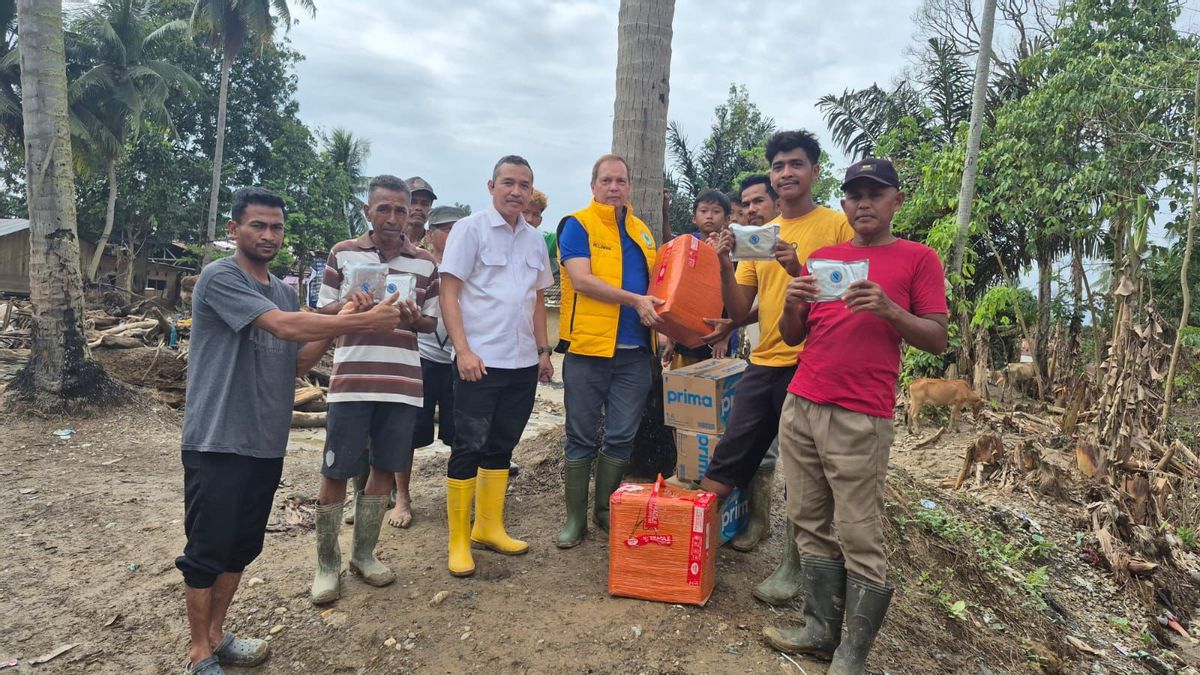
Bamsoet said PT BAMS (Banjarnegara Agro Mandiri Sejahtera) which was established in Banjarnegara, Central Java, in 2013, had sent 1,000 ready-to-eat technology food packages for survivors of disasters in Aceh Tamiang, Aceh Province. The aid was sent during the emergency response period for natural disasters in Sumatra.
"In a disaster situation, food distribution must move quickly because it concerns the physical and psychological resilience of survivors. We can't wait for the public kitchen system to stand perfectly while residents have been in exile for days," said Bamsoet when receiving the PT BAMS board in Jakarta, Tuesday (24/2/2026).
He explained, Andri Noviar representing PT BAMS as a manufacturer of ready-to-eat food with technology sent thousands of packages directly to disaster victims in Aceh Tamiang on Thursday (15/1/2026).
Bamsoet, who is also a member of the Golkar Party Faction of the DPR RI, linked this step with the trend of increasingly frequent disasters. He said the BNPB data showed that the intensity of hydrometeorological disasters had increased. Throughout 2025, thousands of incidents of flooding, landslides, and strong winds that affected millions of people were recorded. In Sumatra, a number of districts in Aceh and North Sumatra, including flood-prone areas due to extreme rainfall and overflowing rivers. In this condition, access to roads is often cut off, logistics are stuck, and public kitchens are difficult to operate immediately.
"We have to be realistic about the conditions on the ground. Building a communal kitchen requires equipment, gas, clean water, volunteer labor, and time. Meanwhile, the victims need nutritional intake right away. Therefore, ready-to-eat technology is an effective strategic solution," said Bamsoet.
According to him, PT BAMS' products are designed for crises, namely they can be consumed immediately with the addition of hot water according to the dosage, without complicated cooking processes. The processing and packaging technology makes it hygienic, resistant for a certain period of time, and easy to distribute in bulk - cutting the logistics chain and reducing dependence on public kitchens.
"We want to present concrete solutions. When access to roads is cut off and resources are limited, food aid must still be able to reach victims," said Bamsoet.
He emphasized that food industry innovation needs to be included in the design of national disaster management. "The food industry must provide concrete solutions when the country faces an emergency situation. In the future, we will strengthen production capacity so that the response can reach more disaster-prone areas," he concluded.
The English, Chinese, Japanese, Arabic, and French versions are automatically generated by the AI. So there may still be inaccuracies in translating, please always see Indonesian as our main language. (system supported by DigitalSiber.id)
Most Popular Tags
#Prabowo Subianto #donald trump #2026 World Cup #Febrie Adriansyah #8791Popular


