

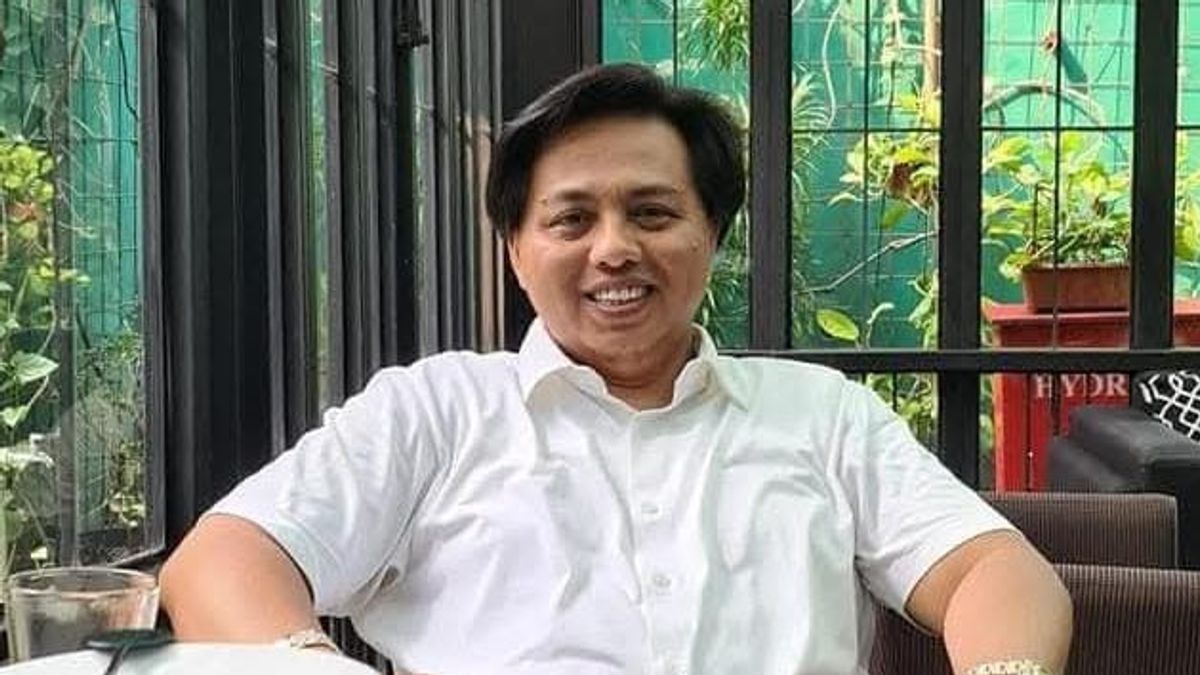


JAKARTA - Rokok Bintang Sembilan HRM Founder Owner. Khalilur R Abdullah Sahlawiy or Gus Lilur assessed that the high acceptance of tobacco excise taxes does not necessarily reflect fairness for the people's cigarette industry players. In the midst of achieving a tax revenue of more than Rp. 226 trillion in 2024, he actually saw policy pressures that narrowed the living space of small factories and tobacco farmers.
"The figure of Rp. 226 trillion looks great in the state report, but let's be honest, who pays the most? Maybe it's the little people who are sacrificed," said Gus Lilur in a statement Monday, February 2.
He emphasized that, procedurally, the people's cigarette factory had complied with all the rules for ordering tax tape, from submission through the Customs system, waiting for approval, payment, to the official collection of tax tape.
"All of our processes are legal and transparent. There are no dark gaps. We deal directly with the central and regional Customs," he said.
However, according to him, the main problem arises in the policy of limiting quotas, especially Hand-rolled Kretek Cigarettes (SKT). In fact, SKT is the backbone of the people's cigarette industry which absorbs many workers.
"After we fulfilled all the procedures, suddenly the quota for SKT was limited. That's where justice stops. SKT is the heart of people's cigarettes. If it is limited, it's not just the factory that dies, but the cigarette workers and tobacco farmers," he said.
Gus Lilur said that the restrictions had a direct impact on production reduction, workers who were laid off, and a decrease in tobacco absorption from farmers. He assessed that the quota policy actually hit small business actors who had always obeyed the rules.
He did not deny that there were violations such as misuse of tax tape or saltem. However, according to him, the action should target the perpetrators, not punish the entire people's industry.
"If someone violates it, arrest the person. Don't kill the industry. Don't punish thousands of small factories because of the mistakes of a few," he said.
He also reminded that restrictions on access to legal excise bands could potentially trigger the growth of illegal cigarettes in the field.
"If the legal channel is narrowed while the demand remains, production will definitely move to the illegal channel. That's economic law. The state should not be surprised if illegal cigarettes are more and more," he said.
According to Gus Lilur, a more appropriate solution is to open the sale of tax tape according to market needs with tightened supervision.
"Whatever the tape ordered by the permit holder, just sell it. The state can tax, we are still supervised. If you are afraid of violations, monitor the production, for example, use CCTV connected to Customs. The technology is there," he said.
He also highlighted the tax policy which was considered to be equalizing large factories and people's factories, although the characters of the two are very different.
"Large factories have capital and machines. We are labor intensive, living from manual labor. It is not fair, but oppressive," he said.
Gus Lilur menyambut wacana penerbitan pita cukai khusus bertarif lebih murah untuk rokok rakyat sebagai langkah koreksi.
"The tariff differentiation is not pampering, but a form of favoritism so that small businesses can survive," he said.
In addition, he encouraged the realization of the Tobacco Special Economic Zone (KEK), especially in Madura, as a strategy for structuring the industry from upstream to downstream.
"Madura is the national tobacco barn. The Tobacco Estate can be a center of economic justice. The state must be present as an architect, not just a spectator," he said.
Closing his statement, Gus Lilur emphasized that the success of tax policies should not be measured solely by the size of state revenue.
"The real measure is simple, farmers are prosperous or not, workers are still working or not. If the little people are more desperate, it means something is wrong with the policy," he concluded.
The English, Chinese, Japanese, Arabic, and French versions are automatically generated by the AI. So there may still be inaccuracies in translating, please always see Indonesian as our main language. (system supported by DigitalSiber.id)
Most Popular Tags
#Prabowo Subianto #donald trump #Febrie Adriansyah #8791 #giias 2026Popular


