



JAKARTA - The Ministry of Higher Education, Science, and Technology (Kemendiktisaintek) has strengthened the role of universities as the front line of preparing Indonesian human resources (HR) who are ready to compete in the global labor market, along with the high interest of the public to work abroad.
Based on data from the Indonesian Ministry of Migrant Worker Protection, as many as 795,300 Indonesian migrant workers (PMI) were stationed abroad during the period 2022-2024.
However, most are still working in low-skilled risk sectors, such as domestic helpers, caregivers, manual workers, plantations, and production operators.
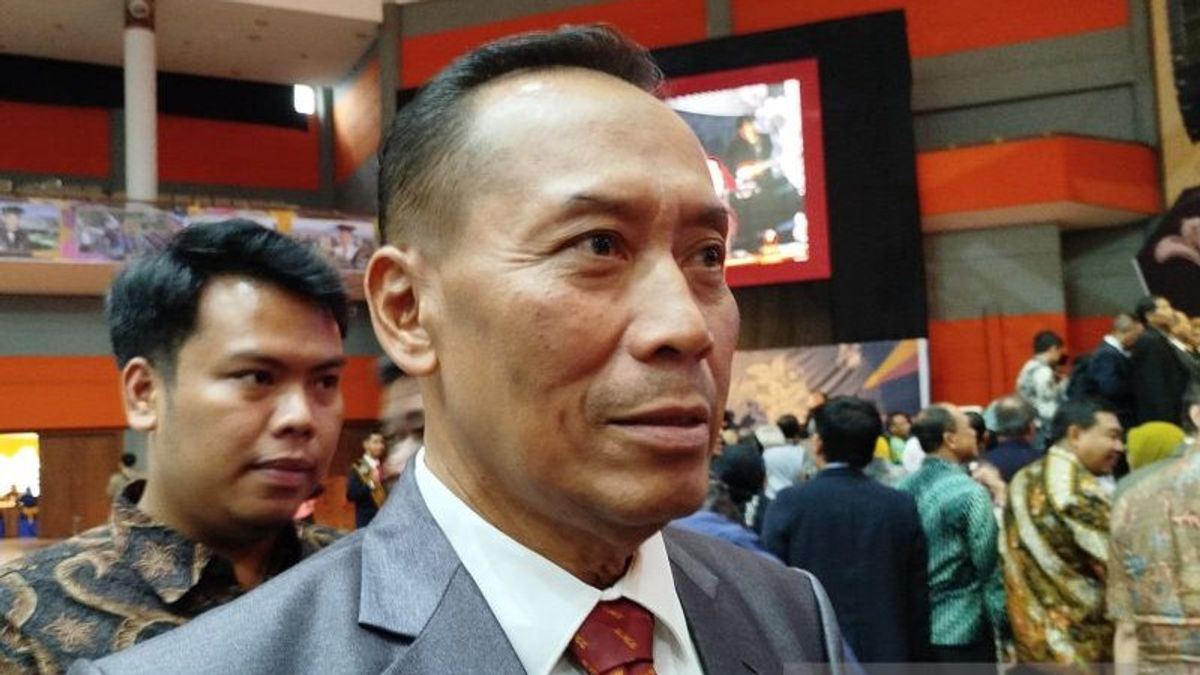
Deputy Minister of Higher Education, Science, and Technology Fauzan said that universities have a strategic role in preparing graduates who are not only ready to graduate, but also ready to work globally.
"Universities play a role in preparing graduates who are not only ready to graduate, but also ready to work globally. Strengthening collaboration with job training institutions and adaptive curricula allows the preparation of competencies to be carried out more systematically from the beginning of the education period," said Fauzan in his statement in Jakarta, Antara, Thursday, January 29.
According to Fauzan, universities are an important transition space from the world of education to the world of work, so that the strengthening of skills and competencies must be carried out since students are studying.
In his meeting with Deputy Minister for the Protection of Indonesian Migrant Workers (P2MI) Dzulfikar Ahmad Tawalla at the Ministry of Industry and Technology Office, Jakarta, last Tuesday, Fauzan cited good practices in a number of regions, one of which was East Java, which allocated a budget of around Rp. 10 billion per year for work training subsidies.
The investment is considered to have a direct impact on the placement of workers, making East Java the region with the highest number of migrant workers for three consecutive years.
In line with this, Deputy Minister of P2MI Dzulfikar Ahmad Tawalla highlighted that there is still a mismatch between the competencies of graduates and the needs of work abroad that often arise at the placement stage.
"The mismatch between competence and job needs abroad is still common. Training facilities on campus can be a solution to prepare prospective workers in a more structured manner while reducing the risk of inappropriate placement," he said.
Dzulfikar also emphasized the importance of synchronizing data on foreign labor needs so that the process of placing Indonesian migrant workers is more targeted and sustainable.
The meeting of the two deputy ministers was a follow-up to the memorandum of understanding between the Ministry of Industry and the Ministry of P2MI which was signed in December 2025, as a strategic step to strengthen the synergy of developing superior and globally competitive human resources in the midst of the demographic bonus momentum.
On a separate occasion, the Minister of Higher Education, Science, and Technology Brian Yuliarto emphasized that Indonesian migrant workers are a representation of the quality of the nation's human resources at the global level, in line with the direction of the President of the Republic of Indonesia Prabowo Subianto to encourage skilled Indonesian workers to fill job opportunities both in the country and in the international market.
The Ministry of Industry and Technology emphasized its commitment to building an integrated human resources development ecosystem through strengthening career development centers, job training institutions, integrating training into the curriculum, and internship and overseas work schemes that can be recognized as part of the higher education process.
The English, Chinese, Japanese, Arabic, and French versions are automatically generated by the AI. So there may still be inaccuracies in translating, please always see Indonesian as our main language. (system supported by DigitalSiber.id)
Most Popular Tags
#Prabowo Subianto #donald trump #2026 World Cup #Febrie Adriansyah #8791Popular


