

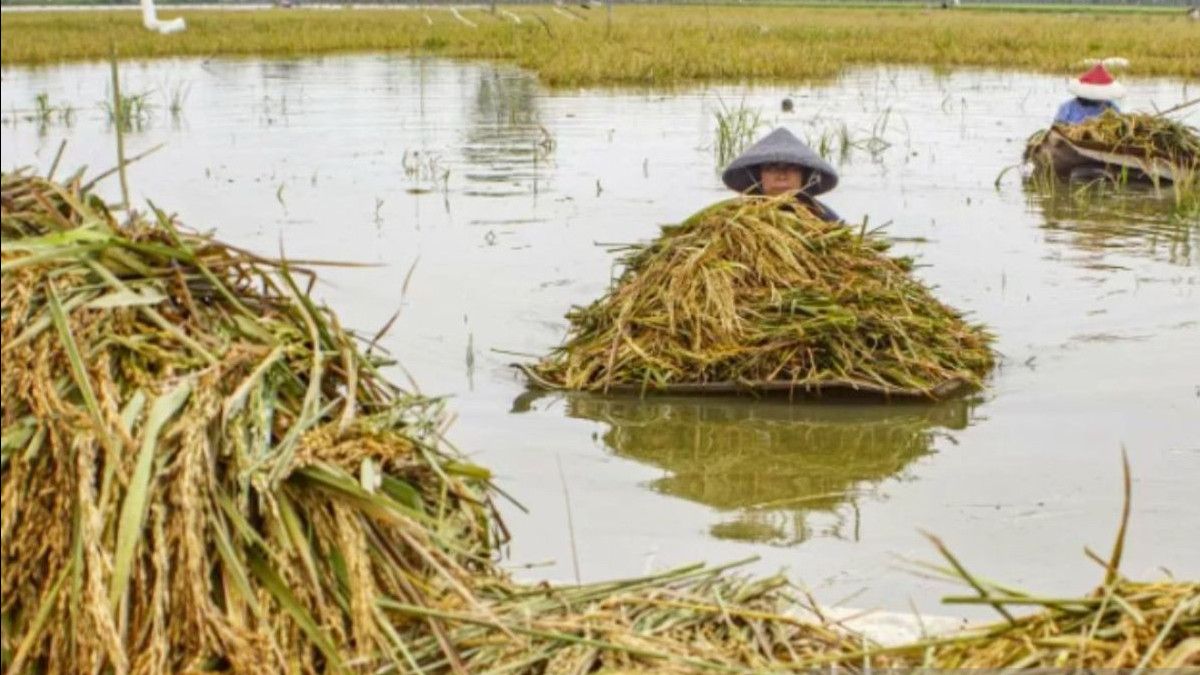


JEMBER - The flood that hit Kepel Village, Lojejer Village, Wuluhan District, Jember Regency, East Java, not only submerged hundreds of residents' houses, but also threatened the agricultural sector. At least 200 hectares of rice fields were reported to be affected by the flood and potentially suffer from crop failure.
Until Thursday, January 15, the rice fields in Lojejer Village were still seen flooded. The flood was triggered by the high intensity of rain that hit the Jember area and its surroundings in the last few days.
The head of Lojejer Village, Mochammad Sholeh, said his party had carried out data collection and mapping of affected agricultural land. Based on provisional data, about 200 hectares of rice fields owned by residents were submerged in water.
"We have gone directly to the field to see the conditions and map the affected agricultural land. In accordance with the president's program, we are trying to minimize the potential for crop failure," said Sholeh.
He explained that the flood in Lojejer Village was not the first time it had occurred. The area is indeed often flooded every year, especially when heavy rainfall hits the upstream area and its surroundings.
In addition to agricultural land, flooding also has an impact on residential areas. The village government recorded at least 300 houses were affected, with water levels reaching more than one meter.
"Since the beginning of the handling, we have evacuated residents and livestock, listed all the impacts of the flood, and worked together with RT/RW, Babinsa, and volunteers to distribute assistance to residents," he added.
Although the flood had paralyzed the activities of residents, the condition is gradually improving. The water is starting to recede and some residents have returned to their usual activities.
However, farmers are still concerned. It is feared that rice plants that have been submerged for quite some time will suffer damage and a decrease in crop yields.
The village government hopes for support from the local government and related agencies to help affected farmers, both through agricultural technical assistance and post-flood assistance. These efforts are considered important to reduce the potential for losses and prevent widespread crop failures.
The English, Chinese, Japanese, Arabic, and French versions are automatically generated by the AI. So there may still be inaccuracies in translating, please always see Indonesian as our main language. (system supported by DigitalSiber.id)


