


JAKARTA - Doctors say cancer-related deaths have tripled since Israel's aggression in Gaza until the ceasefire came into effect today. That's because Israel is blocking patients from medical treatment and limiting the entry of chemotherapy drugs.
Hani Naim, a resident of Gaza, feels it. Living with cancer for six years, Naim has been approved for treatment abroad. However, like thousands of others, he remains trapped in Gaza, banned from leaving due to Israel's increasingly tight restrictions.
"I used to receive treatment in the West Bank and Jerusalem," Naim told Al Jazeera's Tareq Abu Azzoum.
"Right now, I can't access any treatment. I need radiotherapy, and it's no longer available in Gaza," he continued.
Naim is one of 11,000 cancer patients currently stranded in the region, where the health care system has completely collapsed.
According to doctors, the number of deaths from cancer has tripled since the start of Israel's genocidal war in Gaza in October 2023. Without chemotherapy, without radiotherapy, and without a way out, a cancer diagnosis has become, for many, an immediate death sentence.
Depending on the 'Ghost Hospital'
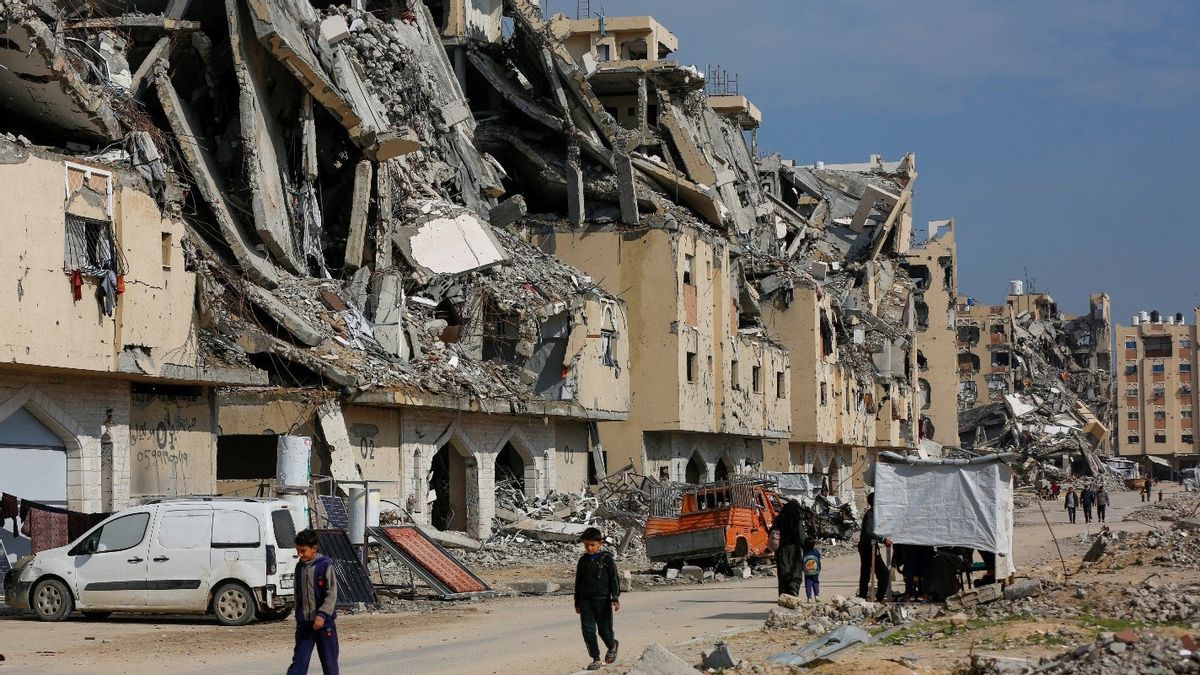
The cancer-related treatment center in the Gaza Strip is the Turkish-Palestinian Friendship Hospital. Formerly the hospital, it was the only facility providing specialized oncology care in Gaza, but now only remains a ruin.
"This hospital resembles a haunted hospital after it was turned into a military location during the war," Abu Azzoum reported.
"Israeli forces blew it up, leaving the patient to fight for himself," he added.
With the destruction of the main facility in the Gaza Strip, doctors were forced to use emergency clinics without any resources at all.
In an interview with Al Jazeera Mubasher, Mohammed Abu Nada, medical director of the Gaza Cancer Center, described the situation he faced as very helpless.
"We have lost everything," Abu Nada said.
"We lost the only hospital that was able to diagnose and treat cancer... Now we are in the Nasser Medical Complex, but unfortunately, we don't have the equipment to diagnose the disease, and we don't have chemotherapy," he explained.
Ceasefire But Block Medical Supplies
Although Israel agreed to a ceasefire since October 10, 2025 which allowed aid to enter the Gaza Strip, essential medical supplies remain blocked.
Abu Nada denied Israel's claim that aid was flowing freely into Gaza, noting that although some commercial goods had entered, vital life-saving medicines had not.
"They bring chocolate, nuts, and chips... but treatments for chronic diseases, cancer treatments, and diagnostic tools have not entered at all," he said.
"This is just propaganda," Abu Nada said.
"We have applied to the World Health Organization... to at least give us medication if we are not allowed to leave. But instead, what we have is gone," he continued.
Abu Nada estimates that 60-70 percent of cancer protocols are completely unavailable in the Gaza Strip. Because chemotherapy often requires a specific sequence of drugs, losing even one component makes the entire treatment ineffective.
In fact, he continued, palliative care has also failed. Pain relief drugs - which are essential to overcoming the suffering of advanced cancer - are now rationed.
"We try to prioritize. Those who suffer from widespread cancer are given a portion, and those who are still in a safe condition... we don't give them anything," he said.
Silent Killer
The negative impact of this shortage is very real. Abu Nada revealed that in the Khan Younis area alone, two to three cancer patients die every day.
"As a result, the cancer spreads in the patient's body like a spreading fire," he said. "We have regressed 50 years in cancer treatment," he continued.
Currently, according to him, as many as 3,250 patients have official referrals for treatment abroad, but cannot cross the border due to the closure of the Rafah crossing and Israel's ban on medical evacuations.
For the remaining medical staff, the psychological burden is enormous.
"Several specialists have left Gaza," Abu Nada said. "But even for those who stay, what is the use of a doctor without tools?"
"Doctors have no other choice but to sit and cry beside patients who are denied treatment and denied their journey," he said.
The English, Chinese, Japanese, Arabic, and French versions are automatically generated by the AI. So there may still be inaccuracies in translating, please always see Indonesian as our main language. (system supported by DigitalSiber.id)
Popular


