
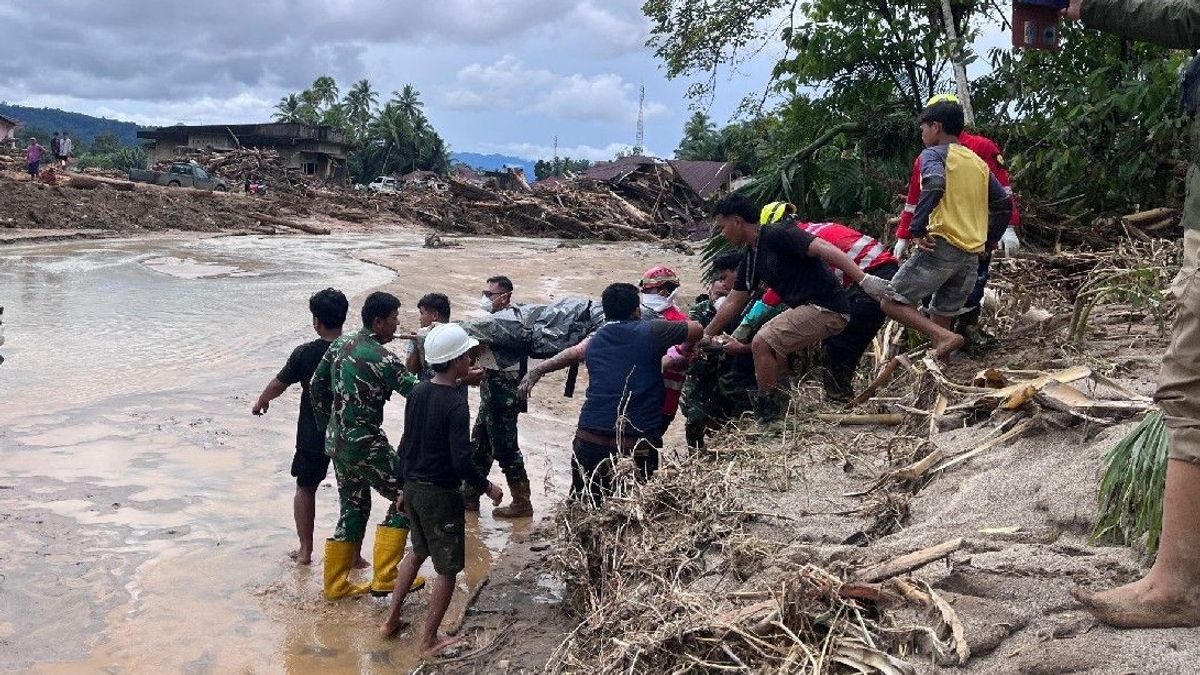


JAKARTA - The National Disaster Management Agency (BNPB) said disaster mitigation is an important step to reduce the risk and impact of natural disasters while increasing community preparedness.
"In addition to the physical readiness of the community, it is also reminded to be alert to hoaxes and disaster misinformation that often arise during emergency situations," said BNPB Head Suharyanto in a press release received by Antara, Saturday, December 20.
According to Suharyanto, disaster mitigation is a series of planned efforts carried out before a disaster occurs to reduce the potential for casualties and losses.
"Mitigation includes understanding disaster risks in their respective regions, identifying types of threats, and being prepared for emergency conditions," he said.
He explained that the urgency of mitigation was reflected in the high frequency of disasters in Indonesia and BNPB noted that throughout 2025, 3,116 disaster events occurred in various areas dominated by hydrometeorological disasters such as floods, extreme weather and landslides.
"The disaster caused 1,492 deaths, 272 people missing, 7,751 people injured, and millions of people affected and displaced, as well as causing significant damage to settlements and infrastructure," he said.
His party encourages the public to understand the potential for disasters in the surrounding environment such as floods, landslides, earthquakes, and volcanic eruptions.
"Basic mitigation steps that can be taken include preparing an evacuation plan for families, recognizing evacuation routes and safe gathering points, and understanding the actions that need to be taken before, during, and after disasters," he said.
In addition to physical mitigation, information readiness is also a concern where hoaxes and disaster misinformation often circulate through social media and chain messages, especially during disasters.
"Inaccurate information can trigger panic, make people make the wrong decisions, and hinder the evacuation and disaster management process," he said.
Regarding this, BNPB appeals to the public to always access disaster information from official sources and credible media, then residents are also asked to be aware of provocative messages, not directly believing photos or videos without a clear context and verifying information before disseminating it.
"Official disaster information can be obtained through the channels of related government agencies, such as BNPB, BMKG, and local governments because these official channels provide early warnings, safety guidelines, and the development of disaster management in the field," he said.
In addition to being recipients of public information, it is also hoped that they will play an active role in maintaining a healthy information space so that it is hoped that this can be done by not forwarding chain messages that are not clear about their sources, helping to disseminate official information, and reporting on disaster hoaxes to the authorities.
His party assessed that with strong disaster mitigation and vigilance against hoaxes, the public is expected to increase preparedness, reduce the risk of panic, and support the effectiveness of disaster management at the community level.
The English, Chinese, Japanese, Arabic, and French versions are automatically generated by the AI. So there may still be inaccuracies in translating, please always see Indonesian as our main language. (system supported by DigitalSiber.id)
Most Popular Tags
#Prabowo Subianto #donald trump #Febrie Adriansyah #8791 #giias 2026Popular


