

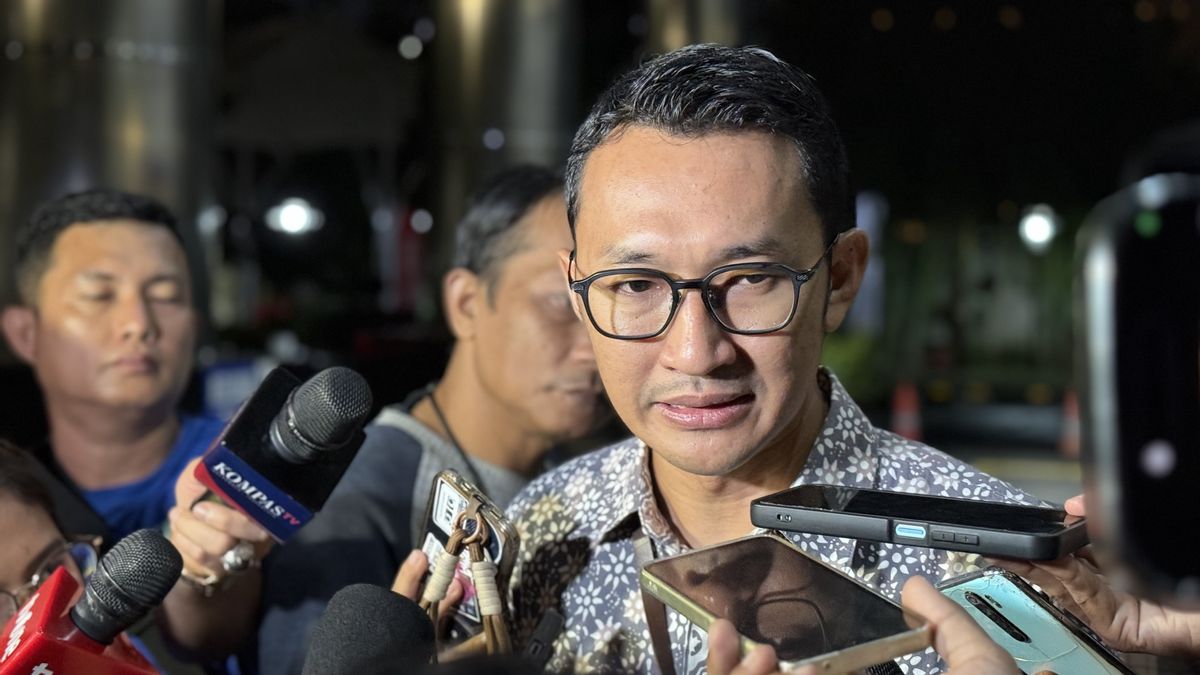


JAKARTA - The Corruption Eradication Commission (KPK) said it would also work with the Financial Supervisory Board (BPK) when it examined the former Minister of Religion (Menag) Yaqut Cholil Qoumas as a witness today.
Yaqut is known to have been investigated in the corruption case for determining quotas and organizing the 2023-2024 hajj in the Ministry of Religion (Kemenag). He was questioned by investigators for 8.5 hours from 11.40 WIB to 20.11 WIB.
"The examination of the witnesses is focused on the calculation of state financial losses carried out by BPK colleagues, the Financial Audit Agency," said KPK spokesperson Budi Prasetyo to reporters at the KPK Red and White building, Kuningan Persada, South Jakarta, Tuesday, December 16.
Besides Yaqut, Budi said there were seven witnesses who were also examined. "From the side of the association organizing the hajj," he said.
As for Yaqut, after being examined, he chose to remain silent and did not answer questions from the media about the materials of his examination. "Please ask the investigators later," said Yaqut briefly.
"Permission, permission," he continued.
English:
English:
English:
English:
English:
As previously reported, the KPK has issued a general investigation order (sprindik) for alleged corruption in adding quotas and organizing the hajj. This institution reasoned that the issuance was carried out so that they could carry out coercive efforts.
The Sprindik general uses Article 2 Paragraph 1 and/or Article 3 of Law Number 31 of 1999 concerning the Eradication of Corruption as amended by Law Number 20 of 2021 jo article 55 paragraph 1-1 of the Criminal Code. This means that there is state loss that occurs due to this corrupt practice.
The state's losses in the 2023-2024 quota and Hajj corruption cases are said to have reached more than Rp1 trillion. This number is still increasing because it is only the initial count of the KPK which continues to coordinate with the Financial Supervisory Board (BPK).
This case started with the provision of 20,000 additional Hajj quotas from the Saudi Arabian government for Indonesia to reduce the queue of pilgrims.
However, recently the distribution turned out to be problematic because it was divided equally, namely 50 percent for regular hajj and 50 percent for special hajj.
In fact, according to the law, the distribution should be 92 percent for regular hajj and 8 percent for special hajj.
The English, Chinese, Japanese, Arabic, and French versions are automatically generated by the AI. So there may still be inaccuracies in translating, please always see Indonesian as our main language. (system supported by DigitalSiber.id)
Most Popular Tags
#Prabowo Subianto #donald trump #firearm #8791 #giias 2026Popular


