

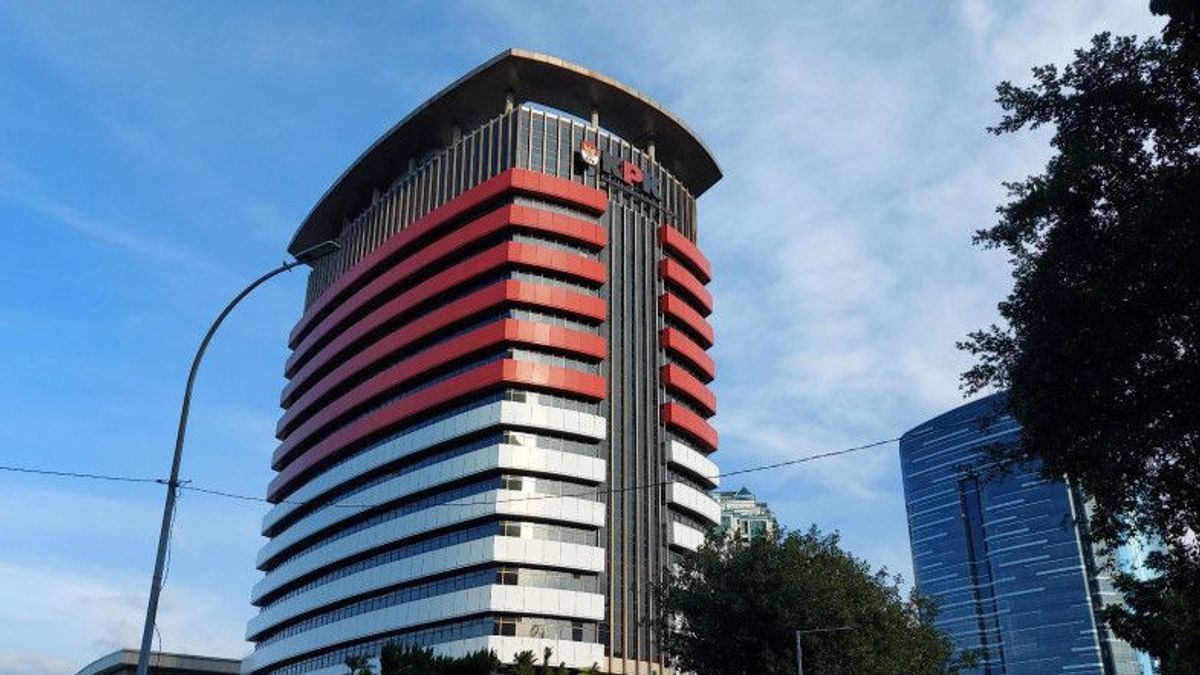


YOGYAKARTA - The Corruption Eradication Commission (KPK) revealed that 95 percent of respondents from the Integrity Assessment Survey (SPI) claimed to see giving money to employees in public services.
This was conveyed by KPK Deputy Chairperson Agus Joko Pramono in opening a talk show entitled 'Collaboration to Build Integrity: Data to Real Action' in the context of Hakordia 2025. This activity is a follow-up to the launch of the 2025 SPI results with a score of 72.32 or still a vulnerable category.
"95 percent of respondents admitted that they had seen employees receive money at the level of public services. The provision of money, goods, or facilities from service users. The numbers are very high," Agus said in the activity.
"This is because 95 percent of respondents have seen employees receive money, goods, or facilities from service users," he continued.
In addition, Agus said that a third of respondents said that their decisions at the office were influenced by kinship factors. This action he called destructive.
"Almost a third of respondents also stated that the decisions in their offices were influenced by kinship, alma mater, and other closeness factors," he said.
"This gap will damage the overall order. For what reason, people who have accessibility skills, intervention, that's very little," he continued.
As previously reported, the Acting Deputy for Prevention and Monitoring of the KPK Aminuddin said the Integrity Assessment Survey was carried out in the period August 1-31 October 2025. There are 657 ministries, institutions, SOEs, and local governments included in this activity.
"The participation involves various perspectives, ranging from internal agencies, service users, to experts and stakeholders with a total of 837,693 respondents," said Aminuddin during the peak event of Hakordia 2025 at the Yogyakarta Kepatihan complex.
SEE ALSO:
-
 | BERITA
Menag Nasaruddin Sebut Seluruh Agama Sepakat Korupsi Musuh Kemanusiaan
09 Desember 2025, 16:49
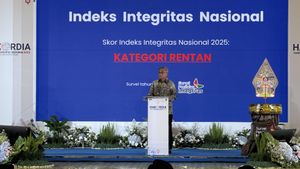
Meanwhile, KPK Chairman Setyo Budiyanto explained that the SPI score had increased from last year from 71.53 to 72.32. Even so, this figure is still in the vulnerable category.
Setyo emphasized that this condition should not only be interpreted as a mere number.
"But it shows that the corrupt behavior in each of them still exists," he said.
Therefore, Setyo invites all ministries/agencies to make improvements. If you want details, ladies and gentlemen, you can assign the inspectorate to come together with the Deputy for Prevention and Monitoring to be dissected. In what part is the risk of integrity is still low," he explained.
In addition, ministries/agencies can also find out the potential for vulnerability to bribes and gratuities and other corruption.
"Everything can be seen, everything can be measured, and we do this number honestly. Nothing can then be upgraded," said Setyo.
The English, Chinese, Japanese, Arabic, and French versions are automatically generated by the AI. So there may still be inaccuracies in translating, please always see Indonesian as our main language. (system supported by DigitalSiber.id)
Most Popular Tags
#Prabowo Subianto #donald trump #Febrie Adriansyah #8791 #giias 2026Popular


